
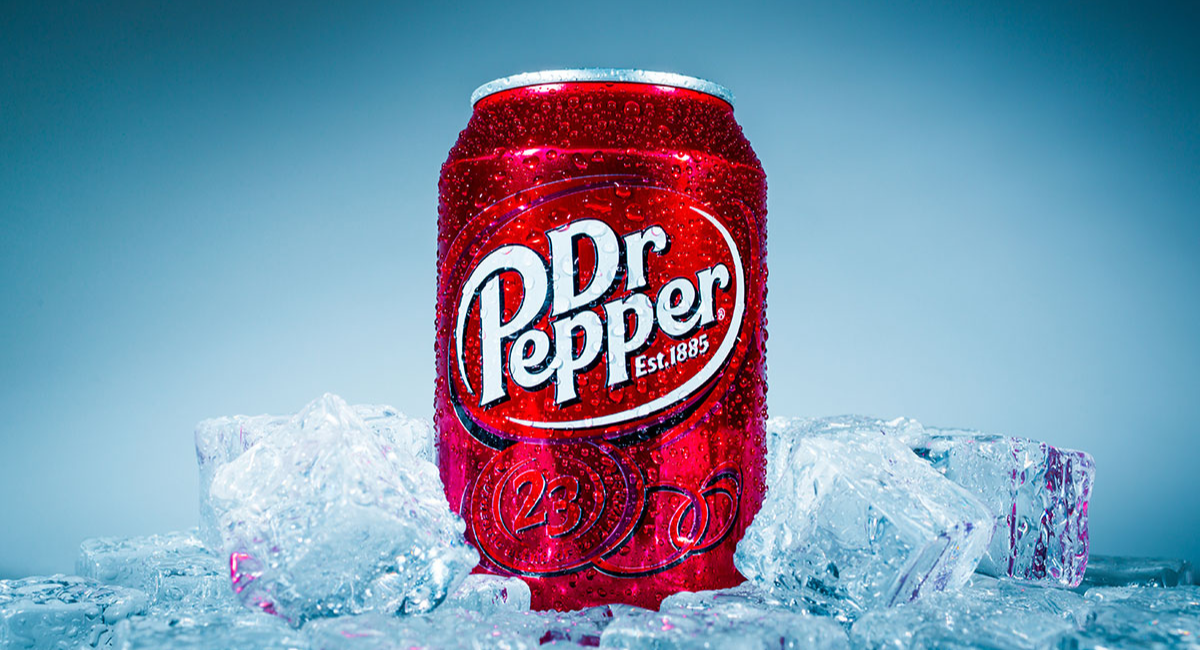
Long before Coca-Cola ruled the world, one pharmacist created something special in a small Texas drug store.
The year was 1885, and America was about to get its first taste of what would become the country’s oldest major soft drink brand.
When was Dr. Pepper invented? The answer takes us back to Waco, Texas, where a curious pharmacist named Charles Alderton was experimenting with flavors at his soda fountain.
His creation would outlast countless competitors and become a beloved American icon.
From a single drug store to global recognition, Dr. Pepper’s journey spans nearly 140 years of American history.
Get ready to discover the fascinating origins of the drink with 23 flavors that America fell in love with!
Contents
The Birth of Dr. Pepper: 1885 in Waco, Texas
Charles Alderton arrived in Waco, Texas, as a young pharmacist with big dreams. He worked at Morrison’s Old Corner Drug Store, where his main job was filling prescriptions and helping customers.
But Alderton had a special interest that would change everything.
The soda fountain at the drug store fascinated him. Most drinks tasted simple and boring – just sweet syrups mixed with carbonated water.
Alderton believed he could create something better, something with more complex flavors that would surprise people’s taste buds.
During quiet moments between customers, pharmacist Charles Alderton experimented with different flavor combinations.
He mixed various syrups and extracts, searching for the perfect blend. His goal was ambitious: create a soft drink unlike anything people had ever tasted.
After months of trial and error, Alderton finally discovered his magic formula. The result was a drink with a mysterious, complex flavor that nobody could quite identify.
This moment in 1885 marked the birth of what would become Dr. Pepper.
Morrison’s Old Corner Drug Store: Where History Was Made
Morrison’s Old Corner Drug Store was the perfect place for beverage innovation. Mr. Morrison, the store’s owner, encouraged Alderton’s experiments and provided all the ingredients he needed.
The drug store served as both pharmacy and social gathering spot for local residents.
Soda fountains were becoming popular attractions in drug stores across America.
People enjoyed the fizzy drinks as special treats, especially during hot Texas summers. The atmosphere was friendly and welcoming, making it easy for customers to try new flavors.
Mr. Morrison recognized the potential in Alderton’s creation immediately. When regular customers started asking for “that new drink” by name, he knew they had something special.
The drug store became the first place in America where people could order Dr. Pepper.
The original soda fountain where Dr. Pepper was invented became a piece of American history.
Today, visitors can learn about this important location and its role in creating one of the world’s most famous soft drinks.
The Secret of 23 Flavors: Creating a Unique Taste
Charles Alderton’s breakthrough came from combining multiple flavor elements instead of relying on single tastes.
While other soft drinks used simple fruit or cola flavors, he created something much more complex and interesting.
The famous 23 flavors blend remains one of the best-kept secrets in the soft drink industry.
Even today, very few people know the exact combination that gives Dr. Pepper its distinctive taste. This mystery has helped maintain the brand’s unique position for over a century.
What made Alderton’s formula special was how the different flavors worked together. No single taste dominated the drink.
Instead, each sip revealed different flavor notes that kept people coming back for more. This complexity set Dr. Pepper apart from every other soft drink on the market.
The pepper element in the name didn’t refer to black pepper or spicy heat. Instead, it described the drink’s sharp, distinctive character that seemed to “pepper” the taste buds with unexpected flavors.
This unique profile made Dr. Pepper impossible to copy successfully.
Early Success and the First Dr. Pepper Company
Word about the amazing new drink spread quickly through Waco and surrounding areas.
People traveled from other towns just to taste the mysterious soft drink that everyone was talking about.
The drug store couldn’t keep up with demand for this local sensation.
By the 1890s, the drink’s popularity had grown beyond what a single soda fountain could handle.
Mr. Morrison and other investors decided to form the Dr. Pepper Company to produce and distribute the beverage on a larger scale.
This business decision would prove incredibly smart.
The early Dr. Pepper Company faced the challenge of maintaining quality while increasing production.
They had to develop new manufacturing processes that preserved the complex flavor profile that made the drink special.
Every bottle needed to taste exactly like the original soda fountain version.
Regional expansion started slowly but steadily. The company focused on Texas and nearby states first, building a loyal customer base before attempting national distribution.
This careful approach helped establish Dr. Pepper as a serious competitor in the growing soft drink industry.
Surviving the Competition Wars
As the soft drink industry exploded in the early 1900s, Dr. Pepper faced intense competition from larger companies.
The Coca-Cola Company and other major brands had more money and better distribution networks. But Dr. Pepper had something they couldn’t copy: its unique flavor.
While other soft drinks battled over similar cola tastes, Dr. Pepper occupied its own category.
Marketing campaigns emphasized that Dr. Pepper was “different” and “one of a kind.” This positioning helped the brand avoid direct taste comparisons with cola drinks.
The company’s survival strategy focused on quality and consistency rather than trying to match competitors’ advertising budgets.
Every bottle of Dr. Pepper had to deliver the same complex flavor experience that customers expected. This commitment to quality built incredible brand loyalty.
Dr. Pepper also benefited from regional pride, especially in Texas and the South. Local consumers supported the homegrown brand and helped it expand into new markets.
This grassroots loyalty proved more valuable than expensive advertising campaigns.
The Name Mystery: Why “Dr. Pepper”?
The origin of the Dr. Pepper name has sparked debate for decades. Several theories exist, but the true story remains somewhat mysterious.
The most popular explanation involves Dr. Charles T. Pepper, a pharmacist from Rural Retreat, Virginia.
According to legend, Mr. Morrison once worked for Dr. Charles T. Pepper and may have named the drink to honor his former employer.
Another version suggests that Morrison was courting Dr. Charles Pepper’s daughter and chose the name to impress the family.
Some historians believe the “Dr.” title was simply a marketing device to suggest health benefits, which was common for patent medicines in the 1880s.
The pepper reference could have described the drink’s sharp, distinctive character rather than honoring any specific person.
Regardless of its true origin, the Dr. Pepper name proved perfect for marketing. It sounded authoritative and memorable, helping customers remember and request the drink.
The distinctive name became one of the brand’s greatest assets over time.
Evolution Through the Decades
Dr. Pepper remained largely unchanged for nearly 80 years after its invention. But changing consumer preferences in the 1960s and 1970s forced the company to innovate.
The introduction of Diet Dr. Pepper marked the brand’s first major variation from the original formula.
Diet Dr. Pepper used artificial sweeteners instead of sugar to appeal to weight-conscious consumers.
The challenge was maintaining the complex 23 flavors profile without regular sugar’s taste contribution.
After extensive testing, the company successfully launched this diet version.
The success of Diet Dr. Pepper opened doors for other flavor variations. Dr. Pepper Cherry added a prominent cherry note to the original blend, while Dr. Pepper Strawberry offered a fruit-forward option.
These extensions attracted new customers while satisfying existing fans’ desire for variety.
Limited editions like Dr. Pepper Berries and Dr. Pepper Dark Berry created excitement and media attention.
The company learned that careful flavor additions could enhance the original recipe without destroying its essential character.
Each new variety had to pass strict taste tests before reaching consumers.
Corporate Changes and Ownership Shifts
The Dr. Pepper Company went through several ownership changes as the soft drink industry consolidated.
In 1988, it merged with Seven-Up to form Dr. Pepper/Seven-Up Companies, creating a stronger competitor against Coca-Cola and Pepsi.
The formation of Dr. Pepper Snapple Group in 2008 brought together multiple beverage brands under one umbrella.
This larger organization provided better distribution and marketing resources while maintaining Dr. Pepper’s unique identity and recipe.
The most recent major change came in 2018 when Keurig acquired Dr. Pepper Snapple Group to form Keurig Dr. Pepper.
This merger combined coffee and soft drink expertise, creating new opportunities for product development and market expansion.
Despite all these corporate changes, Dr. Pepper’s core recipe and character have remained consistent.
New owners recognized that the brand’s value lay in its unchanging taste and loyal customer base. Preserving this heritage became a top priority for each successive company.
Special Editions and Limited Releases
Dublin Dr. Pepper became legendary among soft drink enthusiasts for using pure cane sugar instead of high fructose corn syrup.
Produced in Dublin, Texas, this version was considered the closest to the original 1885 recipe. Though production ended in 2012, it maintains a cult following.
Seasonal offerings like Hot Dr. Pepper gained popularity during winter months, especially in the South.
This served-warm version highlighted different flavor notes and created a completely different drinking experience. It demonstrated the versatility of the original 23 flavors blend.
Modern innovations include Dr. Pepper Ten, marketed specifically to men, and Dr. Pepper Zero Sugar for calorie-conscious consumers.
The company also experimented with Dr. Pepper Red Fusion and other bold flavors, though not all succeeded in the marketplace.
Heritage Dr. Pepper celebrations often feature special packaging and limited-edition flavors that honor the brand’s history.
These releases connect modern consumers with the drink’s rich heritage while generating excitement and media coverage.
Dr. Pepper Today: Legacy and Cultural Impact
The Dr. Pepper Museum in Waco, Texas, preserves the complete history of America’s oldest major soft drink.
Visitors can see the original soda fountain where Charles Alderton created his masterpiece and learn about the brand’s evolution over nearly 140 years.
Interactive exhibits explain the manufacturing process and showcase vintage advertising campaigns that made Dr. Pepper famous.
The museum also explores the soft drink industry’s development and Dr. Pepper’s role in shaping American beverage culture.
Dr. Pepper Day celebrations occur throughout the year, bringing together fans who share their love for the unique soft drink.
These events feature tastings, historical presentations, and special promotions that honor the brand’s enduring popularity.
The museum serves as both tourist attraction and educational resource, helping new generations understand Dr. Pepper’s significance in American business history.
School groups and beverage industry professionals regularly visit to study successful brand development.
Modern Manufacturing and Ingredients
Today’s Dr. Pepper uses high fructose corn syrup as its primary sweetener, though some versions still use pure cane sugar.
The drink also contains caffeine, carbonated water, and the secret blend of natural and artificial flavors that create the famous taste.
Modern quality control ensures that every can and bottle delivers the exact same flavor experience that customers expect.
Computer-controlled mixing systems maintain precise ratios of all ingredients, eliminating the variations that could occur with manual production.
The original 23 flavors formula remains locked in company vaults, known only to a handful of people worldwide. This security protects Dr. Pepper’s most valuable asset and ensures that competitors cannot duplicate the exact taste profile.
Advanced packaging technology preserves flavor freshness and extends shelf life without changing the drink’s essential character.
Whether in aluminum cans, plastic bottles, or fountain dispensers, Dr. Pepper maintains its distinctive taste across all formats.
Frequently Asked Questions
When exactly was Dr. Pepper invented and by whom?
Dr. Pepper was invented in 1885 in Waco, Texas, by pharmacist Charles Alderton while he worked at Morrison’s Old Corner Drug Store. Alderton experimented with flavored syrups at the soda fountain until he perfected a unique blend. Although the exact day is unknown, 1885 is widely accepted, making Dr. Pepper the oldest major soft drink brand in the U.S., created one year before Coca-Cola.
What is Dr. Pepper flavor?
Dr. Pepper’s distinctive taste comes from its secret blend of 23 flavors, creating a complex profile unlike other soft drinks. Instead of relying on one dominant flavor, it combines multiple taste elements that work together seamlessly. The exact formula remains one of the beverage industry’s best-kept secrets, giving Dr. Pepper a signature flavor that’s difficult to define—neither cola nor fruit, but completely unique.
How has Dr. Pepper changed since it was first invented?
Dr. Pepper has grown from a soda fountain drink at Morrison’s drug store into a globally distributed soft drink with many varieties. While the core recipe remains largely unchanged, modern versions use different sweeteners and production methods. Over time, the brand introduced options like Diet Dr. Pepper, Dr. Pepper Cherry, caffeine-free versions, and zero-sugar varieties—expanding choice while preserving its iconic 23-flavor profile.
Is Dr. Pepper owned by Coke or Pepsi?
Dr. Pepper is owned by Keurig Dr Pepper, formed in 2018 when Keurig merged with Dr Pepper Snapple Group. The merger brought together coffee and soft drink brands under one organization while preserving brand identities. Over the years, Dr. Pepper has changed ownership several times, but each owner has protected its original recipe and character.
Why is Dr. Pepper being removed from soda fountains?
Dr. Pepper isn’t being removed everywhere, but some locations drop it due to limited fountain space and distributor contracts. Because it’s owned by Keurig Dr Pepper, restaurants tied to Coca-Cola or Pepsi may not carry the syrup. If sales are low, businesses often replace it with higher-selling options, while still offering Dr. Pepper in bottles or cans.
Wrapping it Up
Dr. Pepper’s remarkable journey from 1885 to today proves that genuine innovation can create lasting success. What started as one pharmacist’s experiments in a Texas drug store became one of America’s most beloved brands.
Charles Alderton’s creation survived the Great Depression, two world wars, countless competitors, and dramatic changes in consumer preferences.
The secret lies in maintaining the unique 23 flavors blend that made Dr. Pepper special from the very beginning.
Nearly 140 years later, Dr. Pepper continues to occupy its own unique space in the soft drink industry.
While cola wars rage between major competitors, Dr. Pepper remains confidently different, appealing to consumers who want something beyond ordinary.
The story of when Dr. Pepper was invented reminds us that the best innovations often come from unexpected places. A small-town pharmacist’s curiosity and persistence created something that millions of people still enjoy today.