Home Blog

When Was Dr. Pepper Invented?

Long before Coca-Cola ruled the world, one pharmacist created something special in a small Texas drug store.

The year was 1885, and America was about to get its first taste of what would become the country’s oldest major soft drink brand.

When was Dr. Pepper invented? The answer takes us back to Waco, Texas, where a curious pharmacist named Charles Alderton was experimenting with flavors at his soda fountain.

His creation would outlast countless competitors and become a beloved American icon.

From a single drug store to global recognition, Dr. Pepper’s journey spans nearly 140 years of American history.

Get ready to discover the fascinating origins of the drink with 23 flavors that America fell in love with!

The Birth of Dr. Pepper: 1885 in Waco, Texas

Charles Alderton arrived in Waco, Texas, as a young pharmacist with big dreams. He worked at Morrison’s Old Corner Drug Store, where his main job was filling prescriptions and helping customers.

But Alderton had a special interest that would change everything.

The soda fountain at the drug store fascinated him. Most drinks tasted simple and boring – just sweet syrups mixed with carbonated water.

Alderton believed he could create something better, something with more complex flavors that would surprise people’s taste buds.

During quiet moments between customers, pharmacist Charles Alderton experimented with different flavor combinations.

He mixed various syrups and extracts, searching for the perfect blend. His goal was ambitious: create a soft drink unlike anything people had ever tasted.

After months of trial and error, Alderton finally discovered his magic formula. The result was a drink with a mysterious, complex flavor that nobody could quite identify.

This moment in 1885 marked the birth of what would become Dr. Pepper.

Morrison’s Old Corner Drug Store: Where History Was Made

Morrison’s Old Corner Drug Store was the perfect place for beverage innovation. Mr. Morrison, the store’s owner, encouraged Alderton’s experiments and provided all the ingredients he needed.

The drug store served as both pharmacy and social gathering spot for local residents.

Soda fountains were becoming popular attractions in drug stores across America.

People enjoyed the fizzy drinks as special treats, especially during hot Texas summers. The atmosphere was friendly and welcoming, making it easy for customers to try new flavors.

Mr. Morrison recognized the potential in Alderton’s creation immediately. When regular customers started asking for “that new drink” by name, he knew they had something special.

The drug store became the first place in America where people could order Dr. Pepper.

The original soda fountain where Dr. Pepper was invented became a piece of American history.

Today, visitors can learn about this important location and its role in creating one of the world’s most famous soft drinks.

The Secret of 23 Flavors: Creating a Unique Taste

Charles Alderton’s breakthrough came from combining multiple flavor elements instead of relying on single tastes.

While other soft drinks used simple fruit or cola flavors, he created something much more complex and interesting.

The famous 23 flavors blend remains one of the best-kept secrets in the soft drink industry.

Even today, very few people know the exact combination that gives Dr. Pepper its distinctive taste. This mystery has helped maintain the brand’s unique position for over a century.

What made Alderton’s formula special was how the different flavors worked together. No single taste dominated the drink.

Instead, each sip revealed different flavor notes that kept people coming back for more. This complexity set Dr. Pepper apart from every other soft drink on the market.

The pepper element in the name didn’t refer to black pepper or spicy heat. Instead, it described the drink’s sharp, distinctive character that seemed to “pepper” the taste buds with unexpected flavors.

This unique profile made Dr. Pepper impossible to copy successfully.

Early Success and the First Dr. Pepper Company

Word about the amazing new drink spread quickly through Waco and surrounding areas.

People traveled from other towns just to taste the mysterious soft drink that everyone was talking about.

The drug store couldn’t keep up with demand for this local sensation.

By the 1890s, the drink’s popularity had grown beyond what a single soda fountain could handle.

Mr. Morrison and other investors decided to form the Dr. Pepper Company to produce and distribute the beverage on a larger scale.

This business decision would prove incredibly smart.

The early Dr. Pepper Company faced the challenge of maintaining quality while increasing production.

They had to develop new manufacturing processes that preserved the complex flavor profile that made the drink special.

Every bottle needed to taste exactly like the original soda fountain version.

Regional expansion started slowly but steadily. The company focused on Texas and nearby states first, building a loyal customer base before attempting national distribution.

This careful approach helped establish Dr. Pepper as a serious competitor in the growing soft drink industry.

Surviving the Competition Wars

As the soft drink industry exploded in the early 1900s, Dr. Pepper faced intense competition from larger companies.

The Coca-Cola Company and other major brands had more money and better distribution networks. But Dr. Pepper had something they couldn’t copy: its unique flavor.

While other soft drinks battled over similar cola tastes, Dr. Pepper occupied its own category.

Marketing campaigns emphasized that Dr. Pepper was “different” and “one of a kind.” This positioning helped the brand avoid direct taste comparisons with cola drinks.

The company’s survival strategy focused on quality and consistency rather than trying to match competitors’ advertising budgets.

Every bottle of Dr. Pepper had to deliver the same complex flavor experience that customers expected. This commitment to quality built incredible brand loyalty.

Dr. Pepper also benefited from regional pride, especially in Texas and the South. Local consumers supported the homegrown brand and helped it expand into new markets.

This grassroots loyalty proved more valuable than expensive advertising campaigns.

The Name Mystery: Why “Dr. Pepper”?

The origin of the Dr. Pepper name has sparked debate for decades. Several theories exist, but the true story remains somewhat mysterious.

The most popular explanation involves Dr. Charles T. Pepper, a pharmacist from Rural Retreat, Virginia.

According to legend, Mr. Morrison once worked for Dr. Charles T. Pepper and may have named the drink to honor his former employer.

Another version suggests that Morrison was courting Dr. Charles Pepper’s daughter and chose the name to impress the family.

Some historians believe the “Dr.” title was simply a marketing device to suggest health benefits, which was common for patent medicines in the 1880s.

The pepper reference could have described the drink’s sharp, distinctive character rather than honoring any specific person.

Regardless of its true origin, the Dr. Pepper name proved perfect for marketing. It sounded authoritative and memorable, helping customers remember and request the drink.

The distinctive name became one of the brand’s greatest assets over time.

Evolution Through the Decades

Dr. Pepper remained largely unchanged for nearly 80 years after its invention. But changing consumer preferences in the 1960s and 1970s forced the company to innovate.

The introduction of Diet Dr. Pepper marked the brand’s first major variation from the original formula.

Diet Dr. Pepper used artificial sweeteners instead of sugar to appeal to weight-conscious consumers.

The challenge was maintaining the complex 23 flavors profile without regular sugar’s taste contribution.

After extensive testing, the company successfully launched this diet version.

The success of Diet Dr. Pepper opened doors for other flavor variations. Dr. Pepper Cherry added a prominent cherry note to the original blend, while Dr. Pepper Strawberry offered a fruit-forward option.

These extensions attracted new customers while satisfying existing fans’ desire for variety.

Limited editions like Dr. Pepper Berries and Dr. Pepper Dark Berry created excitement and media attention.

The company learned that careful flavor additions could enhance the original recipe without destroying its essential character.

Each new variety had to pass strict taste tests before reaching consumers.

Corporate Changes and Ownership Shifts

The Dr. Pepper Company went through several ownership changes as the soft drink industry consolidated.

In 1988, it merged with Seven-Up to form Dr. Pepper/Seven-Up Companies, creating a stronger competitor against Coca-Cola and Pepsi.

The formation of Dr. Pepper Snapple Group in 2008 brought together multiple beverage brands under one umbrella.

This larger organization provided better distribution and marketing resources while maintaining Dr. Pepper’s unique identity and recipe.

The most recent major change came in 2018 when Keurig acquired Dr. Pepper Snapple Group to form Keurig Dr. Pepper.

This merger combined coffee and soft drink expertise, creating new opportunities for product development and market expansion.

Despite all these corporate changes, Dr. Pepper’s core recipe and character have remained consistent.

New owners recognized that the brand’s value lay in its unchanging taste and loyal customer base. Preserving this heritage became a top priority for each successive company.

Special Editions and Limited Releases

Dublin Dr. Pepper became legendary among soft drink enthusiasts for using pure cane sugar instead of high fructose corn syrup.

Produced in Dublin, Texas, this version was considered the closest to the original 1885 recipe. Though production ended in 2012, it maintains a cult following.

Seasonal offerings like Hot Dr. Pepper gained popularity during winter months, especially in the South.

This served-warm version highlighted different flavor notes and created a completely different drinking experience. It demonstrated the versatility of the original 23 flavors blend.

Modern innovations include Dr. Pepper Ten, marketed specifically to men, and Dr. Pepper Zero Sugar for calorie-conscious consumers.

The company also experimented with Dr. Pepper Red Fusion and other bold flavors, though not all succeeded in the marketplace.

Heritage Dr. Pepper celebrations often feature special packaging and limited-edition flavors that honor the brand’s history.

These releases connect modern consumers with the drink’s rich heritage while generating excitement and media coverage.

Dr. Pepper Today: Legacy and Cultural Impact

The Dr. Pepper Museum in Waco, Texas, preserves the complete history of America’s oldest major soft drink.

Visitors can see the original soda fountain where Charles Alderton created his masterpiece and learn about the brand’s evolution over nearly 140 years.

Interactive exhibits explain the manufacturing process and showcase vintage advertising campaigns that made Dr. Pepper famous.

The museum also explores the soft drink industry’s development and Dr. Pepper’s role in shaping American beverage culture.

Dr. Pepper Day celebrations occur throughout the year, bringing together fans who share their love for the unique soft drink.

These events feature tastings, historical presentations, and special promotions that honor the brand’s enduring popularity.

The museum serves as both tourist attraction and educational resource, helping new generations understand Dr. Pepper’s significance in American business history.

School groups and beverage industry professionals regularly visit to study successful brand development.

Modern Manufacturing and Ingredients

Today’s Dr. Pepper uses high fructose corn syrup as its primary sweetener, though some versions still use pure cane sugar.

The drink also contains caffeine, carbonated water, and the secret blend of natural and artificial flavors that create the famous taste.

Modern quality control ensures that every can and bottle delivers the exact same flavor experience that customers expect.

Computer-controlled mixing systems maintain precise ratios of all ingredients, eliminating the variations that could occur with manual production.

The original 23 flavors formula remains locked in company vaults, known only to a handful of people worldwide. This security protects Dr. Pepper’s most valuable asset and ensures that competitors cannot duplicate the exact taste profile.

Advanced packaging technology preserves flavor freshness and extends shelf life without changing the drink’s essential character.

Whether in aluminum cans, plastic bottles, or fountain dispensers, Dr. Pepper maintains its distinctive taste across all formats.

Frequently Asked Questions

When exactly was Dr. Pepper invented and by whom?

Dr. Pepper was invented in 1885 in Waco, Texas, by pharmacist Charles Alderton while he worked at Morrison’s Old Corner Drug Store. Alderton experimented with flavored syrups at the soda fountain until he perfected a unique blend. Although the exact day is unknown, 1885 is widely accepted, making Dr. Pepper the oldest major soft drink brand in the U.S., created one year before Coca-Cola.

What is Dr. Pepper flavor?

Dr. Pepper’s distinctive taste comes from its secret blend of 23 flavors, creating a complex profile unlike other soft drinks. Instead of relying on one dominant flavor, it combines multiple taste elements that work together seamlessly. The exact formula remains one of the beverage industry’s best-kept secrets, giving Dr. Pepper a signature flavor that’s difficult to define—neither cola nor fruit, but completely unique.

How has Dr. Pepper changed since it was first invented?

Dr. Pepper has grown from a soda fountain drink at Morrison’s drug store into a globally distributed soft drink with many varieties. While the core recipe remains largely unchanged, modern versions use different sweeteners and production methods. Over time, the brand introduced options like Diet Dr. Pepper, Dr. Pepper Cherry, caffeine-free versions, and zero-sugar varieties—expanding choice while preserving its iconic 23-flavor profile.

Is Dr. Pepper owned by Coke or Pepsi?

Dr. Pepper is owned by Keurig Dr Pepper, formed in 2018 when Keurig merged with Dr Pepper Snapple Group. The merger brought together coffee and soft drink brands under one organization while preserving brand identities. Over the years, Dr. Pepper has changed ownership several times, but each owner has protected its original recipe and character.

Why is Dr. Pepper being removed from soda fountains?

Dr. Pepper isn’t being removed everywhere, but some locations drop it due to limited fountain space and distributor contracts. Because it’s owned by Keurig Dr Pepper, restaurants tied to Coca-Cola or Pepsi may not carry the syrup. If sales are low, businesses often replace it with higher-selling options, while still offering Dr. Pepper in bottles or cans.

Wrapping it Up

Dr. Pepper’s remarkable journey from 1885 to today proves that genuine innovation can create lasting success. What started as one pharmacist’s experiments in a Texas drug store became one of America’s most beloved brands.

Charles Alderton’s creation survived the Great Depression, two world wars, countless competitors, and dramatic changes in consumer preferences.

The secret lies in maintaining the unique 23 flavors blend that made Dr. Pepper special from the very beginning.

Nearly 140 years later, Dr. Pepper continues to occupy its own unique space in the soft drink industry.

While cola wars rage between major competitors, Dr. Pepper remains confidently different, appealing to consumers who want something beyond ordinary.

The story of when Dr. Pepper was invented reminds us that the best innovations often come from unexpected places. A small-town pharmacist’s curiosity and persistence created something that millions of people still enjoy today.
The Great Northfield Raid: Jesse James’ Failed Bank Robbery

0

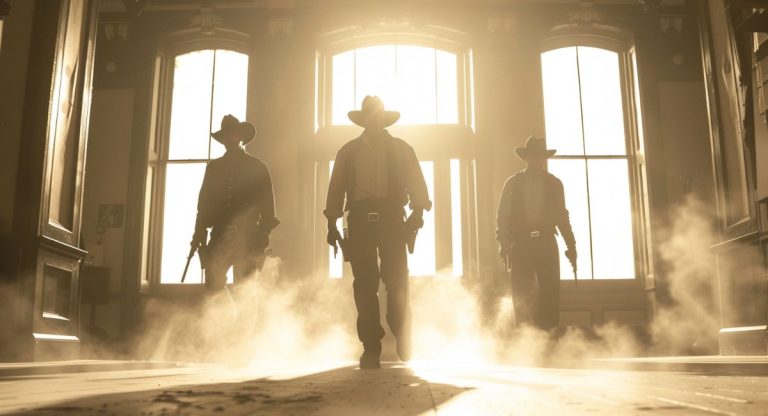
On September 7, 1876, Jesse James and his notorious gang attempted what they thought would be their greatest heist in the quiet town of Northfield, Minnesota. Instead, they met their greatest disaster.

The James-Younger Gang had robbed banks and trains across the frontier for over a decade. They were confident, experienced, and ready for their biggest score yet.

But when the shooting started, ordinary citizens grabbed guns and fought back with extraordinary courage.

What began as a routine robbery became a street battle that changed Wild West history forever.

The James-Younger Gang: America’s Most Notorious Outlaws

Source: Legends of America

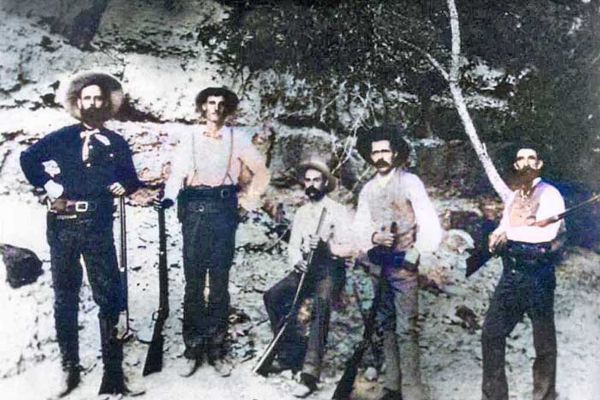
The James-Younger gang emerged from Missouri’s brutal Civil War guerrilla warfare, led by brothers Jesse and Frank James alongside the Younger brothers – Cole, Jim, John, and Bob.

From 1866 to 1881, they terrorized the Midwest with a string of bank and train robberies, becoming folk heroes to some and ruthless criminals to others.

Their guerilla-style military training, honed and perfected while serving with Quantrill’s Raiders during the Civil War, made them exceptionally skilled at hit-and-run tactics.

The gang’s reign of terror finally unraveled during their disastrous 1876 Northfield raid, which scattered the survivors and marked the beginning of their end.

Jesse James: The Face of the Wild West Outlaw

Source: KBPS

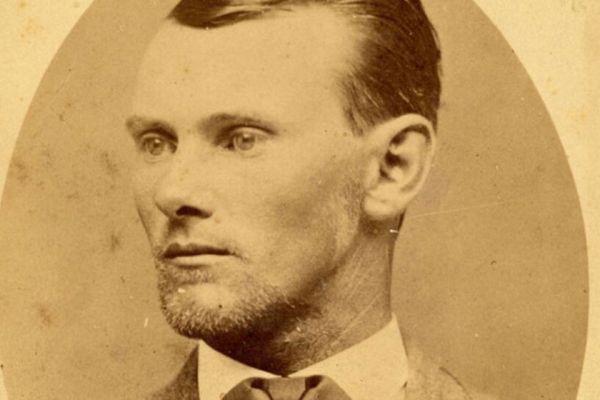
Born in Missouri in 1847, Jesse James learned violence during the brutal Civil War.

As a teenager, he joined Confederate guerrilla units fighting behind Union lines, witnessing terrible atrocities and participating in deadly raids.

When the war ended, Jesse couldn’t adjust to civilian life. He gathered fellow Confederate veterans and began robbing banks across the Midwest.

His daring daylight robberies made headlines nationwide, turning him into both folk hero and public enemy. By 1876, his name was known in every American household.

The Gang Structure

Frank James, Jesse’s older brother, served as the steady leader who balanced Jesse’s impulsive nature.

The gang included other dangerous men like Clell Miller, known for his quick draw, and Bill Chadwell, who brought crucial local knowledge of Minnesota.

Operating like a military unit reflecting their Civil War backgrounds, they planned carefully, moved quickly, and supported each other under pressure.

This teamwork had made them successful for years, but also made them fatally overconfident.

Planning the Raid

Northfield First National Bank, 1870s. Source: Merchants Bank

Why Northfield Bank?

Northfield’s First National Bank attracted the gang because of its reputation as the biggest bank west of the Mississippi, holding enormous amounts of cash from the prosperous farming community.

The town’s remote location meant slow law enforcement response, and multiple escape routes led through rural areas.

Bill Chadwell convinced the others this would be their easiest job yet, describing Northfield as a sleepy farm town where no one would expect famous outlaws.

But their intelligence proved fatally incomplete—they knew about the money but didn’t understand the character of the people.

The September 7th Plan

Three men would enter the bank: Jesse James, Frank James, and one other. The remaining gang members would control the street outside, preventing interference and ensuring escape routes.

They expected to find a full vault and minimal resistance from surprised townspeople.

Their fatal error was assuming Northfield citizens would react like victims in previous robberies.

Most people in other towns had hidden or fled when outlaws appeared.

But Northfield attracted educated, civic-minded settlers who felt strong connections to their community—many were Civil War veterans unafraid of gunfire.

September 7, 1876: The Northfield Raid Unfolds

Source: Reimagined by HistorAI

The Bank Assault

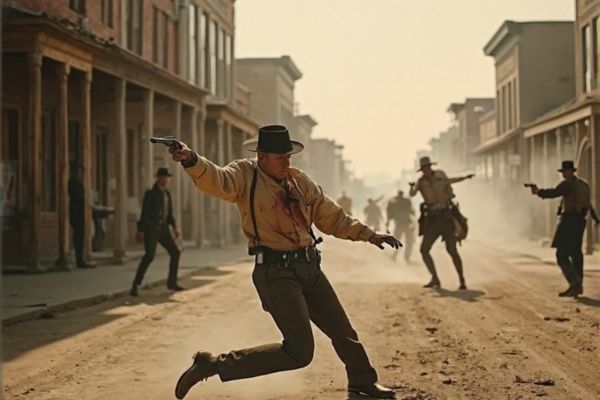
At 2:00 PM, Jesse James and two companions walked into the First National Bank while associates took positions outside.

But something was different from the start—instead of cowering, bank employees looked for opportunities to resist.

Joseph Lee Heywood, the acting cashier, refused to open the vault despite direct threats to his life.

When demanded to cooperate, he calmly lied that it was locked on a time delay.

Even with a gun to his head, he refused to budge, buying precious time for the town to organize resistance.

The Town Fights Back

Word spread quickly through Northfield. Instead of hiding, townspeople grabbed weapons and converged on the bank.

Hardware store owner J.S. Allen armed neighbors with rifles and shotguns. Medical student Henry Wheeler climbed to a second-story window to shoot down at gang members.

Citizens took cover and returned fire.

The coordinated response caught the gang completely off guard. They faced an entire community fighting with the determination of people defending their homes.

The carefully planned raid became chaotic retreat under heavy fire.

Disaster and Aftermath

The street fighting proved deadly for the gang. Clell Miller and Bill Chadwell—the man who had recommended Northfield—both died in the battle.

Other members suffered serious wounds that slowed their escape.

Joseph Lee Heywood was shot and killed by frustrated outlaws as their plan collapsed, but his sacrifice had saved the town’s money and inspired the resistance.

The Failed Escape

Surviving gang members fled in complete disarray, abandoning their escape plans.

Minnesota authorities organized massive manhunts with hundreds of volunteers. Telegraph messages spread word across the state, making the famous outlaws easy to identify and impossible to hide.

The Younger brothers were captured after a gunfight with pursuing lawmen, ending their criminal careers in Minnesota prisons.

Other gang members died from wounds or were shot resisting capture. Jesse and Frank James managed to escape to Missouri, but their lives as successful bank robbers were over.

Related: 13 Female Gunslingers Who Made the West Truly Wild

Legacy and Cultural Impact

The Great Northfield Raid marked the end of the Wild West outlaw era. Citizens had proven that organized resistance could defeat even the most notorious criminals.

The story inspired the 1972 Hollywood film starring Cliff Robertson and continues to be retold in books, documentaries, and annual reenactments in Northfield.

The Northfield Historical Society preserves the memory through exhibits, educational programs, and September reenactments that draw thousands of visitors every year.

The story endures because it represents the triumph of ordinary citizens over notorious criminals, showing how communities can protect themselves through determination and courage.

Frequently Asked Questions

What happened to Frank James the outlaw?

Frank James surrendered to Missouri Governor Thomas T. Crittenden in 1882, five months after his brother Jesse’s assassination. He was tried for various crimes but never convicted. After his acquittal, Frank lived quietly as a farmer, worked various jobs including theater security, and died peacefully in 1915 at age 72.

What happened to the Younger brothers after the Northfield Raid?

After the Northfield Raid, Cole, Jim, and Bob Younger were captured, wounded, and sentenced to life in prison at Stillwater State Prison in Minnesota. Bob died in prison in 1889. Jim and Cole were paroled in 1901, with Jim later committing suicide in 1902 and Cole living until 1916.

What happened to the Younger brothers after the Northfield Raid?

After the Northfield Raid, Cole, Jim, and Bob Younger were captured, wounded, and sentenced to life in prison at Stillwater State Prison in Minnesota. Bob died in prison in 1889. Jim and Cole were paroled in 1901, with Jim later committing suicide in 1902 and Cole living until 1916.

Was the Great Northfield Minnesota Raid true?

Yes, the Great Northfield Minnesota Raid was a real historical event that occurred on September 7, 1876. The Jesse James-Younger gang attempted to rob the First National Bank of Northfield but were thwarted by armed townspeople. The failed robbery became legendary in American outlaw history.

How many were killed in the Northfield raid?

The Northfield raid of September 7, 1876, resulted in the deaths of two townspeople – Nicholas Gustafson and Joseph Lee Heywood, a bank cashier who refused to open the vault. Two members of the Jesse James-Younger gang were also killed during the failed bank robbery attempt in Minnesota.

Wrapping it Up

The Great Northfield Raid became Jesse James’ most famous failure because it revealed the limits of outlaw power and the strength of community resistance.

A small Minnesota town transformed itself into legend by refusing to be intimidated by America’s most notorious criminals.

Joseph Lee Heywood’s heroic sacrifice and the citizens’ courageous street fighting proved that organized resistance could defeat any threat.

After Northfield, outlaw gangs could no longer count on terrorizing peaceful communities.

The bank robbery that went wrong marked the end of an era and continues to inspire anyone who faces overwhelming odds and refuses to surrender.

Article Sources

Hamilton vs Burr: The Fatal Duel That Changed American History

0

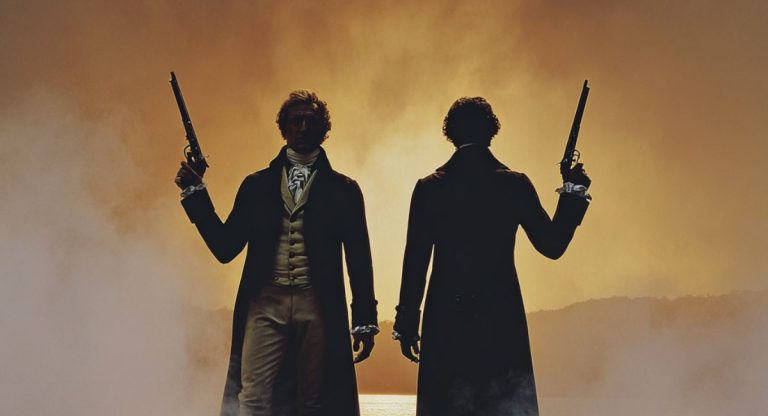
Dawn broke over the Hudson River on July 11, 1804. Two men faced each other with loaded pistols in their hands. The morning mist hung heavy over Weehawken, New Jersey, as America’s most famous political rivals prepared for a deadly showdown.

Alexander Hamilton and Aaron Burr had once been friends. They fought together in the Revolutionary War. They practiced law in the same New York courtrooms.

But years of bitter political fights had turned them into enemies. Now they stood ten paces apart, ready to settle their feud with bullets.

This wasn’t just any duel. These men had helped build the United States from nothing. One would die before the sun reached its peak. The other would become the most hated man in America.

Their fatal encounter would change the nation forever.

How did two founding fathers end up trying to kill each other? The answer lies in a story of ambition, betrayal, and the deadly price of political revenge.

Alexander Hamilton: The Scrappy Fighter Who Built America’s Money System

Source: Institute for New Economic Thinking

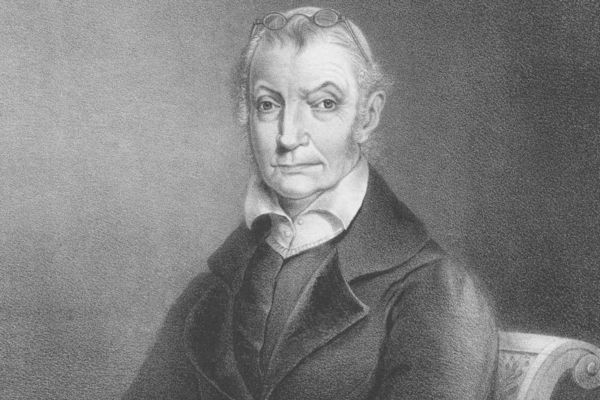
Alexander Hamilton’s life started with nothing. Born on a Caribbean island, he lost his father early and watched his mother die when he was just thirteen.

Most orphans in his situation died poor and forgotten. But Hamilton had something special burning inside him.

The Revolutionary War gave him his big break. This short, quick-talking young man caught George Washington‘s attention.

Soon Hamilton was writing the general’s most important letters and making battle plans.

While other soldiers dreamed only of going home, Hamilton dreamed of building a new nation.

After the war, Hamilton became America’s first Treasury Secretary. He created the country’s entire financial system from scratch.

Banks, taxes, government bonds – Hamilton invented it all. He worked eighteen-hour days and fought anyone who got in his way.

But Hamilton made enemies as fast as he made money for America. His sharp tongue cut down rivals without mercy.

He never backed down from a fight, even when he should have.

This fearless attitude would eventually lead him to the duel at Weehawken.

Aaron Burr: The Smooth Politician Who Wanted It All

Source: ThoughtCo

Aaron Burr came from the opposite world. His grandfather founded Princeton University. His father served as the school’s president.

Burr grew up with money, education, and connections that opened every door.

During the Revolutionary War, Burr served bravely in the Continental Army. Unlike Hamilton, who served as George Washington’s aide de camp, Burr led men into bloody battles. He earned respect as a soldier who shared his troops’ risks and hardships.

After the war, Burr built a successful law practice in New York. He charmed juries and won cases that seemed impossible.

His smooth talking and good looks made him popular with voters. In 1801, he reached the pinnacle of American politics as Vice President under Thomas Jefferson.

But Burr had a reputation problem. People whispered that he switched sides whenever it helped him win.

Unlike Hamilton, who never hid his beliefs, Burr played politics like a chess game. He kept his real thoughts secret and made promises he didn’t always keep.

This difference in style would eventually destroy both men.

When Rivals Shared the Same World

In the 1790s, New York City buzzed with ambition. The young nation’s leaders lived and worked within a few blocks of each other. Hamilton and Burr often appeared in the same courtrooms, arguing opposite sides of important cases.

During the Revolutionary War, both men had served with honor in the Continental Army. They shared drinks and stories like any other veterans. Their wives knew each other. Their children played together at social gatherings.

But beneath the polite society manners, tension grew. Hamilton built the Federalist Party around his vision of a strong national government.

Burr worked with Thomas Jefferson’s Republicans, who wanted to limit federal power.

As the political stakes rose higher, their friendship began to crack.

By 1800, they barely spoke to each other except when business required it. The stage was set for a confrontation that would shock the nation.

The Election That Changed Everything

Source: Bill of Rights Institute

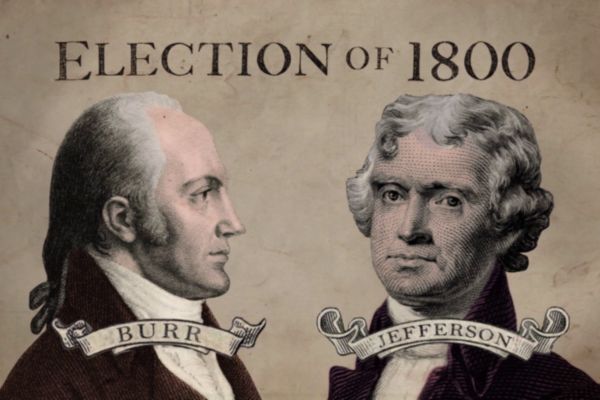
The presidential election of 1800 nearly broke the young United States. The Constitution had a major flaw – it didn’t separate votes for president and vice president.

This created a disaster when Thomas Jefferson and Aaron Burr tied for first place.

The tie meant the House of Representatives had to choose the winner. For six days and thirty-six ballots, Congress argued while the nation held its breath.

Some states threatened to leave the Union if their candidate lost.

Then Alexander Hamilton made a choice that stunned everyone. Despite hating Thomas Jefferson’s politics, Hamilton threw his support behind Jefferson instead of Burr.

“Jefferson has some principles,” Hamilton told his Federalist friends. “Burr has none.”

Hamilton’s influence tipped the election. Jefferson became president, and Burr settled for vice president.

But Burr never forgave Hamilton for blocking his path to the nation’s highest office. The betrayal planted seeds of revenge that would grow for four long years.

Burr’s Last Shot at Power Goes Wrong

Source: AI-generated, HistorAI by Kizaz

By 1804, Aaron Burr’s political career was dying. Thomas Jefferson had frozen him out of the administration. The Republican Party wanted nothing to do with him.

Burr faced a terrible choice: retire from politics or find another way to stay relevant.

He chose to run for governor of New York. If he won, Burr could rebuild his power base and maybe try for president again in 1808.

The plan might have worked, except for one problem: Alexander Hamilton lived in New York too.

Hamilton couldn’t stand the thought of Burr controlling his home state. He worked behind the scenes to destroy Burr’s campaign.

At dinner parties and political meetings, Hamilton spread rumors about Burr’s character. He called Burr dangerous and untrustworthy.

The strategy worked perfectly. Morgan Lewis, Hamilton’s preferred candidate, crushed Burr in the election. Burr’s political dreams died in a landslide defeat.

But his anger toward Hamilton was just beginning to burn.

The Insult That Sparked a Duel

Source: AI-generated, HistorAI by Kizaz

After losing the governor’s race, Aaron Burr learned exactly what Alexander Hamilton had been saying about him.

A letter from Dr. Charles D. Cooper appeared in a New York newspaper. The letter described a dinner party where Hamilton had called Burr’s character “despicable.”

But Cooper hinted that Hamilton had said even worse things. The letter mentioned “a still more despicable opinion which General Hamilton has expressed” about Burr.

Those words hit Burr like a physical blow. His anger finally boiled over, and he wrote to Hamilton demanding an explanation.

What exactly had Hamilton said?

Burr wanted a public apology or at least a denial of the worst accusations.

Hamilton’s response was typical – he refused to back down or apologize. He said he couldn’t remember every casual comment from a dinner party.

But he wouldn’t deny saying harsh things about Burr’s character.

This cold response left Burr with only one option under the honor code of gentlemen: challenge Hamilton to a duel.

On June 27, 1804, Burr’s friend William Van Ness delivered the formal challenge. Hamilton accepted without hesitation.

Ten Paces at Dawn: Why Gentlemen Settled Scores with Dueling

In 1804, wealthy men lived by a strict honor code. A gentleman’s reputation meant everything.

One public insult could destroy a career and ruin a family’s social standing. Running away from a challenge amounted to social and reputational suicide.

Dueling offered a way to settle disputes that the law couldn’t touch. If someone questioned your courage or honesty, you could demand “satisfaction” with weapons.

Even if you lost the fight, at least you proved your bravery.

But New York had banned dueling after Hamilton’s son Philip died in a duel three years earlier. The law made it murder to kill someone in a planned fight.

Smart duelists found a simple loophole: cross the Hudson River to New Jersey.

New Jersey’s laws were different. A duel wasn’t automatically murder if both men agreed to fight.

Weehawken became the go-to spot for deadly business between New York gentlemen. The isolated cliffs offered privacy and a quick escape route back across the river.

Hamilton and Burr had both used this dueling ground before. Now they would meet there for the last time.

The Morning That Changed History

Source: Streets of Salem

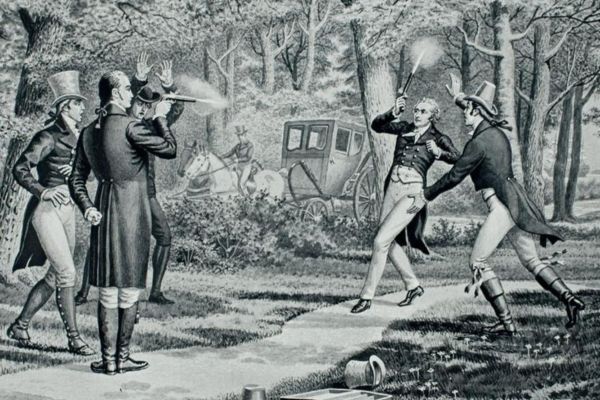
July 11, 1804, started gray and misty along the Hudson River. At dawn, two boats crossed from Manhattan to the New Jersey shore. Alexander Hamilton rode in one with his second, Nathaniel Pendleton. Aaron Burr traveled in the other with William Van Ness.

The men barely spoke as they climbed the path to the dueling ground. A small clearing among the trees had hosted dozens of similar fights. Pistol shots from this spot had settled political arguments and personal grudges for years.

The seconds tried one last time to avoid bloodshed. But both Hamilton and Burr refused to apologize or back down. The duel would proceed according to the formal rules both sides had agreed upon.

Nathaniel Pendleton and William Van Ness loaded the pistols and checked them carefully. The weapons were identical flintlock pistols with hair triggers. One small mistake could fire the gun by accident.

At precisely seven in the morning, the two men took their positions. They stood sideways to make smaller targets, just as they had learned years ago.

The seconds counted off ten paces.

“Present!” came the command.

Both men raised their pistols and took aim. Two shots rang out almost together. The morning mist swirled as gunpowder smoke drifted through the trees.

Alexander Hamilton stumbled and fell. The bullet had struck him in the right side, just above his hip.

Aaron Burr stepped forward as if to speak, then stopped. His second quickly led him away to avoid any witnesses.

Hamilton lay bleeding on the ground. The bullet had shattered his spine and lodged near his heart.

Nathaniel Pendleton and the boat crew carried him back across the Hudson River to Manhattan.

Thirty-one hours later, on July 12, 1804, Alexander Hamilton died at his friend’s house.

The most famous duel in American history was over.

Frequently Asked Questions

What did Hamilton and Burr disagree about?

The Hamilton-Burr conflict stemmed from years of political rivalry and personal grudges. It escalated in the 1800 election, when Hamilton backed Jefferson over Burr. In 1804, Hamilton sabotaged Burr’s New York governor bid with public insults, revealed in Dr. Charles D. Cooper’s letter—sparking the infamous duel that ended their feud.

What is the biggest difference between Hamilton and Burr?

The biggest difference between Hamilton and Burr lies in their vision for America. Hamilton was an idealist, driven by bold principles and a desire to shape the nation’s future with strong federal power. Burr, on the other hand, was pragmatic and opportunistic, more concerned with personal advancement than lasting ideals.

What happened to Burr after he killed Hamilton?

After Hamilton’s death, Aaron Burr became reviled, charged with murder in two states, and his political career collapsed. He drifted through failed schemes to regain power and was later arrested for treason over a suspected Western empire plot. Though acquitted, Burr died in 1836, infamous for the duel that defined his legacy.

How did Hamilton’s family survive the tragedy?

After Hamilton’s death, Aaron Burr became reviled, charged with murder in two states, and his political career collapsed. He drifted through failed schemes to regain power and was later arrested for treason over a suspected Western empire plot. Though acquitted, Burr died in 1836, infamous for the duel that defined his legacy.

Wrapping it Up

The Hamilton vs Burr duel destroyed both men in different ways. Hamilton died at the peak of his influence, mourned as a fallen hero who had built America’s financial foundation. Burr lived for thirty more years, but his reputation never recovered from killing a founding father.

The nation reacted with horror to Hamilton’s death. Dueling had always been controversial, but this tragedy turned public opinion against the practice forever. No respectable politician would risk their career in a duel after 1804.

Aaron Burr fled to the frontier, where he hatched wild schemes to create his own empire in the West.

Thomas Jefferson eventually had him arrested for treason. Though Burr beat the charges, he spent his final years as a broken man, remembered only for his fatal shot at Weehawken.

The duel also marked the end of an era in American politics. The founding generation was passing away, taking their bitter personal feuds with them.

Future political battles would be fought with words and votes, not pistols at dawn.

Today, the Hamilton-Burr duel reminds us how personal hatred can destroy great men.

Both Hamilton and Burr had brilliant minds and genuine love for their country. But their need for revenge ultimately wasted their talents and changed American history forever.

17 Fun Facts About Orthodontics & Braces

0

Anyone who had crooked teeth as a child remembers the nightmare-inducing orthodontic braces.

I personally kind of liked them because they made me look like Jaws, the metal-mouthed villain from the James Bond movies…but let’s be honest here, orthodontic treatment was HELL.

Now, of course, we can all look back on those dark days and consider our dues paid. Our smiles have never looked better, am I right??

In this article, we’ll take a look at some surprisingly fun facts about orthodontics!

Fun Facts About Orthodontics

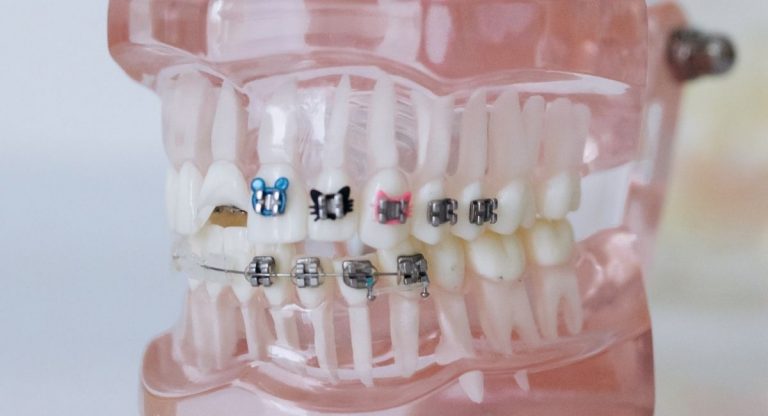
1) Braces have been around since 1669 when orthodontist Pierre Fauchard invented the “Bandeau” (the great-great-great-great-great-great grandfather of modern braces) which was a flat piece of iron shaped like a horseshoe that was designed to expand the palate.

2) The average cost of braces is $5,000.

3) The first documented use of braces was around the year 860 AD by the Ancient Egyptians.

4) The orthodontic wires used for braces were actually originally created by NASA. Yup, Space-Age wire. Good ol’ Titanium Alloy.

5) All orthodontists are also certified dentists, but interestingly enough, only 5% of dentists are also orthodontists.

6) 4 million Americans are currently wearing braces. (Source: Trapnell Orthodontics)

7) To be an orthodontist, it is required that you complete four years of dental school, in addition to 3700 hours of specialized orthodontist training. (Source: Belmar Orthodontics)

8) Orthodontic braces used to be made of gold due to their malleable (and wealthy) nature. Sadly, metal braces would replace gold as the norm because the gold proved to be too flexible, causing patients to have to frequently return to the orthodontist for adjustments. (Source: Orthodontic Arts)

9) 25% of all orthodontic patients are adults (Source: American Association of Orthodontics)

10) The average time for wearing braces is one to three years, though it could be longer or shorter depending on the severity of the issue. (Source: Healthline)

11) Dogs can wear braces- but not for aesthetic reasons. Dog braces help to improve a bite pattern that’s off-kilter. (Source: PetMD)

12) Cats can wear braces for the same reasons dogs do- a malformed bite. Cat braces are also beneficial for fixing unusual tooth protrusion. (Source: Pet Health Network)

13) Many famous celebrities wore braces as adults. Famous orthodontic patients include Cristiano Ronaldo, Gwen Stefani, Tom Cruise, Daisy Fuentes, Diana Ross, and even Phyllis Diller! (Source: The Things)

14) Former “First Daughter” Chelsea Clinton had braces in the ’90s.

15) Many Ancient Egyptian mummies that have been excavated were found with metal bands around their teeth, held there by catgut for applying the appropriate pressure to move teeth. (Source: Bowmanville Dental)

16) Though tooth straightening has been around for quite a while, Dr. Edward H. Angle is considered the Father of Orthodontics. In 1899, he founded The Angle School of Orthodontia in St. Louis, and in 1900, he became the first dentist to limit his practice to strictly orthodontic corrections.

17) In total, there are seven different types of braces available today: ceramic braces, mini braces, metal braces, lingual braces, Invisalign, porcelain braces, and self-aligning braces.

Wrapping it Up

The next time you catch your reflection and admire those perfectly aligned pearly whites, remember that you’ve experienced a treatment that connects you to everyone from ancient pharaohs to modern celebrities like Tom Cruise and Gwen Stefani.

And hey, if it’s good enough for space-age technology and presidential daughters, it was definitely good enough for us mere mortals enduring those awkward teenage years.

The Bear That Almost Started World War III

How a hungry black bear in Minnesota came within minutes of triggering nuclear Armageddon during the Cuban Missile Crisis

TL;DR: On October 25, 1962, during the most dangerous moment of the Cold War, a wandering bear at a Minnesota air base was mistaken for a Soviet saboteur, triggering a chain reaction that nearly launched nuclear-armed fighter jets and potentially started World War III.

The Most Dangerous Night of the Cold War

It’s just after midnight on October 25, 1962. The world is holding its breath during the Cuban Missile Crisis. President Kennedy and Soviet leader Khrushchev are locked in a nuclear standoff that has the planet teetering on the edge of destruction.

The U.S. military is on DEFCON 3 for the first time in history—halfway to nuclear war.

Bombers circle the globe 24/7, missiles are armed and ready, and every soldier, pilot, and guard is on edge, knowing that World War III could begin at any moment.

The Setup: Nuclear Hair Triggers

Source: Flickr

As part of the crisis protocol, the Air Force had scattered 161 F-106A Delta Dart interceptor jets armed with nuclear weapons across small airfields throughout the country.

The strategy? Make it harder for the Soviets to destroy America’s nuclear arsenal in a surprise first strike.

Two squadrons from Selfridge Air Force Base in Michigan had been relocated to Volk Field in Wisconsin—a tiny training base so small it didn’t even have a control tower.

These weren’t your average fighter jets. Each F-106 carried:

  • Four conventional AIM-4 Falcon missiles
  • One AIR-2A “Genie” nuclear rocket with a 1.5-kiloton warhead

The Genie was the world’s first nuclear air-to-air weapon—an 812-pound unguided rocket designed to detonate in the middle of Soviet bomber formations, wiping out entire squadrons with a single blast.

It had a lethal radius of roughly 300 meters and could reach speeds of Mach 3.3.

Enter the Unlikely Villain

At the Duluth Air Force Base in Minnesota, about 300 miles from Volk Field, security was taken extremely seriously.

The base housed approximately 130 nuclear weapons, and military planners expected that any Soviet nuclear first strike would be preceded by sabotage operations—”spetsnaz” special forces infiltrating to disable American defenses.

So when a security guard spotted a shadowy figure climbing the perimeter fence around midnight, his training kicked in. Soviet saboteur!

He fired his weapon and immediately activated the base’s sabotage alarm.

But the “Soviet saboteur” was actually a curious (and probably American) black bear, likely searching for food before winter set in.

The hefty intruder quickly scampered back into the woods on four legs, completely unaware that it had just triggered a potential nuclear apocalypse.

The Fatal Wiring Error

Here’s where things went catastrophically wrong. The sabotage alarm at Duluth was connected to alarm systems at nearby bases, including Volk Field.

But in the rush to install new alarm systems during the crisis, someone had crossed the wires.

Instead of triggering the “intruder alert” at Volk Field, the bear’s midnight snack run activated the “scramble” alarm—the klaxon that ordered pilots to immediately take off with nuclear weapons, believing that World War III had just begun.

Nuclear Jets Ready for Takeoff

The pilots at Volk Field had been sleeping in the base dispensary when the klaxon shattered the night.

They’d been explicitly told there would be no practice drills—if that alarm sounded, it was the real thing.

Lieutenant Dan Barry, just 27 years old, raced to his F-106A along with his squadron.

Each pilot genuinely believed nuclear war had started and Soviet bombers were approaching over the North Pole. Barry later recalled:

“That was serious business. We’d never flown with a nuke on board… It was really serious. I can remember almost expecting to see inbound nuclear missiles.” (Source: Racket MN)

The jets began taxiing toward the runway. In the weapons bay of each aircraft sat a live nuclear warhead capable of devastating destruction. The pilots were seconds away from takeoff.

The Last-Second Save

Fortunately, an officer at Volk Field decided to call Duluth directly to confirm the scramble order.

When he learned it was a false alarm, disaster was literally racing down the runway toward them.

Since Volk Field had no control tower, the only way to stop the nuclear-armed jets was for someone to drive a vehicle onto the runway with headlights flashing.

Barry, who was second in line for takeoff, saw the truck speeding toward them and received the stand-down order just in time.

Nuclear war had been averted by mere minutes.

The Decades-Long Secret

Stanford University professor Scott Sagan. Source: Flickr

This incredible near-miss remained classified for over 25 years. The pilots initially thought equipment had malfunctioned due to snow.

Later, they heard rumors about a drunk soldier trying to sneak back onto base.

It wasn’t until 1993 that Stanford University professor Scott Sagan revealed the truth in his book “The Limits of Safety: Organizations, Accidents, and Nuclear Weapons.”

Sagan discovered the incident through Freedom of Information Act requests and declassified Air Force documents.

When he contacted Barry decades later, the former pilot finally learned that a bear had nearly triggered the end of the world.

Why This Matters Today

This bizarre incident wasn’t isolated. Sagan documented numerous nuclear close calls during the Cold War:

  • Moon rising over Norway mistaken for incoming missiles
  • Computer training tapes accidentally fed into live warning systems
  • Mechanical failures nearly causing accidental launches
  • Communication breakdowns bringing superpowers to the brink

The bear incident highlights a terrifying reality: during the nuclear age, human error and technical failures can be more dangerous than enemy action.

As Sagan noted, “There’s an inherent fragility to the system—it’s like walking across thin ice.”

Wrapping it Up

The bear, for its part, wandered back into the Minnesota woods completely oblivious to its brief role as potential destroyer of worlds. It probably just wanted a midnight snack.

A single hungry bear, looking for food before winter, came within minutes of potentially ending human civilization.

If those F-106s had taken off with nuclear weapons during the height of the Cuban Missile Crisis, Soviet forces might have interpreted it as the beginning of an American first strike.

The incident serves as a chilling reminder that even in our most carefully planned systems, the unexpected will occur.

Sometimes the greatest threats to humanity come not from our enemies, but from the complex, fragile technologies we create to protect ourselves.

References

Defense Media Network. (2021, July 14). 6 November activation [PDF]. U.S. Department of Defense. https://media.defense.gov/2021/Jul/14/2002762368/-1/-1/0/6_NOVEMBER_ACTIVATION.PDF

Broad, W. J., & Sanger, D. E. (2018, January 13). False alarm missile alerts show the lingering dangers of the nuclear age. The New York Times. https://www.nytimes.com/2018/01/13/us/false-alarm-missile-alerts.html

Sagan, S. D. (1993). The limits of safety: Organizations, accidents, and nuclear weapons. Princeton University Press. https://repositories.lib.utexas.edu/bitstreams/cfd8b2cb-8df3-4475-94d8-5da76d993c05/download

Stilwell, B. (2021, April 30). How one black bear almost set off World War III during the Cold War. Military.com. https://www.military.com/off-duty/how-one-black-bear-almost-set-off-world-war-iii-during-cold-war.html

White Eagle Aerospace. (n.d.). First & only air-to-air nuke. White Eagle Aerospace. https://www.whiteeagleaerospace.com/firstonly-air-air-nuke/

Sagan, S. D. (1993). The limits of safety: Organizations, accidents, and nuclear weapons. Princeton University Press.

Seven Dead in Seconds: The Real Story of the St. Valentine’s Day Massacre

0

In the winter of 1929, Chicago was a city on edge. The streets bustled with Model T’s and bundled-up pedestrians, but under the hum of everyday life, a different engine was running—one fueled by bootleg hooch, bribes, and bullets.

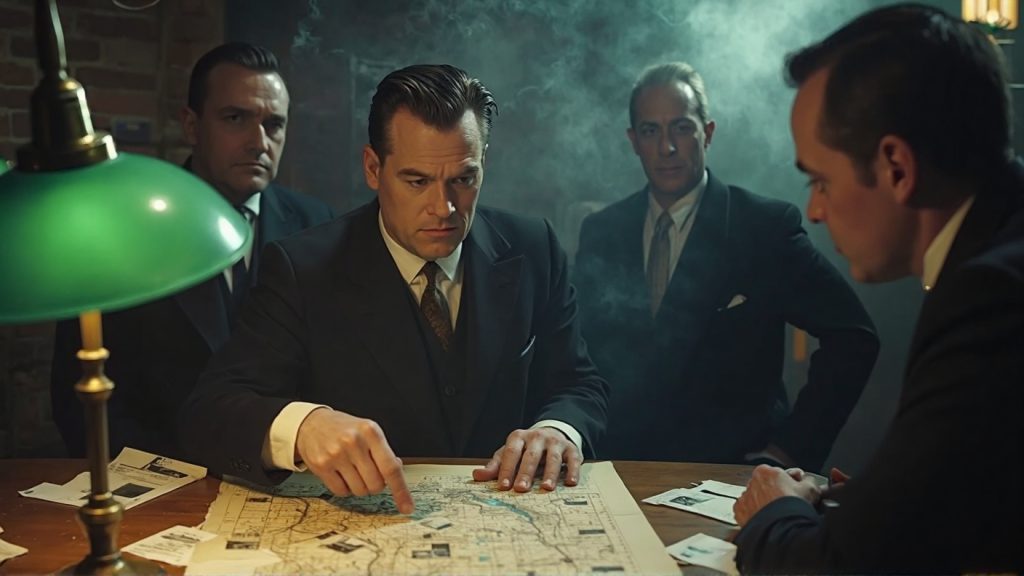
The wind off Lake Michigan could chill a man to the bone – but it was nothing compared to the cold war brewing between two of the city’s most dangerous men: Al “Scarface” Capone and George “Bugs” Moran.

The Making of a Gang War

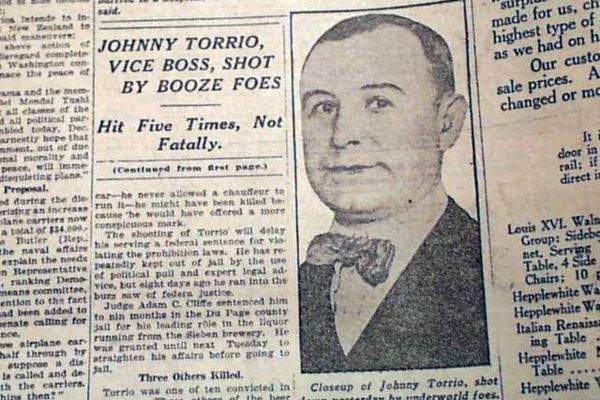
The roots of their feud stretched back to 1924, when North Side mob boss Dean O’Banion was gunned down in his own flower shop by killers tied to Johnny Torrio, Capone’s mentor.

O’Banion’s death lit the fuse for a gang war that would last years.

Torrio barely survived a revenge shooting the following year and, badly shaken, handed the reins of the Chicago Outfit to Capone.

Capone was no small-time hustler. Born in Brooklyn, he’d built a reputation as a ruthless and ambitious operator.

By the mid-1920s, his Outfit dominated the city’s South Side, pulling in tens of millions from bootlegging, gambling, and vice.

The North Side, however, refused to bow.

First under Hymie Weiss, then under George “Bugs” Moran—a sharp dresser with a volatile temper—the Irish-American crew kept striking back.

The fight wasn’t just about territory; it was about pride. Moran hijacked Capone’s liquor shipments, muscled in on his speakeasies, and even took over a dog track Capone considered his own.

The two traded assassination attempts like poker chips. One drive-by sprayed Capone’s headquarters in Cicero with over a thousand bullets. Another left Moran dodging hitmen on his own turf.

By 1928, the war was personal. Moran’s gang was suspected in the murders of two of Capone’s allies—Patsy Lolordo and Antonio Lombardo, both important Mafia figures.

The rumor mill claimed Moran had even put a $50,000 bounty on Capone’s head. For Capone, that was the last straw.

Setting the Trap

February 14, 1929, dawned bitterly cold. Sometime that morning, Moran’s men were told about a special opportunity—a truckload of high-quality Canadian whiskey available at a bargain.

The delivery point: the SMC Cartage Company garage on North Clark Street, one of their regular hangouts.

Moran planned to be there at 10:30 a.m., but he was running late. That delay would save his life.

As Moran approached the garage, he saw what looked like a police car pull up.

Four men got out—two in crisp police uniforms, two in civilian clothes.

Believing the cops were about to raid the place, Moran hung back, slipping away before anyone spotted him.

Inside, his men didn’t know it was a trap. The two “officers” strode in, ordering everyone to line up against the wall.

The rest of the crew complied, thinking they’d be frisked and maybe fined. Then came the signal. The men in civilian clothes raised Thompson submachine guns.

What followed was chaos compressed into seconds—about 70 rounds tearing through the garage, echoing like thunder in the closed space.

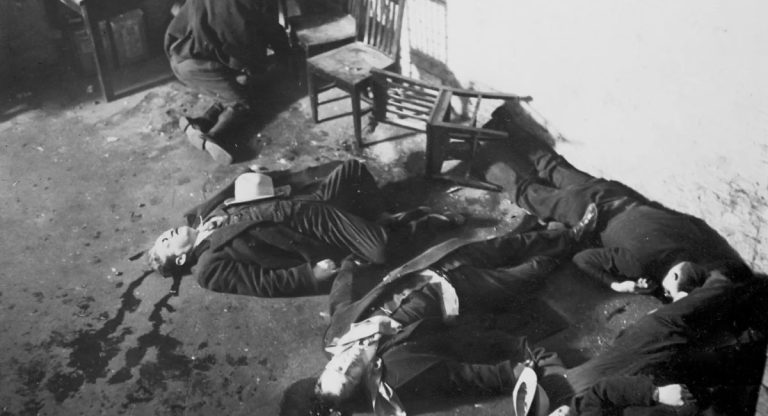
As the smoke cleared, shotgun blasts finished the work. Seven men lay sprawled in the sawdust and grease: five of Moran’s gang and two unlucky associates.

A Chilling Scene

Frank Gusenberg, who lived

The killers didn’t run; they acted. To nearby witnesses, it looked like the police were arresting two plainclothes men.

The four walked calmly to a waiting car—a stolen police vehicle—and vanished into the city.

Minutes later, real police arrived to find a scene of horror. The victims were slumped against the bullet-pocked wall, their faces and bodies riddled with holes.

Miraculously, one man—Frank Gusenberg—was still breathing despite fourteen bullet wounds.

Officers pressed him for names, but Gusenberg stuck to the gangster code of silence: “Nobody shot me,” he rasped, “For God’s sake, get me to the hospital!” Gusenberg died three hours later.

Among the dead were Moran’s brother-in-law, Albert Kachellek (alias James Clark), and top enforcers Frank and Peter Gusenberg. The hit had gutted the North Side Gang’s leadership in one morning.

Shockwaves Across the Nation

News of the massacre spread fast. Chicago had seen plenty of bloodshed during Prohibition, but this was different. The date—Valentine’s Day—gave it a macabre twist that journalists couldn’t resist.

Photos of the crime scene splashed across front pages nationwide, and the public began to wonder if the city had completely lost control.

Bugs Moran didn’t mince words with reporters: “Only Capone kills like that.” Capone, lounging in Florida with an alibi, shot back, “The only man who kills like that is Bugs Moran.”

The back-and-forth was pure thee-ater, but few doubted who had ordered the hit.

Even President Herbert Hoover was alarmed. Within weeks, he told his attorney general to “get Capone” by any legal means necessary.

Federal agents began peeling back the layers of Capone’s empire.

The Downfall

Ironically, the massacre that cemented Capone’s power in the underworld also accelerated his fall. Moran’s gang was shattered, leaving Capone unrivaled in Chicago’s bootlegging trade.

But the outrage brought relentless federal pressure. Unable to tie him directly to the murders, investigators went after him for other crimes.

By 1931, Capone was in court—not for murder, but for tax evasion. The verdict: guilty, with an eleven-year prison sentence. “Public Enemy No. 1” was finally behind bars.

Moran’s story ended differently but no less grimly. Without his key lieutenants, he slipped into minor crimes, arrested in 1946 for a bank robbery.

He died of lung cancer in Leavenworth Prison in 1957—a far cry from his days as Capone’s greatest rival.

The Last Shots

Seven years to the day after the massacre, one of its suspected triggermen met his own violent end. “Machine Gun” Jack McGurn, long believed to have orchestrated the attack, was gunned down in a Chicago bowling alley.

The hit mirrored the massacre—quick, brutal, and silent. Some whispered that it was Moran’s long-delayed revenge.

The Birth of Modern Forensic Science

The crime scene was unlike anything police had encountered before. Seven bodies, dozens of bullet trajectories, and a sophisticated criminal operation that left few clues.

For the first time, investigators began systematically analyzing ballistics evidence. They studied the bullet patterns, examined shell casings, and attempted to trace the weapons used in the attack.

This case helped establish the science of forensic ballistics in American law enforcement.

Investigators realized that every gun leaves unique markings on bullets and cartridge cases – like fingerprints, but for firearms.

The massacre also highlighted the need for better crime scene photography and evidence preservation. The brutal efficiency of the killers showed authorities they needed to match that precision with scientific investigation methods.

While the perpetrators were never officially identified, the forensic techniques developed in response to this case would solve countless future crimes.

The St. Valentine’s Day Massacre became an inadvertent catalyst for modern criminal investigation.

Where Did the Saying “Hair of the Dog” Come From?

Many people with hangovers have reached for that famous “hair of the dog” cure. They hope it will make them feel better after drinking too much. But few people know where this strange phrase came from.

Like many sayings about our furry friends, it’s quite a story. The phrase suggests that a small amount of what caused your problem might also fix it.

In this case, we’re talking fixing the damage you’ve likely inflicted on yourself- which was drinking alcohol.

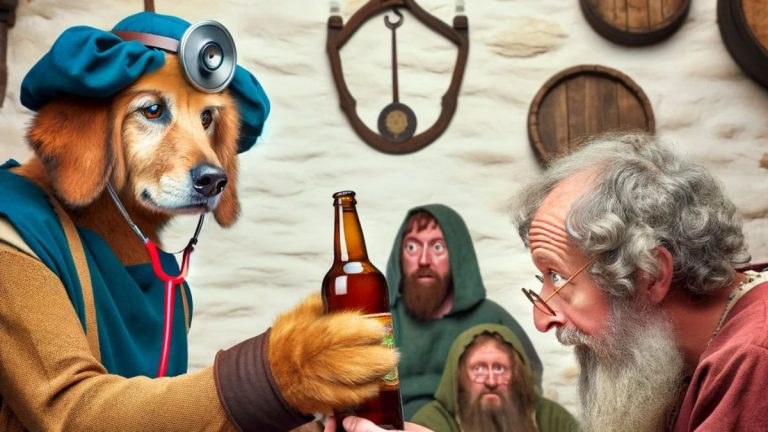
This weird phrase goes back to ancient times. Back then, people believed something crazy. They thought putting hair from a rabid dog on a bite wound could prevent rabies.

Sounds believable, right?

Now in modern times, “Hair of the Dog” has become a funny way to suggest something. People say that a small drink of alcohol might cure your hangover.

So how did we get from ancient wound treatment to fixing hangovers with a Bloody Mary?

Let’s find out!

Where “Hair of the Dog” Really Came From

The phrase hair of the dog is a shortened version of “the hair of the dog that bit you.” This peculiar idea – that a rabid dog’s hair placed in the wound it caused could prevent rabies – stems from an ancient notion of like cures like.

In other words, the homeopathic medicine we know today.

It surfaced in various ancient texts, hinting at the sheer longevity of the concept.

However, this notion didn’t stay lodged in medical practices; it wagged its way into the English language, undergoing a metaphorical transformation.

When one cries out for a morning tipple to stave off last night’s overindulgences, they are unwittingly hearkening back to this curious historical treatment.

The First Time It Was Written Down

The first time someone wrote down “hair of the dog” for hangovers was in 1546. A man named John Heywood wrote a book of common sayings. He wrote:

“I pray thee let me and my fellow have
A hair of the dog that bit us last night.
And bitten were we both to the brain aright,
We saw each other drunk in the good ale glass.”

This collection of sayings made “hair of the dog” famous. It wasn’t just a saying anymore—it was part of drinking culture. Later, the phrase showed up in a French writer’s work called “Gargantua and Pantagruel.” This helped make it popular across Europe.

A man named Ebenezer Cobham Brewer wrote about the phrase in his famous dictionary in 1898. He explained both meanings: the old Scottish folk remedy and how people used it for drinking.

Hair of the Dog Around the World

From Scotland to Korea, many cultures have their own version of the hangover cure. This idea has spread everywhere, with funny and interesting variations.

Proverbial Pints: European Traditions

In the misty highlands of Scotland, one might fancy a spicy “wedge” of whiskey to ward off the woes of last night’s revelry.

Meanwhile, in Germany, they don’t horse around; the Germans traditionally reach for a hearty Katerfrühstück, a “hangover breakfast,” often featuring a bold beer.

Even the Hungarian beverages Unicum (snicker, snicker) and Pálinka are a testament to central Europe’s lasting affair with morning-after elixirs.

Across the North Sea, Norwegian and Danish Vikings might not have said no to a nip of mead, and in the Czech Republic, Becherovka kicks the rooster away.

Should you wake in Japan with a spinning head, a jolt of Ukon no Chikara, a turmeric drink, could set you straight.

Hop across to China, and you might be offered suanmeitang, a hearty beverage made from rock sugar and smoked plums.

Crossing into Costa Rica, the solution might be a fiery Chili guaro, an eye-opener made with local liquor and hot sauce.

In Korea, morning salvation comes in the form of Haejangguk, a “soup to chase a hangover,” chock-full of veggies, and often, a heartwarming wedge of pig.

Wrapping it Up

In English-speaking parts of the world, this phrase has lasted longer than many other old sayings. It proves that sometimes humor is the best medicine—even if the science doesn’t work.

Whether it’s a special cocktail or a local drink, it’s clear that people everywhere have tried to cure hangovers since alcohol was invented. The phrase’s journey from ancient medical practice to modern drinking culture shows how language changes.

It carries forward both old wisdom and fun ideas from our ancestors, for sure.

10 “Game of Thrones” Filming Locations You Can Actually Visit

0

The hit HBO show based on George R.R. Martin’s Song of Ice and Fire novels has been a smash hit success, delighting and dismaying viewers with its telling of power struggles and political machination, not to mention its willingness to suddenly kill off central characters.

While the rich character development and extremely well-known cast has made GOT popular with the fans, the show’s set designers and location managers have also been praised for bringing Martin’s world to life. 

These are some of the real-life filming locations that were used in the making of Game of Thrones!

1. Malta (Kings Landing)

The red stone buildings of this Mediterranean island state set the scene for the crowded capital of Westeros and base of the Iron Throne.  Malta enjoys a warm, almost sub-tropical climate, which producers noted provides a stark contrast (no pun intended…honest) to the harsher northern climes of Winterfell. 

This contrast was something the showrunners wanted to highlight, despite the books’ King’s Landing being more temperate, akin to medieval Paris or London according to Martin.

2) Dubrovnik, Croatia (King’s Landing)

While Malta was the sole location for the filming of scenes in Kings Landing during Season One of Game of Thrones, the second season called for some different perspectives, not least as the city looked to the sea for the approach of Stannis Baratheon’s forces at the Battle of the Blackwater.

The castle-town offered many natural backdrops for the characters’ discussions, not least in Season Three where Sansa is offered the opportunity to escape the city by Lord Petyr “Littlefinger” Baelish.

3. Doune Castle, Scotland (Winterfell)

Coincidentally also used in the classic Monty Python and the Holy Grail, Doune Castle was the principal location for Game of Thrones’ excellent pilot episode, specifically as interior and backdrop of Winterfell. 

Interior locations were notably used in the Great Hall feast scenes following the arrival of King Robert and the royal party, while the castle can be clearly seen during the scene where Ned executes a Night Watch deserter.

4) Castle Ward, Northern Ireland (Winterfell)

One of many locations in the show’s principal filming location, Northern Ireland, Castle Ward acted as Winterfell’s courtyard in the first and second seasons. 

These scenes contrast with exterior shots of the castle in the pilot, which were shot in Scotland as mentioned earlier, but a combination of suitability, convenience, and budgetary considerations meant that Castle Ward was a better choice for the ‘interior’ of the Stark stronghold than Doune Castle.

5) Iceland (The Land Beyond The Wall)

While the little we saw of the far north of Westeros in Season One was filmed in Croatia, the second and third seasons took the story of Jon Snow and the Night’s Watch deep into wildling territory, requiring larger, bleaker landscapes as backdrops for filming.

The show’s location managers picked out a brilliantly diverse range of locations in Iceland for these segments, including Þórsárdalur valley, Þingvellir, and Svínafellsjökull glacier, hiring nearly 300 locals as extras in both Night’s Watch and wildling scenes.

6) Cushenden Caves, Northern Ireland

Situated on the Causeway Coast, the Cushenden Caves acted as the secret passage beneath Storm’s End in which the Red Priestess, Melisandre, gave birth to the shadow assassin which killed Renly Baratheon during his siege of the castle.

Witnessed by the Hand of Stannis Baratheon, Lord Davos Seaworth, this dark, and the atmospheric scene was our first glimpse into the power of Melisandre’s magic and the Lord of Light, R’hllor.

7) Ouarzazate, Morocco (Pentos, King’s Landing)

First used during the filming of the pilot, where an old set from the movie Kingdom of Heaven provided the basis for the Pentos scenes, this is where we are introduced to Dany, Viserys, Magister Illyrio, and Khal Drogo.

In Season Three, the crew returned here to film some limited parts of King’s Landing, as well as some of Dany’s scenes in which she acquires her Unsullied army.

8) Essaouira, Morocco (Slaver’s Bay)

The second of Season Three’s Morocco location, this city on the country’s west coast was used for many of the exterior scenes in which Dany travels through Slaver’s Bay between Astapor and Yunkai. 

Perhaps most memorably, it was featured in the closing scene of the season’s finale, Mhysa.

9) Ballintoy Harbour, Northern Ireland

In Season Two, we first get a glimpse of Pyke, the home of the Greyjoys and seat of the king of the Iron Islands.  For the scenes in which Theon arrives at and later departs from Pyke, Ballintoy Harbour on the northern coast of County Antrim is used. 

Whether the location will be used in later seasons as the storyline turns to the Iron Islands once more is not yet known.

10) Lokrum, Croatia (Qarth)

Just off the coast from Dubrovnik, Lokrum and its Fort Royal Castle featured prominently in Season Two, as Dany seeks assistance from the Thirteen, the city-state’s rulers.

Scenes from the council chambers and the sinister and magical House of the Undying were filmed here, as well as at the nearby St Dominic monastery and Dubrovnik’s Rector’s Palace.

Where Did the Saying “Holy Mackerel” Come From?

Updated: 6/23/2025

Where did the saying “Holy Mackerel” come from? It turns out, “holy mackerel” is an old-timey exclamation that’s been swimming around in the English language since at least the 1800s.

It’s a mild oath, kind of like saying “holy cow,” but with a nautical twist. The “holy” part likely stems from religious references to avoid blasphemy, and “mackerel” just because it’s a common fish, and let’s face it, it sounds pretty amusing.

But hold your seahorses, folks! There’s more to this story than just a fish getting a halo. Why mackerel? Why not “holy salmon” or “holy tuna”?

And how did this fishy phrase manage to stay afloat in our everyday lingo?

Stay tuned as we cast our net wider and delve into the fascinating waters of language, culture, and yes, even a bit of fishy folklore.

Origins of “Holy Mackerel”

Exploring the journey of the phrase ‘Holy Mackerel’ is akin to diving into a linguistic ocean teeming with religious references and cultural transformations.

Religious Roots

In the briny depths of the phrase’s history, one finds that ‘Holy Mackerel’ may have originated as a whimsical nod to religious practices. Historically, Catholics were known to consume fish on Fridays and during Lent, which distanced them from meat.

Mackerel, being an affordable choice, was closely associated with this tradition. Some speculate that the term ‘holy’ was a half-jocular reverence to the fish’s elevated status in Catholic dietary customs.

In fact, its usage could be seen as a tongue-in-cheek euphemism to avoid blasphemy while expressing surprise or disbelief.

Linguistic Evolution

As for its etymological journey, ‘Holy Mackerel’ flounders into the English lexicon with a mix of influences. The Dutch word “makelaar,” meaning “broker” or “peddler,” swims into the conversation, revealing how the phrase may have evolved from a term of commerce to one of expressive astonishment.

Over time, ‘Holy Mackerel’ became an idiomatic expression in English, though it’s questionable whether the French or Dutch had a primary role in its inception.

The phrase managed to leap out of religious context, evolving into a cultural catchphrase that playfully substitutes for “Holy Mary” or “Holy Moses”, avoiding any direct religious invocation in a way that’s as clever as it is comical.

You Might Also Like…

Where Did Knocking on Wood Come From?

Where Did the Saying “Hair of the Dog” Come From?

Where Did the Saying “Peanut Gallery” Come From? Unshelling Its Nutty History

Cultural Significance and Usage

The saying “Holy Mackerel” swims through the seas of English vernacular with a splash of surprise and a whiff of irreverence. This particularly fishy phrase has managed to embed itself in the scales of cultural lexicons and entertainment alike.

In Literature and Media

The term “Holy Mackerel” often nets itself a role in literary works and media, buoying comedic effect or expressing astonishment without resorting to profanity.

Cartoon characters might exclaim it after their latest caper goes belly-up or when an unexpected twist surprises them. This fish has indeed found a way to school its way into the popular phraseology of various scripts and dialogues.

As Slang and Euphemism

In slang’s murky waters, “Holy Mackerel” is a colorful euphemism, darting away from potentially blasphemous or unsavory expressions.

Historically, the term has been bait for etymologists and slang enthusiasts, with some suggesting its connection to the once pejorative term “mackerel” referring to “pimps” or business “brokers.”

It’s a linguistic lighthouse that illuminates a creative way to avoid taking sacred names in vain while still packing a punchy exclamation.

Modern-Day Reception

The saying “holy mackerel” has leaped from historical pages to today’s vernacular with all the gusto of a surprise plot twist in a bestselling novel. It’s ubiquitous in expressing wonderment or sometimes disbelief, without missing a beat of comedic timing.

Expressions of Astonishment

“Wow” is arguably a mild cousin to the more flavorful “holy mackerel” when they come across shocking news or a jump in their heartbeat.

Its staying power as an exclamation of surprise rivals that of the most persistent of pop songs.

Whether folks are witnessing a beautiful day that merits abandoning all indoor activities, or they’re faced with a new car in the driveway ribbon and all, “holy mackerel” elevates their awe from the mundane to the memorable.

In Popular Phrases

While not everyone has a chance to exclaim “holy mackerel” in the wild, its popularity endures with a nod and a wink in pop culture. Scriptwriters sprinkle it into dialogues, ensuring that the scene’s punchline lands with the grace of a gymnast sticking the landing.

Its versatility shines, as they can say it with a smile after receiving unexpectedly pleasant surprise news or even use it to lighten the mood when the office coffee machine decides to stage a mid-morning rebellion.

Miscellaneous Mackerel Facts

Mackerels have made a splash well beyond the dinner plate, gliding into our daily lingo with ease. Here’s a dive into their lesser-known contributions to culture and conversation.

From the Sea to the Slang

When not darting through the ocean, mackerel makes quite the impression on dry land. It’s not just their reputation for rapid quality deterioration post-catch that has fishmongers rushing; this trait also contributes to their common nickname, “mackerel,” in selling quickly before their value plummets.

Who knew seafood economics could influence idioms?

The Bottom Line

So the next time you exclaim “Holy mackerel!” remember that you’re participating in a tradition that’s over 200 years old. Whether it started as a way for people to avoid saying “Holy Mary,” a random joke that caught on, or a not-so-innocent reference to the fish’s slang meaning, it’s a perfect example of how language evolves in unexpected ways.

Language doesn’t always follow logical rules – sometimes a phrase sticks around just because it sounds good and makes people laugh.

And honestly? That’s pretty amazing.

Where Did Knocking on Wood Come From?

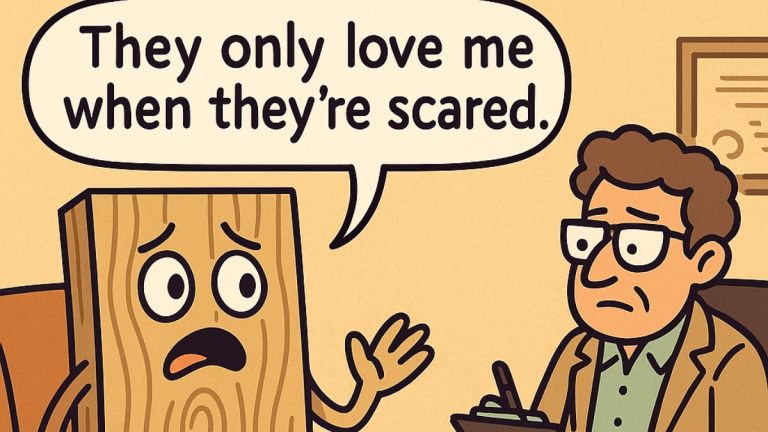
They say a little superstition never hurt anyone, especially when it comes to avoiding jinxing a stroke of good luck. The phrase “knock on wood” is like the trusty umbrella of superstitions—no one really wants to get caught in a downpour of bad fortune.

This quirky tradition has people rapping their knuckles on the nearest wooden object, believing it will ward off misfortune or ensure a positive outcome continues.

But here’s the plot twist that would make any folklore detective do a double-take: despite all the ancient stories you might have heard about tree spirits and Celtic druids, the actual documented history of “knock on wood” is surprisingly recent—and possibly much more mundane than you’d expect.

Knock on Wood Origins

The Oxford English Dictionary’s first record of the phrase “knock on wood”—meaning to knock on something made of wood as a superstitious action to ward off misfortune or bad luck—isn’t until 1907 (a slightly earlier version “touch wood” appeared in 1898).

That’s right—despite all the dramatic tales of ancient pagans communing with tree spirits, we have zero written evidence of this practice before the late 1800s.

Michael Adams, professor of English and linguistics at Indiana University Bloomington, is skeptical of the conventional wisdom behind ancient origins.

As he points out, just because something feels ancient doesn’t mean it actually is.

Sometimes a superstition that seems to have emerged from the mists of time actually started when your great-great-grandmother was already alive and complaining about “kids these days.”

Competing Knock on Wood Origin Stories

Theory #1: Ancient Tree Whisperers

The most popular origin story goes something like this: Ancient pagan cultures such as the Celts believed that spirits and gods resided in trees.

Knocking on tree trunks may have served to rouse the spirits and call on their protection, but it could have also been a way of showing gratitude for a stroke of good luck.

Many scholars believe the expression “knock on wood” is rooted in pagan rituals to ward off evil spirits.

“Early Celtic and Germanic peoples believed trees housed spirits or gods and had stories about them,” says etymology expert Jess Zafarris. “Touching wood could call on the spirits for protection or be an ‘expression of thanks’ that would bring good luck.”

It’s a compelling narrative that taps into our love of mystical ancient wisdom. The problem? Folklorists have only found reference to [knocking on wood] starting in the early 20th century.

There’s simply no documented evidence connecting modern wood-knocking to ancient tree worship.

Theory #2: Christian Cross Connection

Another theory suggests that touching wooden objects—particularly the wood of the cross from Christ’s crucifixion—was seen as a gesture of faith and divine protection.

According to Zafarris, “There’s been speculation that it has a connection to Christianity, though that’s probably a retcon,” or an instance of recontextualizing.

Like the pagan theory, this one sounds plausible but lacks historical documentation linking medieval Christian practices to our modern habit of frantically searching for the nearest table leg.

Theory #3: The Playground Plot Twist

Here’s where things get interesting. British folklorist Steve Roud traces the practice to a 19th century children’s game called “Tiggy Touchwood,” a type of tag in which players were immune from being caught whenever they touched a piece of wood such as a door or a tree.

In his book The Lore of the Playground, Roud makes a bold claim: “Given that the game was concerned with ‘protection,’ and was well known to adults as well as children, it is almost certainly the origin of our modern superstitious practice of saying, ‘Touch wood.’ The claim that the latter goes back to when we believed in tree spirits is complete nonsense.”

This theory has the advantage of actually being documentable. Children’s games from the 19th century are much better recorded than hypothetical ancient rituals, and the concept of touching wood for “safety” in tag games directly parallels our modern superstitious use.

The Academic Consensus (Or Lack Thereof)

In A Dictionary of English Folklore, scholars Jacqueline Simpson and Steve Roud note that the earliest known reference to the practice only dates to 1805. That’s it—1805. Not 500 BCE, not medieval times, but the same century that gave us the steam locomotive and Napoleon’s final defeat.

Of course, much folklore is learned informally, by word of mouth or customary behavior. So it’s possible – even likely – that the phrase and the ritual predate its first appearance in print.

But the complete absence of earlier documentation is telling, especially when compared to other superstitions that do have ancient written records.

How Other Countries Knock on Wood

Despite its possibly recent origins, “knock on wood” has spread worldwide and spawned fascinating variations:

  • In Egypt, “emsek el-khashab” (“hold the wood”) is said when mentioning either good luck one has had in the past or hopes one has for the future.
  • In Italy, “tocca ferro” (“touch iron”) is used, especially after seeing an undertaker or something related to death.
  • Turkish people often pull on one earlobe and knock on wood twice to ward off a jinx.
  • In Denmark the saying is “7, 9, 13” (usually accompanied by knocking under a table), as these numbers have traditionally been associated with magic.

Why We Still Knock on Wood Today

So why does a possibly 200-year-old children’s game rule our anxiety responses today?

Wood holds deep symbolic meaning across various cultures. As a natural element, it represents life, growth, strength and connection to the earth. 

“Trees are entirely tied up with notions of life and death and rebirth and fate and the divine,” says Zafarris.

Whether or not our ancestors actually knocked on trees to summon spirits, the symbolism resonates with something fundamental in human psychology.

We want to feel like we have some control over fate, and a simple rap on a wooden surface gives us that psychological comfort.

Wrapping it Up

I’d wager few, if any, people today think – after saying something that might bring bad luck – “I’d better ask the tree spirits for help!”

Instead, we’re probably unconsciously recreating the safety mechanism from a Victorian-era children’s game, elevated to the status of protective ritual through repetition and cultural transmission.

The irony is all there: our most “ancient” superstition might actually be younger than the telephone.

But perhaps that’s fitting for a practice that’s fundamentally about managing uncertainty.

In a world where we’ve replaced tree spirits with smartphones and ancient wisdom with Wikipedia, we still find ourselves reaching for the nearest wooden surface when life feels a little too good to be true.

After all, whether you’re invoking Celtic druids or just following the rules of Tiggy Touchwood, the message is the same: sometimes the most logical thing to do is something completely illogical—like rapping your knuckles on the nearest piece of timber and hoping for the best.


Sources

  1. Adams, Michael. Professor of English and linguistics at Indiana University Bloomington. Interview with Reader’s Digest, May 16, 2025.
  2. Andrews, Evan. “Why Do People Knock on Wood for Luck?” History.com, August 29, 2016.
  3. “Knocking on wood.” Wikipedia, May 20, 2025.
  4. Roud, Steve. The Lore of the Playground: The Children’s World – Then and Now. Random House, 2010.
  5. Simpson, Jacqueline, and Steve Roud. A Dictionary of English Folklore. Oxford University Press, 2000.
  6. “What Are the Origins of ‘Knock on Wood’?” Reader’s Digest, July 20, 2021.
  7. “Why We Knock on Wood, and the Origins of 7 Other Superstitions.” Interesting Facts, August 7, 2024.
  8. Zafarris, Jess. Etymology expert, founder of Useless Etymology. Interview with Reader’s Digest, 2021.