Home Blog Page 2

50 Funny & Cool George Washington Facts

Think you know George Washington? The powdered-wig-wearing, cherry-tree-chopping, wooden-tooth-having founding father from your 5th-grade textbook? We bet you don’t, because the real story? Way weirder. 

From ice cream hoarder to mule enthusiast, ol’ George was less “stoic statue” and more “party-starting, horse-dodging whiskey mogul with a flair for dance and dramatic death prep.” 

Strap yourselves in for this one, because history’s about to get hilariously human.

​George Washington Fun Facts

Shift that fat ass, Harry-but slowly, or you’ll swamp the damn boat.”

-Washington to his slightly obese crewmate General Henry Knox during the famed 1776 Delaware River crossing.

Guess that British regiment on the other side of the river weren’t the only ones dealing with surprise attacks that night…

  1. George Washington was America’s first mule breeder! Recognizing the value of mules for farmers, Washington established mule breeding at Mount Vernon, which powered agriculture in the South.
  2. Washington owned at least 36 foxhounds and gave them incredibly mushy names like “Sweet Lips,” “Venus,” “Tipsy,” and “True Love.”
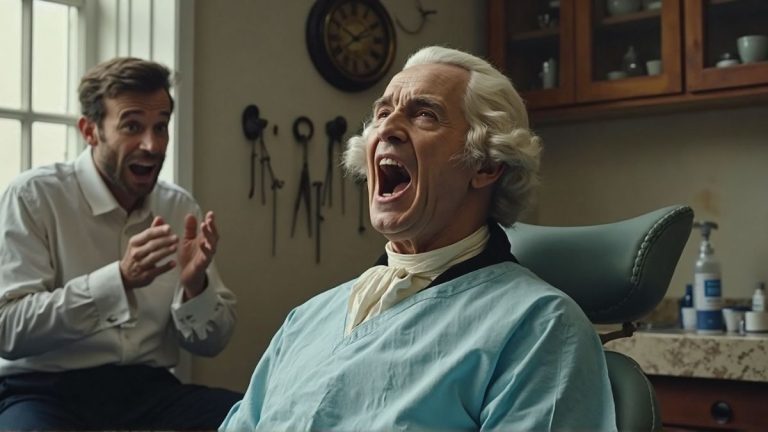
  3. Contrary to popular belief, Washington’s teeth were not made of wood but a horrifying combination of human teeth (possibly from slaves), cow and horse teeth, and ivory — all held together by springs that required him to clench his mouth to keep it shut.
  4. Washington was actually one of the new nation’s most successful liquor distributors, producing rye whiskey and fruit brandies at his state-of-the-art Mount Vernon distillery.
  5. At the time of his death, Washington insisted mourners wait at least three days before burying him — just in case he was only unconscious.
  6. Despite being 6’2″ and very muscular with broad shoulders, Washington weighed only 175 pounds — making him quite lean for his impressive stature.
  7. Washington was such a fan of ice cream that he purchased special “ice cream-making equipment” for the capital and owned as many as 36 ice pots for serving the dessert.
  8. Washington survived nearly drowning in an ice-clogged river, the burning of Fort Necessity, and having two horses shot out from under him in a single battle — yet was ultimately killed by a sore throat and less-than-reliable medical treatment techniques.
  9. If dinner guests were even five minutes late to Washington’s table, they would find everyone already eating. Washington would explain that his cook was “governed by the clock and not by the company.”
  10. Washington’s first love wasn’t Martha but Sally Fairfax, the wife of one of his best friends. Before his wedding to Martha, he wrote Sally a passionate letter declaring his feelings.
  11. Washington’s favorite breakfast was “hoecakes” — essentially corn pancakes that he liked smothered in butter and honey.
  12. Despite his stern appearance in portraits, Washington loved to dance and was known to dance “late into the night at various balls, cotillions, and parties.”
  13. Washington was the fifth of nine surviving children from his father’s two marriages — with three brothers, two sisters, three half-brothers, and one half-sister.
  14. The famous cherry tree story (“I cannot tell a lie”) was completely invented by one of Washington’s early biographers, Mason Locke Weems, who published it in 1806, seven years after Washington’s death.
  15. Washington was an enthusiastic billiards player and gambler who also enjoyed card games and betting on horse races.
  16. Washington’s wife Martha had a cake recipe that called for 40 eggs, four pounds of butter, four pounds of sugar, and five pounds of flour!
  17. Washington had a phobia of being buried alive — he left instructions in his will that his body should not be buried for three days after his death, just to be sure he was really dead.
  18. During the French and Indian War, Washington survived what should have been certain death when four bullets passed through his coat, and two horses were shot out from under him.
  19. Washington was America’s first spymaster, designing an elaborate espionage system against the British during the Revolutionary War that was so advanced that the CIA considers him the father of American intelligence.
  20. The first time Washington ran for public office, he lost! It was only on his second attempt that he won a seat in the Virginia House of Burgesses.
  21. Washington reportedly had a condition that caused him to faint or lose consciousness, possibly due to a combination of stress, dehydration, and high temperatures.
  22. Washington is the only president to have a state named after him.
  23. At dinner parties, Washington typically drank a pint of beer and two or three glasses of wine, becoming noticeably more lively after alcohol consumption.
  24. Martha Washington was eight months older than George — an unusual age dynamic for marriages of that time.
  25. In 1777, Washington ordered the first mass immunization in American military history, requiring all Continental soldiers to be vaccinated against smallpox.
  26. Washington employed more people at Mount Vernon than he did in the entire executive branch of the early U.S. government.
  27. Washington’s trip to Barbados in 1751 was the only time he ever left mainland North America. While there, he contracted smallpox but survived, giving him immunity that would prove crucial during later epidemics.
  28. Washington was unanimously elected president twice, receiving all electoral votes (69) in the first election — something no other president has achieved.
  29. Washington expanded his estate from 2,000 acres to a massive 8,000 acres that included five separate farms growing various crops.
  30. At the time of his death, Washington’s plantation housed 317 enslaved people — though in his will, he instructed that they be freed upon Martha’s death.
  31. Washington is the only president who did not live in the White House — it wasn’t completed until after his presidency.
  32. Washington regularly requested ship captains to bring him pineapples from the West Indies, sometimes as many as two or three dozen at a time.
  33. Washington has appeared on more U.S. postage stamps than all other presidents combined.
  34. During the Battle of the Monongahela, Washington was suffering from such severe dysentery that he could barely ride his horse, yet he managed to help organize the retreat after the British defeat.
  35. Washington’s formal schooling ended when he was just 11 years old after his father died.
  36. Washington feared being buried alive so much that he directed his body not be buried for three days after his death, just in case.
  37. Washington took his performance on the dance floor “deadly serious,” once referring warmly to dance as “the gentler conflict.”
  38. Despite his dignified reputation, Washington was known to have a quick temper and allegedly once threw a punch at a fellow officer during the French and Indian War.
  39. The form of whiskey Washington produced at Mount Vernon was similar to modern moonshine, leading to myths that he was a moonshiner.
  40. Washington was a prolific letter writer, and he was estimated to have written over 20,000 letters during his lifetime.
  41. A British poll in 2012 ranked Washington as Great Britain’s greatest military enemy ever — beating out Napoleon and other feared adversaries.
  42. Washington technically didn’t retire after his presidency — he came out of retirement in 1798 when war with France seemed possible to prepare to lead American forces again.
  43. In 1787, Washington was unanimously chosen to preside over the Constitutional Convention despite speaking very little during the proceedings.
  44. Washington’s distillery produced nearly 11,000 gallons of whiskey annually by 1799, making it the largest whiskey producer in America at the time.
  45. During the American Revolution, Washington lost more battles than he won — yet still managed to win the war through strategic retreats and carefully chosen engagements.
  46. In 1755, Washington was chosen as an aide to British General Edward Braddock specifically because of his extensive knowledge of the American frontier.
  47. In the first presidential election, Washington received votes from all 69 electors — the only president ever to win unanimously.
  48. In his “Circular Letter to the States” in 1783, Washington outlined what he believed necessary for America to succeed — a precursor to his famous Farewell Address 13 years later.
  49. Washington’s doctors bled him extensively during his final illness, removing about 40% of his blood — a treatment that likely hastened his death rather than helping him.
  50. Washington’s theatrical dinner parties featured elaborate dessert courses with ice creams, jellies, pies, puddings, watermelons, and other fruits — all served on fine china.

Related: Hamilton vs Burr: The Fatal Duel That Changed American History

Wrapping it Up

So, the next time someone mentions George Washington, don’t just picture the serious guy on the dollar bill—picture a tall, lean, mule-breeding, ice-cream-loving dance machine who dodged bullets, hoarded pineapples, and basically moonlighted as a whiskey baron.

He helped birth a nation and threw legendary dinner parties. 

Honestly? Founding Father by day, eccentric legend by night. 

History class didn’t do him justice.

Sources

  1. https://www.history.com/articles/george-washington-little-known-facts
  2. https://www.rd.com/list/george-washington-facts/
  3. https://www.bostonteapartyship.com/george-washington-facts
  4. https://constitutioncenter.org/blog/10-cool-washington-facts-on-georges-real-birthday-2
  5. https://www.britannica.com/biography/George-Washington
  6. https://www.ranker.com/list/what-george-washington-liked-to-eat/melissa-sartore
  7. https://www.smithsonianmag.com/arts-culture/dining-with-george-washington-29372121/
  8. https://www.mountvernon.org/10-things-you-really-ought-to-know-about-george-washington
  9. https://www.weareteachers.com/fun-facts-about-george-washington/
  10. https://www.history.com/articles/top-george-washington-myths-cherry-tree-wooden-teeth
  11. https://american-presidents.fandom.com/wiki/George_Washington
  12. https://www.mountvernon.org/the-estate-gardens/food-culture
  13. https://www.mountvernon.org/george-washington/george-washington-key-facts
  14. https://kids.nationalgeographic.com/history/article/george-washington
  15. https://vocal.media/fyi/top-20-surprising-and-bizarre-facts-about-george-washington-you-didn-t-know
  16. https://www.archives.gov/publications/prologue/1994/spring/george-washington-1.html
  17. https://en.wikipedia.org/wiki/George_Washington
  18. https://www.ducksters.com/biography/uspresidents/georgewashington.php
  19. https://www.mountvernon.org/george-washington/athleticism
  20. https://www.colonialwilliamsburg.org/learn/living-history/5-facts-about-george-washington/

7 Most Famous Botched Executions in History

0

Updated: 4/28/2025

Authorities try to make an official execution as quick and painless as possible – the punishment is the ending of someone’s life, not the method of the killing.

The US Constitution forbids ‘cruel and unusual punishment,’ which is why the Death Penalty is generally carried out by lethal injection in most states these days.

Even with experienced executioners, things can and do go wrong. A lethal injection using new drugs went wrong in 2014, people have taken a lot longer than normal to die in the gas chamber, and all sorts have gone wrong with hangings in years past.

Here are 7 of the most famous botched executions in history!

#1: Joseph Wood Execution (2014)

When European countries banned exporting execution drugs to the U.S., Arizona had to improvise.

Bad idea.

Wood, convicted of double murder, became an unwitting test subject for a new drug cocktail.

Instead of the quick death promised by sodium thiopental, Wood spent nearly 40 minutes gasping and writhing on the gurney—like a fish out of water, but with much higher stakes.

When they couldn’t get it from there, Arizona tried a combination of midazolam and hydromorphone, which led to his death.

This DIY chemistry experiment proved that sometimes, alternative medicine isn’t the answer.

#2: Barzan Ibrahim al Tikriti Execution (2007)

Following Saddam Hussein’s execution, his half-brother Barzan Ibrahim (convicted of murdering 148 Shiite Muslims) was next in line for the gallows. The executioner, apparently not a measuring tape enthusiast, miscalculated the rope length needed.

When Ibrahim dropped through the trapdoor, physics took over with gruesome efficiency.

Instead of breaking his neck, the force completely separated his head from his body—turning what should have been a solemn punishment into a medieval spectacle that nobody had signed up to see.

#3: Donald Eugene Harding Execution (1992)

Source: Death Penalty News

After Arizona dusted off its death penalty following an 18-year break, double murderer Donald Harding became their first “customer.”

The gas chamber was supposed to provide a quick death by cyanide-induced asphyxiation.

Instead, witnesses watched in horror as Harding gasped, screamed, and thrashed for nearly 11 minutes, even smashing his head against a steel pole.

Officials later claimed he was already brain-dead during the pole-smashing phase—a strange comfort to those who had to watch the whole ordeal.

#4: Pedro Medina Execution (1997)

Execution witness Don Reid stands in the death chamber of the Texas State Penitentiary on July 31, 1972, where he officially watched 189 men die in the heavy oak electric chair. The Supreme Court struck down capital punishment on June 29 of that year.

The electric chair was invented with the belief that it would cause a humane, painless death. The truth, however, was far from that.

Even with a very powerful current passing through the body from the leg to the head, it often took a great deal of time to stop the heart from beating.

In 1997, murderer Pedro Medina was sent to the Electric Chair in Florida. Witnesses gasped when they witness actual flames fly from the top of Medina’s head and reported the smell of burning flesh as the current passed through his body.

When the flames came out of his head, the executioner stopped the current, but Medina was dead a minute or two later.

Investigators said that the sponge that was put on his head to conduct the current wasn’t wet enough at the time of the execution.

#5: Joachim von Ribbentrop Execution (1946)

Following the end of World War II, 10 high-ranking Nazi officials were sent to the gallows at the request of the Allies, who had tried them at the famous Nuremberg Trials.

The hangman got his calculations wrong with a number of Nazis. The Nazi Foreign Minister Joachim von Ribbentrop ended up spending 15 minutes at the end of the rope, slowly being strangled to death.

The head of the German Luftwaffe, Hermann Goering, who gave orders to bomb millions of innocent people in cities all over Europe during the war, managed to escape his own death by hanging.

How?

Goering concealed a glass vial of cyanide, and the morning he was due to hang, he took it out and bit into it, killing himself before the hangman could do it.

#6: George Painter Execution (1891)

In 1891, George Painter was sentenced to death for murdering his girlfriend. He protested his innocence until the day he was due to die.

Painter was allowed to say his last words before being led onto the scaffold. The executioners tied his legs together and put a hood over his head before the noose was lowered around his neck.

When they pulled the lever to the trapdoor, his body fell straight through and snapped the rope that was meant to kill him.

This must have burst a blood vessel because as they were carrying him up to be hanged again, blood spurted everywhere.

Thankfully, the second hanging was successful.

#7: Lady Margaret Pole Execution (1541)

In 1541, Lady Margaret Pole was sentenced to be beheaded at the command of King Henry VIII in England. She committed no crime, but her son had refused to accept that the King’s marriage to Anne Boleyn was legal.

He had escaped to France, so the King’s men couldn’t get to him and got his Mum instead.

The executioner was inexperienced, and Lady Pole was in no mood to cooperate.

The story goes that she had to have her head forced onto the block and the ax man missed several times, slashing her shoulder and cutting off part of her head before finally taking her head off.

Wrapping it Up

These seven botched executions show us a simple truth – there’s no perfect way to execute someone.

From Wood’s 40-minute struggle to Lady Pole’s brutal beheading, these cases span hundreds of years but share the same problem: what’s meant to be quick and painless becomes anything but.

It’s strange that we try so hard to make killing painless. We want death to be quick but certain, just but merciful. These execution failures remind us that even when we try to make death “clean,” it rarely cooperates.

As we argue about the death penalty today, these grim stories make us wonder: if we can’t guarantee a quick and painless death, should we be in the business of execution at all?

Was Jesus Really a Carpenter? Unpacking the Historical Evidence

0

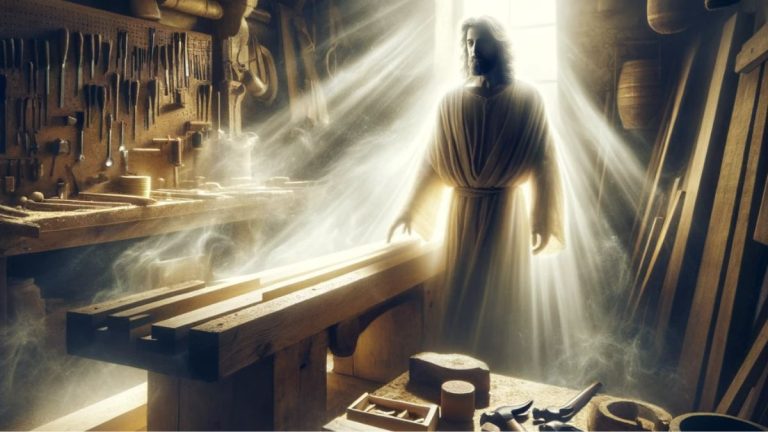
Was Jesus really a carpenter? This question has intrigued scholars and believers alike for centuries. The common belief, rooted in tradition and biblical interpretation, is that yes, Jesus was indeed a carpenter.

This image of Jesus working with wood, crafting, and creating comes primarily from a brief mention in the Gospel of Mark (6:3), where he is referred to as a ‘tekton,’ a Greek word often translated as ‘carpenter.’

But as with many historical figures, there’s more beneath the surface. What does being a ‘tekton’ in ancient Judea really mean?

The role and status of a ‘tekton’ during Jesus’ time were likely quite different from what we might picture today.

So was Jesus a carpenter in the way we understand the term today, or is there a deeper story waiting to be told?

Let’s find out!

The Historical Context of Jesus’ Profession

The whole “Jesus was a carpenter” idea comes from a single mention in the Gospel of Mark (6:3), where he’s called a “tekton.”

While we’ve translated this Greek word as “carpenter,” its meaning has more layers than a plywood sheet.

Nazareth in Jesus’s time wasn’t exactly a bustling metropolis. This small farming village in Galilee stood in the shadow of the more influential city of Sepphoris.

Jesus’s family, led by Joseph, would have had to carve out a living through their trade…whatever that was.

References in the Gospels

The Gospels provide sparse, yet revealing information regarding Jesus’ earthly profession. The book of Mark, notably, refers to Jesus as a “carpenter,” inferring that he engaged in manual labor.

Additionally, references such as Jesus’ childhood home and interactions in the synagogue offer insights into the societal role he may have assumed in Nazareth.

What’s in a Word? The Mystery of “Tekton”

The term ‘tekton‘, as seen in the original Greek texts, signifies a more expansive meaning than the modern translation to “carpenter.”

Here’s where things get interesting. “Tekton” in ancient Greek wasn’t as specific as our modern “carpenter.” It was more like saying someone was a “builder” or “craftsman.” A tekton might work with wood, sure, but also stone or other materials.

Think of it like calling someone a “tech person” today – are they a programmer? IT support? Social media manager? The label covers a lot of ground.

Archaeological evidence from the region suggests Jesus might have been more versatile than just a woodworker. He could have been the ancient equivalent of a general contractor!

Jesus’ Family and Socioeconomic Status

Joseph, traditionally known as a carpenter, likely taught Jesus the family trade. Imagine teenage Jesus as an apprentice, learning to measure twice and cut once under his father’s watchful eye.

This hands-on experience might explain why Jesus later built so many of his teachings around practical metaphors that everyday people could understand.

Jesus’s brothers—James, Joses, Judas, and Simon—probably pitched in too. Picture a family business where everyone had their role, not unlike the small businesses that form the backbone of communities today.

Mary, meanwhile, wasn’t just standing around. In a society where family roles were clearly defined, she would have been essential to keeping the household running while supporting the family trade.

Joseph as a Mentor

Joseph is traditionally recognized as a carpenter, which, in the cultural context of the time, referred to a craftsman skilled in working with wood, stone, or metal.

As Jesus’ earthly father, Joseph likely served as his primary mentor in this trade. Apprenticeship was a common practice, and Jesus probably spent much of his childhood and early adulthood learning these skills from Joseph.

This hands-on experience with craftsmanship could have influenced Jesus’ later parables and teachings.

Siblings in Craftsmanship

The Gospels reference other members of Jesus’ family – James, Joses, Judas, and Simon – suggesting that they, too, might have been involved in the family trade.

While specific details of their involvement are not extensively documented, it is reasonable to speculate that they could have contributed to the family’s economic status by working alongside Joseph and Jesus in carpentry.

Shared responsibility within the trade could have been a part of their collective upbringing and development.

Mary’s Role in Jesus’ Upbringing

Mary, Jesus’ mother, played a significant role in his upbringing. She is depicted as a nurturing figure who would have reinforced the values and responsibilities of family and work.

In a societal context where family roles were clearly defined, Mary’s influence would have extended beyond domestic life to supporting the family’s well-being and trade, ensuring Jesus’ childhood was rooted in the customs of their community.

The Spiritual Significance of Jesus the Builder

Jesus is often portrayed as a literal builder by profession, a skill that echoes through his teachings and the spiritual metaphors he used.

The notion of Jesus as a carpenter extends beyond his earthly trade to encompass the deeper, symbolic roles he embodied as the foundation of the church and the architect of faith.

Metaphors of Building in Scripture

The gospels mention Jesus in the context of carpentry, which holds profound spiritual symbolism.

Jesus is referred to as the “cornerstone” of the church (Ephesians 2:20), a vivid illustration of his indispensable role in the foundation of faith.

This metaphor highlights both Jesus’ integral support of the spiritual edifice and his unifying role, signifying how individual believers, much like stones or bricks, are built up into a holy temple.

Carpentry in Jesus’ Teachings and Parables

Jesus skillfully applied the language of building and carpentry within his teachings to convey spiritual truths.

In the Parable of the Wise and Foolish Builders (Matthew 7:24-27), he contrasts the outcomes of lives built on the rock-solid foundation of his words versus the sandy footing of disobedience.

Such narratives reinforced the principles of wisdom, dedication, and the importance of a strong spiritual foundation for his disciples and believers.

His identity as a builder and the son of a carpenter also resonated with his disciples and the early church, who saw in him the true Messiah who came not to construct physical buildings but to rebuild the relationship between God and humanity, culminating in his resurrection – the ultimate testament of his messianic authority and the cornerstone of Christian faith.

Critiques and Debates: Was Jesus Literally a Carpenter?

The ongoing discussion about Jesus’ profession examines both historical texts and current scholarly opinions to understand the term “carpenter” as it applies to Jesus.

Arguments from Historical and Scriptural Analysis

In scriptural texts, notably Mark 6:3 and Matthew 13:55, Jesus is referred to as a ‘carpenter,’ a translation of the Greek word ‘tektōn.’

Traditionally, this has been understood to mean that Jesus, like Joseph, engaged in some form of skilled manual labor, potentially as a builder, craftsman, or artisan.

However, some researchers argue that “tektōn” could more broadly signify a handyman or general laborer, indicating that Jesus’ work might have included a variety of physical tasks rather than solely woodwork.

Modern Interpretations and Scholarly Views

Current scholarly views contribute to a nuanced understanding of the term “tektōn.” It is now often regarded as an indication of Jesus’ humble origins and connection to the working class.

Modern interpreters suggest that Jesus might have been more of an artisan than a carpenter in the strict sense, potentially working with stone as well as wood, reflecting the common building materials of the time.

Ongoing research endeavors to reconcile these interpretations with historical and cultural contexts to achieve a clearer picture of Jesus’ life as a laborer.

Wrapping it Up

Exploring whether Jesus was really a carpenter leads us through the annals of history and into the heart of how we understand and interpret historical figures.

Whether Jesus was literally shaping wood or not, his identity as a “tekton” places him firmly in the working class of his time. Unlike many religious figures who came from wealth or privilege, Jesus had calluses on his hands and knew what it meant to earn a living through physical labor.

This connection to everyday work gives his teachings an authenticity that continues to resonate. After all, a religious leader who knows what it’s like to hit his thumb with a hammer might be more relatable than one who’s never built anything.

So was Jesus really a carpenter? Maybe not in the Home Depot sense. But he was definitely a builder—of furniture, perhaps, but more importantly, of foundations that would support the faith of billions for centuries to come.

Article References

Where Did the Saying “Peanut Gallery” Come From? Unshelling Its Nutty History

As phrases go, “peanut gallery” has a certain nutty charm that belies its less-than-glamorous roots. Picture this: a raucous crowd hurling peanuts from the cheap seats, a lively albeit a potentially hazardous way to show disapproval in the old days of vaudeville and theater. It wasn’t just about the legumes flying through the air—this term was a playful jab at a section of the audience known to be rowdy and, perhaps, a bit too freewheeling with their opinions.

The expression managed a nifty leap from the balconies and back rows of theaters to the radio and television waves, most memorably with the “Howdy Doody” show’s live audience of spirited kids.

Labeling them the “peanut gallery,” the show captured that same lively spirit that once threw actual peanuts. No longer dodging salty projectiles, modern-day usages have toned down to mean those unsolicited commentators offering up their two cents, or rather, their peanuts.

Historical Roots of the Phrase

The saying “peanut gallery” carries with it a storied past that is intricately tied to America’s social tapestry; spanning from vaudeville humor to racial tensions, its origins are as crunchy as the peanuts themselves.

Vaudeville Era and the Peanut Gallery

During the vaudeville era, a particular section in theaters, known colloquially as the “peanut gallery,” was reserved for the cheapest seats.

Historically, this was the rowdy back row where patrons might throw peanuts when a performance displeased them. Theaters during this period, with their diverse troupe of entertainment acts, served as the birthplace of the phrase.

The Howdy Doody Connection

Fast forward to the 1940s and 50s, and you’d find the term given a fresh coat of family-friendly paint on The Howdy Doody Show. Here, the “peanut gallery” referred to the live studio audience of jubilant kids; it’s arguably a stark contrast from the den of discord back in the day.

Social and Racial Implications

The history of the “peanut gallery” isn’t all laughs and chuckles, however. The term intertwined with a derogatory term, “nigger gallery,” used to imply where black patrons were seated, typically the balcony.

This association reveals the phrase’s problematic origins, highlighting its transition from colloquial to socially unacceptable over time. The term’s progression serves as a mirror reflecting the changing attitudes toward language with racially charged connotations.

From Theatre Seats to Pop Culture

The term “peanut gallery” has pirouetted from its vaudevillian origins to embed itself firmly in the lexicon of pop culture, encompassing everything from jovial jeering to pointed social commentary.

Evolution in the Entertainment Industry

In the late 19th and early 20th centuries, the cheapest seats in a theater were often in the back, where less affluent people, including working class and recent immigrants, gathered. They gained notoriety as the peanut gallery, named for the concession snacks often thrown by a noisy or disorderly group of spectators.

These areas were frequented by those who wouldn’t shy away from playing the role of the heckler, raining down their unsolicited reviews upon the performers. As vaudeville waned and motion pictures rose, the peanut gallery crowd was given a new screen upon which to cast their opinions.

Language, Insults, and Modern Usage

Fast forward a few decades, and the peanut gallery found its way onto the small screen with Buffalo Bob Smith presiding over the Howdy Doody show’s live audience of kids, affectionately named after the cheap seats of yesteryear.

But wait, there’s more! In modern parlance, being told to “keep it down in the peanut gallery” might have one recalling their mental development years when such a phrase was lighthearted.

Today, on platforms like social media, the peanut gallery has evolved into a virtual back row, offering commentary that ranges from humorous to scathing, all while treading the tightrope walk of cultural sensitivities. And just like that, the peanut gallery carries on, veering between mirth and mischief in the cultural zeitgeist.

The Peanut Gallery Today

In today’s vernacular, “peanut gallery” still throws a salty shade, but you won’t find anyone pelting snack foods from the cheap seats. This phrase has evolved from its historical roots to describe any group of outspoken critics or hecklers, particularly those who offer unsolicited opinions from the sidelines.

Where Did the Saying “Dead as a Doornail” Come From?

The expression “dead as a doornail” conjures up such a peculiar image that it begs the question: what makes a doornail any deader than an ordinary nail? This vivid simile has been knocking on the English language’s door since the 14th century, well before Shakespeare decided whether to be or not to be.

This idiom, used to describe something that is unequivocally dead or utterly devoid of life, has colored our language for centuries.

But have you ever wondered how this peculiar expression, involving a doornail of all things, came to signify the absolute certainty of death? The journey of this phrase is as fascinating as it is ancient, weaving through the tapestry of English literature and history.

From the pen of William Langland to the iconic works of Shakespeare, “dead as a doornail” has stood the test of time, but its story is not as straightforward as it seems.

Join us as we delve into the captivating history of this idiom, exploring its literary beginnings and how it has cemented itself in the lexicon of the English language.

Historical Origins of the Phrase

The expression “as dead as a doornail” isn’t just a quirky saying one might toss around at a Halloween party; it has deep historical roots and has been polished by literary greats across the ages.

William Langland, an English poet, is often credited with the first known usage of “dead as a doornail” in his narrative poem, The Vision of William Concerning Piers Plowman.

In the poem, the phrase is used to describe something that is completely and unquestionably dead. The choice of the word “doornail” is interesting because, in those times, doornails were nails that were hammered into doors and then bent over, making them unusable and effectively “dead.”

This made the doornail a fitting symbol for something that has no life or use left in it.

Langland’s use of “dead as a doornail” in his poem was the beginning of its journey into the English language. It started as a creative expression in a medieval poem and became a common way to describe something that is absolutely lifeless.

Shakespeare’s Take

Fast forward a couple of centuries to the Bard himself. Shakespeare had a knack for snappy verbiage, and he certainly didn’t skip past this phrase.

In Henry VI, a character named Jack Cade declares he’s ready to make a Lord as dead as a doornail.

Dickensian Revival

Oh, but the tale doesn’t end in the Globe Theatre! The phrase enjoyed a Victorian-era revival with Charles Dickens. It found its way into A Christmas Carol, where Ebenezer Scrooge’s miserly old business partner Jacob Marley was explained to be as dead as… you guessed it, a doornail.

Doornails & Ironmongery Explained

Before diving into the nitty-gritty of medieval hardware, one must know that the saying “as dead as a doornail” doesn’t involve ghosts of ironmongery past. It’s a phrase that hinges, quite literally, on the historical use of nails.

The term “doornail” refers to hefty, hand-forged nails used in the medieval era. Ironmongery was the craft of the day, turning raw iron into useful items including latches, hinges, and of course, nails.

These nails weren’t your run-of-the-mill hardware store variety; they were the strong, silent types, enduring the slamming and banging of doors.

Doornail CharacteristicsDescription
MaterialIron, forged by hand
PurposeTo secure and strengthen doors
VisibilityProminently displayed, for strength and aesthetics

How Reuse Led to the Death of a Nail

After multiple slams of the door, one realizes that the bent nature of a used doornail rendered it nearly unusable for a new door.

In a time when reuse was the name of the game, a doornail was a single-use ticket; once it finished its doorly duties, it was as good as dead—hence, the phrase “as dead as a doornail” took its place in the lexicon.

One might say doornails didn’t get a second lease on life; they were bent once, and forever held their peace.

Variations of the Phrase “Dead as a Doornail”

One might say that the saying “dead as a doornail” has relatives lounging about in the linguistic mortuary.

PhraseTone
As dead as a doornailClassic, almost festive
As dead as a dodoQuirky, slightly mournful
Dead as muttonQuiet, potentially tasty
Coffin nailGrim, with a metallic tang

Those who find “doornail” a tad too genteel might opt for its avian cousin, “as dead as a dodo,” summoning the ghost of a bygone bird that’s become an emblem of extinction. This phrase is used to describe someone or something that is out of date or no longer relevant.

But why stop there? The phrase has kinfolk of the culinary variety as well, with “dead as mutton” suggesting something has not just ceased to be, but has done so with the quietude of well, cooked sheep.

Wrapping it Up

Today, the saying “dead as a doornail” is still widely used in the English language. It serves as a powerful way to say something is completely dead or no longer working.

This phrase has lasted for centuries, moving from old poems to our everyday conversations. Its ability to stay popular over such a long time shows just how expressive and flexible language can be.

When we use “dead as a doornail” now, it connects us to the past while helping us clearly express a sense of finality or end in a simple, yet vivid way.

Did Ozzy Osbourne Really Eat a Bat?

0

The bat-biting incident was a real event that occurred during a concert in 1982, when Ozzy Osbourne, the former frontman of Black Sabbath, bit off the head of a bat he believed to be rubber.

The story took on a life of its own, becoming ingrained in rock lore and often retold with various embellishments.

The reality, which Osbourne himself has confirmed, is that it was a genuine mistake fueled by the show’s theatrics and perhaps by his inebriated state. Despite the presence of such twisted stories, they are overshadowed by Ozzie’s undeniable impact on heavy metal music.

This moment has since become legendary, entrenching itself in the collective consciousness as a defining example of rock and roll’s wild and unrestrained side.

However, there has been much debate surrounding the authenticity of the incident—did Osbourne unknowingly perform this act on a real, live bat, or is the truth behind the story less gruesome than the rumors suggest?

The Infamous Bat Incident


On January 20, 1982, at the Veterans Memorial Auditorium in Des Moines, Iowa, Ozzy Osbourne was in the midst of his “Diary of a Madman” tour. The concert was packed with fans eager to witness the energetic performance of the former Black Sabbath frontman.

However, this particular show would soon become infamous for an unforeseen event that would etch itself into rock history.

As Osbourne delivered his electrifying performance, a fan threw what appeared to be a toy bat onto the stage. Ozzy, known for his theatrical and often unpredictable stage antics, picked up the bat and bit its head off, assuming it was a fake.

This spontaneous act turned into a moment of shock and bewilderment for the audience and Osbourne himself, who quickly realized the bat was real.

This incident, a mixture of shock and disbelief, instantly became a defining moment in Osbourne’s career. The night at Veterans Memorial Auditorium thus became more than just a rock concert; it became a legendary event in the annals of rock ‘n’ roll.

Aftermath and Public Reaction

Following the shocking incident at the concert, Ozzy Osbourne faced immediate medical concerns. The reality of biting a real bat brought with it the risk of rabies, a serious and potentially fatal virus.

Understanding the gravity of the situation, Osbourne was rushed to Broadlawns Medical Center for urgent treatment.

At the medical center, Osbourne underwent a series of rabies vaccinations. This regimen was not a one-time ordeal; it extended for several weeks as he continued his tour.

He received multiple injections, described as painful, in various parts of his body, including his arms, thighs, and buttocks. This intense and uncomfortable medical process served as a stark reminder of the consequences of his impulsive act on stage.

The Real Story Behind the Bat

The story behind the bat that found its way onto Ozzy Osbourne’s stage is as bizarre as the incident itself, involving a series of unlikely events and a teenager named Mark Neal. Neal, then 17, played a pivotal role in this strange tale that culminated on that infamous night.

The bat’s journey to the concert began two weeks prior to the event. Neal’s younger brother had found the bat, intending to keep it as a pet, but unfortunately, the bat did not survive.

Neal and his friends, seizing an opportunity for a memorable stunt, decided to preserve the bat’s body by freezing it. They planned to bring this frozen bat to Ozzy Osbourne’s concert, a decision spurred by the rocker’s notorious reputation for outlandish on-stage antics.

On the day of the concert, Neal smuggled the bat into the venue, concealing it in a baggy inside his coat. Security measures at the time were evidently lax enough to allow this unusual item to pass unnoticed.

Or maybe security figured the guys were using the bat to get high somehow and decided it was easier not to ask questions.

In any case, Neal and his friends positioned themselves near the stage, waiting for the perfect moment to execute their plan.

As Ozzy performed, Neal saw his opportunity and threw the bat onto the stage. The dead and somewhat decayed bat didn’t move, lying inert where it landed.

When Ozzy Osbourne noticed the bat in the heat of his performance, he mistook it for a rubber toy, part of the props often thrown by fans.

In a spontaneous reaction, he picked it up and bit its head off, only to realize too late that it was a real, albeit deceased, bat.

Upon realizing the bat was real and not a prop, Osbourne experienced the unpleasant aftertaste of what could only be described as a warm, gloopy liquid, indicative of actual animal parts.

Impact on Ozzy Osbourne’s Career and Image

Throughout his career, Osbourne has utilized a variety of stage props and antics that incorporate animals, such as using snakes and featuring a plush bat as part of his stage productions.

His on-stage persona, often draped in a dramatic cape, amplifies the dark and wild atmosphere associated with his performances. These elements became signature parts of his identity as a performer, consolidating his image within the heavy metal genre.

In the aftermath, Osbourne found himself at the center of a media frenzy. The incident was widely reported, often with a mix of horror and fascination, and it sparked a range of reactions from condemnation to admiration.

For some, it reinforced the negative stereotypes often associated with heavy metal music, such as recklessness and disregarding societal norms.

For others, particularly within the heavy metal community, it further solidified Osbourne’s status as a legendary figure, synonymous with the genre’s rebellious and nonconformist spirit.

By biting the head off a bat, Osbourne cemented the association of heavy metal with the darker, more transgressive elements of rock and roll.

The incident has been immortalized in various forms of memorabilia and even a commemorative toy, signifying how deeply it resonated in rock-and-roll symbolism.

The “devil persona” that Osbourne adopted became a blueprint for future artists seeking to capture public attention and express the rebellious spirit of their music.

Wrapping it Up

In conclusion, the tale of Ozzy Osbourne biting the head off a bat during a concert in 1982 is more than just a shocking anecdote from rock history; it’s a testament to the unpredictability and wild nature of rock and roll.

While Osbourne himself believed the bat to be a prop, the real, albeit deceased, bat became a pivotal point in his career, casting him forever in the light of the “Prince of Darkness”.

When comparing Osbourne’s bat incident with other rock myths, it’s important to note that his peers also engaged in extreme stage antics.

For instance, Alice Cooper is well-known for his theatrical stage shows featuring a guillotine and the simulated harm of doves, often giving an impression of insanity, yet meant to entertain rather than cause harm.

The bat incident not only shaped Osbourne’s public persona but also left an indelible mark on the cultural landscape, illustrating the often blurred lines between legend and reality in the world of music.

Where Did the Saying “Mad as a Hatter” Come From?


Have you ever wondered where the saying “mad as a hatter” comes from? This peculiar phrase, often conjuring images of eccentric characters with a penchant for hats, has a backstory as intriguing as its usage.

It’s not just a random collection of words or a fanciful creation from a children’s story.

The origin of “mad as a hatter” takes us down a rabbit hole of history, where fact intertwines with fiction, and the truth is just as fascinating as the tales it has inspired.

Join us as we unravel the surprising history behind this well-known saying, exploring its roots and how it became a staple in our language!

Historical Context of the Phrase

Back in the days when top hats were the bee’s knees, hatters indeed had a penchant for peculiar behavior. But this was not due to any inherent madness in the millinery profession; rather, it resulted from mercury used in the hat-making process.

This toxic exposure led to symptoms that mimicked insanity, giving rise to the phrase mad as a hatter.

As if the fashion industry needed another faux pas, right?

The Effects of Mercury in Millinery

It turns out, the whimsical term “mad as a hatter” isn’t just a fantastical notion from a beloved children’s book. Who knew? This saying has grim historical roots, with mercury nitrate being the nefarious villain and unsuspecting hatters the tragic heroes in this tale of haberdashery horror.

Hat-making, specifically in the 18th and 19th centuries, was no walk in the park. Mercury was the secret sauce in the process, used to turn fur into felt, a key material for dapper hats of that era.

But stylists beware: prolonged exposure to this silvery substance led hat-makers down a path of neurological mayhem aptly called mercury poisoning.

Symptoms observed in Milliners included:

  • Uncontrollable tremors (famously known as the Danbury shakes).
  • Chattering speech like an over-caffeinated auctioneer with a bladder problem.
  • A tendency to daydream vividly and, sometimes, nightmarishly.

In severe cases, these poor souls could end up in a mental asylum, unable to distinguish their top hats from their teacups, victims of mercury-induced insanity.

Social Ramifications

As time went on, notable social consequences arose, like:

  • The once esteemed hat-making craft suddenly had an air of mystery (not the good kind).
  • Hat-making towns gained odd fame for their “quirky” residents.
  • Dinner invitations declined as the risks of conversing with a potentially nonsensical milliner just weren’t worth it.

The term “mad as a hatter” became the polite society’s way of saying, “He’s lost his hat—and his marbles!” While the felt hats may have been the height of fashion, little did the patrons know that every stylish tilt of the brim came at a cost to the hatter’s health and social standing.

Cultural Impact and Legacy

The saying “mad as a hatter” has infiltrated various facets of culture, becoming a colorful expression and evoking imagery of whimsy and eccentricity. It has been immortalized through literature, film, and colloquial speech, underpinning the oddball charm of certain characters and providing a lexicon of curiosity.

Lewis Carroll took reality on a whimsical ride with his character The Hatter in his 1865 story Alice’s Adventures in Wonderland.

The character wasn’t officially dubbed the “Mad Hatter” by Carroll, but he was kooky enough that readers stuck him with the moniker. Then there’s Thackeray’s earlier mention of a “mad hatter” around 1858, which carved its place in social consciousness.

The hat-making industry of the past inadvertently spawned a stable of characters that embody the peculiar side of human nature. Lewis Carroll’s Alice’s Adventures in Wonderland presented such a character – the Hatter, whose erratic behavior during the famous tea party scene echoed signs of mercury poisoning, a genuine occupational hazard for hatters of that era.

Some speculate that the Hatter was partially inspired by the furniture dealer Theophilus Carter, known for his eccentric behaviour, suggesting a real-world muse for this mad figure.

William Makepeace Thackeray’s Pendennis contains an early example of the phrase, further embedding it in English literary heritage. His characters illustrated the diverse application of the term beyond the literal sense, showcasing the seamless blend of language into metaphor.

Wrapping it Up

In our exploration of the phrase “mad as a hatter,” we’ve traversed through the annals of history, uncovering its origins in the hat-making industry and its evolution in popular culture. This journey reveals how language evolves, capturing not just the words themselves but the stories and histories behind them.

“Mad as a hatter” is more than a quirky saying; it’s a linguistic snapshot of a bygone era, reflecting both the literal realities and the imaginative creations of the past.

As we put the hat back on the rack, we’re reminded of the power of words to transcend time, carrying with them the tales and truths of the ages. So, the next time you hear or use “mad as a hatter,” remember the rich tapestry of history and human creativity woven into those four simple words.

Was There Really a Queen Charlotte?

0


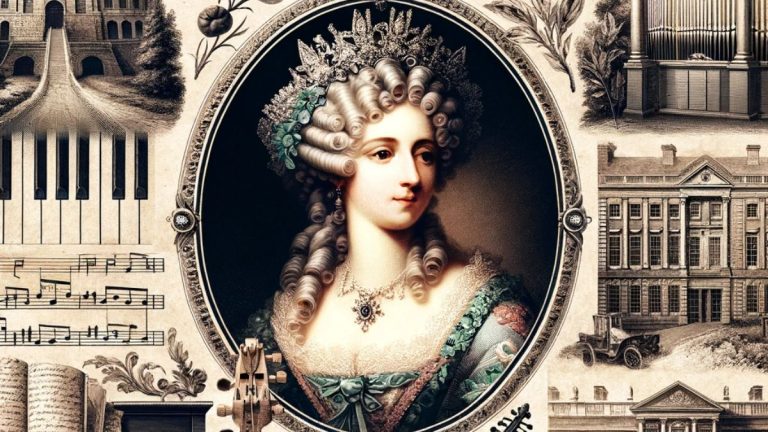
Absolutely, there really was a Queen Charlotte! This remarkable woman wasn’t just a figment of historical fiction or a character conjured up for dramatic effect in period dramas. Queen Charlotte was as real as the crown she wore.

But who was she beyond the royal title and the opulent palaces? Why does her legacy continue to stir intrigue and conversation centuries after her reign?

Was she merely a queen consort, standing in the shadow of her husband, King George III, or did she wield an influence that reshaped the monarchy?

Let’s dive into the story of Queen Charlotte – a tale interwoven with fascinating elements of power, personality, and perhaps a pinch of palace intrigue.

Origins and Marriage

Queen Charlotte of Mecklenburg-Strelitz is a historical figure whose lineage and legacy have recently become subjects of public interest and debate, particularly regarding her ancestry. She served as the British consort to King George III and was the queen of Great Britain and Ireland from her marriage in 1761 until her death in 1818.

Historical records confirm her birth, life as a queen, and her role in the cultural and botanical expansion of the royal court.

However, the question of her racial background has given rise to scholarly discussions and popular speculations alike, rendering her a fascinating character for both historians and creators of fiction.

Depictions in media, like the series Queen Charlotte: A Bridgerton Story, have brought to light the potential African ancestry of Queen Charlotte. This portrayal has sparked conversations about the diversity of royal lineage and the representation of historical figures.

Nonetheless, it is crucial to distinguish between the dramatic liberties taken for narrative allure and the documented historical facts that have been thoroughly researched by historians.

European Lineage

Charlotte was born on May 19, 1744, to Duke Charles Louis Frederick of Mecklenburg-Strelitz and Princess Elisabeth Albertine of Saxe-Hildburghausen. She was a German princess from a small duchy in northern Germany. Historically recognized as of Protestant faith, the duchy of Mecklenburg-Strelitz was nevertheless the co-ruler of the Holy Roman Empire by default.

Marriage to King George III

The marriage between Charlotte and King George III was both a political union and a personal relationship. They married on September 8, 1761, just six hours after first meeting each other.

Despite their union’s political nature, which helped fortify Anglo-German relations, the couple went on to have a fruitful marriage with fifteen children.

Their alliance is particularly noted for its impact on the British monarchy and the continuation of Protestant lineage.

Racial Identity and Ancestry

The racial identity and ancestry of Queen Charlotte have sparked considerable debate, particularly around the assertions of African heritage through ancestral lineage. Distinct perspectives arise from historical portraits and accounts, fueling the controversy.

Debate Over African Heritage

Historians remain divided on Queen Charlotte’s lineage, with some suggesting a direct descent from a Black branch of the Portuguese royal family.

An argument made by historian Mario de Valdes y Cocom points to Queen Charlotte’s ancestry linking back to Margarita de Castro y Sousa, a member of the Portuguese nobility with African roots.

De Valdes highlights the lineage trailing back to Madragana, who was labeled as a Moor, suggesting a mixed racial heritage.

There is, however, no clear consensus among scholars regarding the veracity of Queen Charlotte having Black ancestry, as evidence remains a topic of contention.

Queen Consort and Motherhood

As Queen Consort, Charlotte’s role extended far beyond marriage; she was a mother to 15 children, and her duties encompassed both public engagements and private education of her offspring, which would shape the future succession of the British throne.

Duties and Public Life

Queen Charlotte, married to King George III, held the significant rank of Queen Consort during a transformative period in British history. She navigated the complexities of royal duties with discretion and influence, participating in charitable activities that reflected the monarchy’s interest in the welfare of their subjects.

Her public visibility helped reinforce the monarchy’s image during the ever-evolving Regency Era, often standing in for the Monarch during his ill health.

Children and Succession

The royal couple’s 15 children were integral to the line of succession, with the education and upbringing of the heirs being paramount. George IV ascended to the throne after his father and the preparation for his role as Monarch began in his early years under the guidance of his mother.

Tragically, Princess Charlotte, who was expected to carry on the lineage, passed away, creating a succession crisis that impacted the future of the crown.

Princess Augusta and the other siblings also played roles in the complex dynamics of royal succession, with some members of the family forging alliances with other European royalty through marriage.

Queen Charlotte’s influence extended to ensuring her children’s readiness for their future duties amidst a society that was increasingly attentive to the lives of Black families and the question of lineage.

Cultural Impact and Representation

The depiction of Queen Charlotte has become a subject of considerable cultural dialogue, particularly concerning her representation in media and her purported influence on arts and botany.

Portrayal in Media

Netflix’s Bridgerton series and its prequel, Queen Charlotte: A Bridgerton Story, have re-imagined the historical figure with a diverse cast, sparking discussions about representation in period dramas.

Golda Rosheuvel depicts Queen Charlotte in the original series with a dynamic and strong presence, while India Amarteifio portrays a younger incarnation alongside Corey Mylchreest as King George in the prequel.

The casting by Shonda Rhimes and the narrative’s voice, provided by Julie Andrews as Lady Agatha Danbury, add depth and a modern twist to the story.

These portrayals contribute to an ongoing conversation about inclusivity in media, centering on how historical figures of ambiguous ethnicity are depicted in contemporary television.

Influence on Arts and Botany

Outside of television, the legacy of Queen Charlotte extends into the realms of music and botany. The queen’s patronage is often associated with the prominence of the harpsichord in 18th-century music.

In the arts, Queen Charlotte’s influence led to the rise of new botanical discoveries, thanks to her support for prominent botanists during her reign.

The botanical gardens established under her reign are still relevant today, evidencing her lasting impact on the arts and botanical studies.

Health and Later Years

Queen Charlotte’s later years were marked by her personal health challenges and the far-reaching influence of her legacy. She grappled with mental health struggles, mirrored by those of her spouse, and her death set the stage for the succession of her granddaughter, Queen Victoria.

Mental Health Struggles

Queen Charlotte experienced significant mental health challenges, particularly as she grew older. Historians suggest that she may have suffered from an illness resembling bipolar disorder or depression, conditions not well understood at her time.

Queen Charlotte’s husband, King George III, famously suffered from acute bouts of mental illness, and it’s posited that the stress of caring for him exacerbated her own health issues.

Death and Legacy

In her final years, Queen Charlotte became incapacitated from dropsy (now known as edema), a condition involving fluid retention and swelling. She passed away in 1818, and her funeral procession reflected her status as a beloved monarch.

Her son, George IV, acted as Regent before ascending the throne, while her granddaughter, Queen Victoria, was set to establish a legacy that would shape the British monarchy for generations.

Queen Charlotte also had familial connections to Princess Elisabeth Albertine of Saxe-Hildburghausen, linking her to broader European nobility. Her reign’s end marked a pivotal transition in British royal history.

Historical Interpretation and Ongoing Legacy

Queen Charlotte’s lineage and the implications of her heritage have become a subject of considerable interest. Modern analysis of historical evidence and the Queen’s cultural impact form the basis of understanding her legacy.

Assessment by Modern Historians

Historians examine portraits, genealogies, and archives to ascertain the veracity of claims regarding Queen Charlotte’s ancestry. Some scholars suggest that she may have descended from the Portuguese Royal House of Albufeira, which traced its lineage to sub-Saharan African ancestors.

The discussion focuses on the features depicted in portraits and her family tree.

This inquiry into Britain’s history and how it integrates with stories of the British Empire has reignited conversations about the diversity of the British Royal Family and its connection to broader historical narratives.

Wrapping it Up

Queen Charlotte was not merely a queen in name; her influence and contributions have echoed through the corridors of time, challenging our perceptions of royal life in the 18th century.

In the public imagination, Queen Charlotte transforms into a symbol of the possibility of Britain’s First Black Queen, a concept that speaks to the increasingly multiethnic society that Britain recognizes today. This conversation has its complexities, as interpretations must carefully navigate the historical record and the allure of historical fiction.

As we close the curtains on her story, we’re reminded that history is not just about crowns and thrones, but about the people who wear them – their lives, their challenges, and their indelible marks on the world. Queen Charlotte, a figure from the past, continues to inspire curiosity and admiration, proving that her story is indeed worth telling and remembering.

Did Lobotomies Actually Work?

0

Lobotomies, once hailed as a revolutionary treatment for mental illness, were far from the miracle cure they were once thought to be.

In fact, the procedure, which involves severing connections in the brain’s prefrontal cortex, had controversial and often devastating effects on patients’ personalities, mental abilities, and overall quality of life.

It’s a stark reminder of how medical understanding and ethics evolve over time.

But there’s more to this story than just the grim reality of a bygone medical practice. How did lobotomies rise to prominence, and who was behind this notorious procedure? What finally led the medical community to turn its back on such a drastic approach?

Buckle up as we journey through the twisted corridors of medical history, uncovering tales of ambition, desperation, and the relentless pursuit of understanding the human mind.

Historical Context

In the realm of psychiatric treatment, the advent and subsequent decline of lobotomy as a medical procedure is a story of rapid rise and dramatic fall. It reveals the interplay between experimental surgery and the desperation to find treatments for mental illness.

Development of Lobotomy

The lobotomy was developed by the Portuguese neurologist Egas Moniz in the 1930s. He theorized that mental illnesses were related to problems in the connections between the frontal lobes and the rest of the brain.

In 1935, Moniz introduced the prefrontal lobotomy, which involved severing these connections. Moniz was awarded the Nobel Prize for Physiology or Medicine in 1949 for his work in developing this procedure, reflecting the initial optimism surrounding the lobotomy’s potential.

Rise and Fall in the US

In the US, lobotomies really took off when Walter Freeman, a major advocate, started doing them in the 1940s. Freeman put his own spin on it, creating the transorbital lobotomy, which folks often called the “ice-pick lobotomy.”

Pretty grisly stuff — it involved jabbing a sharp tool through the eye socket to get to the frontal lobes.

By the time the 1950s rolled around, a whopping 40,000 lobotomies had been done in the United States.

But the plot thickens. As new antipsychotic drugs hit the scene and people started to see the serious downsides of lobotomies, like major personality shifts and brain fog, the procedure began to lose its appeal.

Big media publications, like The New York Times, started shining a light on these scary side effects. This kind of coverage played a big role in lobotomies falling out of favor with the medical community.

Lobotomy Procedure Details

The lobotomy procedure was developed with the purpose of altering a patient’s mental state by manipulating brain tissue, primarily in the frontal lobe region. These surgical techniques were performed by neurosurgeons to alleviate severe mental disorders.

Surgical Techniques

A frontal lobotomy, often referred to as a prefrontal lobotomy, was a form of psychosurgery that involved severing connections in the brain’s frontal lobe.

Neurosurgeons traditionally accessed the brain through the patient’s eye sockets using an instrument called a leucotome. The European variant, known as leucotomy, typically involved drilling holes in the skull to reach the brain tissue.

The surgical goal was to target the white matter connecting the prefrontal cortex, which is involved in complex behaviors and personality, to the thalamus, an area associated with processing sensory information.

Standard Procedure:

  • Drill hole in the skull or use eye sockets for access
  • Sever white matter to disconnect the prefrontal cortex from the thalamus
  • Use leucotome to cut brain tissue

Biological Implications

By targeting the cortex and its underlying white matter, these procedures had profound and often unpredictable effects on the patient’s mental and emotional state.

The prefrontal lobotomy was thought to work by altering neural pathways, dampening intense emotional responses and erratic behavior. The notion was that by disrupting these connections, symptoms of psychosis and other severe mental illnesses would be mitigated.

However, this often results in many additional neurological deficits and personality changes, as the frontal lobe is critical for cognitive functions and emotional regulation.

Biological Outcomes

Frontal lobe: Cognitive deficits, personality changes

White matter: Disrupted neural pathways

Thalamus: Altered emotional and sensory processing

Effects and Efficacy

Lobotomies were once performed with the intention to alter mental health by modifying connections in the brain, but they often resulted in a range of side effects. This section explores the variable outcomes patients experienced.

Intended Outcomes

Lobotomies aimed to alleviate severe psychiatric conditions by severing connections in the prefrontal cortex, believing it would improve personality, behavior, and thoughts.

In some cases, patients demonstrated a reduction in symptoms such as agitation, aggression, and chronic pain, which were considered signs of improvement.

However, the procedure’s efficacy in achieving these intended outcomes was highly inconsistent among patients.

Side Effects and Complications

The procedure also led to numerous side effects and complications, which included:

  • Seizures
  • Memory issues
  • Significant changes in personality. Patients frequently exhibited apathy or indifference and, in some cases, exacerbated agitation or hallucinations.
  • Problems with bodily functions, such as incontinence and a decline in intellect

The risks associated with lobotomy were significant, and while some patients showed signs of improvement, others suffered irreversible damages that severely affected their affect and capacity to function independently.

Case Studies and Notable Figures

In the history of lobotomies, certain individuals stand out for their experiences. These case studies and stories of noted figures provide insights into the practice and its impact.

Rosemary Kennedy

Rosemary Kennedy, the sister of President John F. Kennedy, underwent a prefrontal lobotomy at the age of 23. The procedure was arranged by her father in hopes of controlling her mood swings and potential embarrassment to the family.

Unfortunately, the operation did not have the intended outcome; instead, it resulted in severe mental impairment, leaving Rosemary unable to speak clearly and necessitating long-term institutional care.

Howard Dully

At the age of 12, Howard Dully became one of the youngest recipients of a lobotomy. The operation was performed by Walter Freeman, the same neurologist who conducted Rosemary Kennedy’s procedure.

Dully’s stepmother sought the surgery as a solution to his alleged behavioral problems. Decades later, Dully chronicled his experience and the operation’s lifelong effects in a memoir.

His story is a rare first-person account that sheds light on the controversial procedure and offers a personal perspective on its ramifications.

Modern Perspective and Alternatives

The surgical procedure known as lobotomy is now obsolete, having been replaced by advanced mental health treatments that emphasize patient safety, effectiveness, and ethics.

Evolution of Mental Health Treatment

In the mid-20th century, a significant shift occurred with the introduction of antipsychotic medication such as chlorpromazine, which provided a non-surgical option to treat symptoms associated with mental illnesses like schizophrenia and bipolar disorder.

The reliance on invasive psychosurgery methods like lobotomy decreased as medications and psychotherapy gained prominence for managing conditions including anxiety, depression, and OCD.

Advancements in the field led to the development of targeted surgical interventions like cingulotomy, still used as a last resort in severe cases of mental illness when all other treatments have failed.

A key factor in these procedures is their refinement over the decades, focusing on minimizing risks and improving outcomes.

Contemporary Practices and Ethical Considerations

Today’s therapeutic landscape employs a wide range of medications, including antidepressants and mood stabilizers, as primary lines of intervention for various mental health conditions.

Psychotherapy remains a cornerstone, providing patients with coping mechanisms and strategies to address their mental health.

In more severe cases, where medication and psychotherapy are not effective, electroconvulsive therapy (ECT) is used under strict ethical guidelines. It works by inducing controlled seizures to provide relief from severe depression and other mental health challenges.

The treatment decisions in the modern sphere are made with a strong emphasis on ethical considerations, always prioritizing the patient’s best interests and informed consent.

A better understanding of mental health conditions has led to comprehensive approaches that integrate medical, psychological, and social support systems.

The Lobotomy in Popular Culture

The lobotomy procedure emerged as a controversial medical practice that reflected broader societal attitudes towards mental health and sparked significant ethical debates.

Public Perception and Media

In the United States, lobotomy was once seen through a relatively positive lens, largely due to the advocacy and public showmanship of neurologist Walter Jackson Freeman.

He and his partner, James Watts, performed numerous procedures, often with dramatic claims of curing severe mental illnesses. \

This positive public perception was influenced by a lack of effective treatments for psychiatric patients at the time, which included individuals exhibiting mania, catatonia, or suicidal tendencies.

In Europe, a different ethos prevailed. Portuguese neurologist António Egas Moniz, along with his colleague Almeida Lima, pioneered the lobotomy, but their approach was initially more cautious. Europe, in general, was more skeptical about this radical intervention.

Original experimentation by Swiss psychiatrist Gottlieb Burckhardt had earlier been met with criticism within the medical community, and European practitioners typically performed fewer lobotomies than their American counterparts.

Media portrayal often mirrored the scientific community’s understanding and public sentiment of the time. Early successes led to optimistic reporting; however, the narrative shifted as complications and criticism mounted.

Key figures like John Fulton, who was influential in neuroscientific circles, helped to lend credibility to the procedure initially but could not shield it from growing scrutiny.

The media’s role cannot be understated in shaping the public’s perception of lobotomy. They were instrumental in both heralding its perceived successes and later exposing the tragic outcomes, including cases of increased lethargy and other negative side effects.

Over time, the procedure, once performed out of desperation, became synonymous with the mistreatment of the mentally ill, a testament to society’s conflicted relationship with radical approaches to psychiatric care.

Where Did the Saying “The Bee’s Knees” Come From?

Have you ever wondered why something exceptionally good is called “the bee’s knees”? This quirky phrase, which means something is excellent or of high quality, buzzed into popularity in the United States during the Roaring Twenties.

The origin of “the bee’s knees” is a bit hazy, but it’s believed to be part of the era’s fondness for nonsensical phrases. But there’s more to this phrase than just a random selection of words.

Why did a reference to a tiny part of a bee’s anatomy come to signify excellence? How did this phrase survive the test of time when others faded into obscurity?

As we dive into the fascinating world of etymology, let’s explore the hive of history and uncover the sweet nectar of the story behind “the bee’s knees”!

The Origins of “The Bee’s Knees”

The phrase “the bee’s knees” didn’t always mean something great. In fact, in the early 18th century, it started as a playful, nonsensical phrase.

Back then, people liked to make up funny sayings where animal parts were paired with unrelated things, like “the cat’s pajamas” or “the eel’s ankle.”

The phrase was akin to saying ‘unicorn horns’—something splendid…if it existed! These phrases didn’t really mean anything; they were just fun to say.

The Roaring Twenties: The Phrase Takes Off

Fast forward to the 1920s, also known as the Roaring Twenties. This was a time of big parties, jazz music, and lots of new slang.

People were all about having fun and being a bit rebellious, especially the young women called flappers.

It was during this time that “the bee’s knees” started to mean something excellent or of high quality.

But why?

Well, no one knows for sure, but it seems like it was just part of the trend of using silly, catchy phrases.

The Bee’s Knees in Pop Culture

Ready to strut back to the roaring twenties? Well, hold onto your cloche hats because we’re about to take a whirlwind tour through the era where “the bee’s knees” buzzed its way into the hearts of flappers and dapper gents alike.

Flapper Fervor

Those spunky, spirited gals known as flappers really knew how to stir up the dance floor, shaking societal norms and their fringe-clad dresses with equal zest.

They embraced “the bee’s knees” as their catchphrase for anything that epitomized the height of excellence.

Whether shimmying through a Charleston or sipping illicit sips at a speakeasy, flappers were the embodiment of what it meant to be “the bee’s knees.”

Bee Jackson and Broadway Influence

Enter Bee Jackson, the bee who had her own wings pinned back by fame. As the world champion Charleston dancer, she fluttered onto Broadway with moves that screamed, “I’m the bee’s knees, and don’t you forget it!”

Her influence on pop culture was like a dollop of honey on the era’s proverbial biscuit, making the phrase synonymous with top-notch talent and irresistible showbiz sparkle.

The theaters buzzed with anticipation anytime Bee Jackson was slated to grace the stage. Broadway couldn’t have been the bee’s knees without its buzzing hive of starlets like her.

Wrapping it Up

This phrase was made by people who loved to have fun and try new things, both in the 1700s and the 1920s.

Today, we still use “the bee’s knees” to talk about something really great. It’s a fun way to remember the lively and happy spirit of the 1920s.

So, every time we use it, we’re keeping a bit of that happy 1920s spirit alive!

You Might Also Like…

Where Did Knocking on Wood Come From?

Where Did the Saying “Hair of the Dog” Come From?

Where Did the Saying “Peanut Gallery” Come From? Unshelling Its Nutty History