Home Blog Page 3

Where Did the Saying “On Cloud Nine” Come From?

Floating on “Cloud Nine” – ever wondered where this breezy expression for blissful happiness came from? Surprisingly, the origin of “cloud nine” isn’t as mysterious as it sounds; it has its roots in the cumulus heap of cloud classification.

The saying dates back to the late 1950s and is believed to have originated from the International Cloud Atlas of the World Meteorological Organization.

In this atlas, clouds are classified into ten types, with “cloud nine” representing the cumulonimbus cloud, the highest in the sky.

This lofty position mirrors the peak of happiness the phrase now symbolizes.

But hang on, why did this particular cloud catch the public’s imagination, and how did a term from a technical cloud atlas translate into a metaphor for elation? Is there more to the story than just meteorological jargon?

Let’s navigate through the swirling mists of language and history to uncover how “cloud nine” evolved from a simple term in a cloud classification system to a universally recognized metaphor for joy.

The Cloud Classification System: A Scientific Breakthrough

In the early 1800s, clouds became a subject of great interest and conversation among scientists and seafarers. During this time, renowned amateur meteorologist Luke Howard and his contemporaries embarked on a groundbreaking endeavor – the classification of clouds.

By meticulously observing cloud appearance and height above ground level, they succeeded in categorizing clouds into ten fundamental cloud types that are still used today. These include:

  • Cumulus
  • Stratus
  • Stratocumulus
  • Nimbostratus
  • Cumulonimbus
  • Altostratus
  • Altocumulus
  • Cirrus
  • Cirrostratus
  • Cirrocumulus

Howard and his fellow meteorologists devised a numerical code from 0 to 9 for each cloud group to facilitate the recording of cloud observations.

Zero represented the lowest clouds, known as stratus, while nine denoted the tallest clouds – the majestic cumulonimbus clouds, also called thunderstorm clouds.

This numerical system allowed for a more systematic and comprehensive understanding of cloud formations and their characteristics.

The Birth of “Cloud Nine”

As the cloud classification system gained prominence, a curious expression emerged – “on cloud nine.” This idiom, rooted in the fascination with clouds, symbolizes a state of extreme happiness or euphoria.

But why exactly did the number nine become associated with such ecstatic bliss?

The answer lies in the remarkable height and grandeur of cumulonimbus clouds. These towering giants soar to incredible altitudes, reaching up to 30,000 feet above ground level.

The folklore significance of the number nine further adds to the allure of this idiom. In many cultures, the number nine symbolizes perfection, completeness, and ultimate achievement.

It represents the pinnacle of success and contentment – a fitting metaphor for the height of happiness that “on cloud nine” encapsulates.

Unraveling the Origins: Clouds and Euphoria

While the cloud classification system provides a solid foundation for the origins of “on cloud nine,” other intriguing theories contribute to its rich history.

According to one theory, the expression can be traced back to the US Weather Bureau, which used a 10-part classification system for clouds in the 20th century.

Each category of clouds was further subdivided into nine types, with the ninth signifying the highest altitude.

This theory aligns with the notion that being on cloud nine implies a state of being at the pinnacle of happiness.

However, some experts challenge this theory and propose a different origin for the phrase. The Flavells, authors of the Dictionary of Idioms and their Origins, suggest that “on cloud eight” was the original version of the expression and first appeared in the 1930s.

They argue that it was popularized by jazz singers seeking a way to convey a feeling of being “high” – whether through emotions or substances.

The American radio program Johnny Dollar, which aired in the 1950s, further solidified the association of cloud nine with a euphoric state, as a character would frequently regain consciousness on cloud nine after being knocked unconscious.

Exploring Cloud Nine in Language and Literature

The idiom “on cloud nine” has permeated the English language, finding its way into various forms of expression, literature, and popular culture.

Its usage extends beyond describing extreme happiness, often evoking a sense of blissful ignorance or detachment from reality.

In the Oxford English Dictionary, examples from different time periods shed light on the evolution of the idiom’s meaning.

In 1651, the phrase “in the clouds” emerged, with connotations of obscurity, mysticism, and a fanciful, unreal realm.

This idea of being in a dream-like state is also echoed in the phrase “having one’s head in the clouds,” which implies daydreaming or being lost in thought.

Fast forward to the mid-20th century, and we encounter references to being “on cloud seven,” which later evolved into “on cloud nine.”

Synonyms for “On Cloud Nine”

While being on cloud nine is undeniably delightful, other idiomatic expressions capture the essence of extreme happiness. Here are a few popular alternatives to add color to your language palette:

  1. Over the moon
  2. On top of the world
  3. In seventh heaven
  4. Walking on air
  5. In a state of bliss
  6. Cloud thirty-nine”

These synonyms serve as delightful linguistic tools for conveying the sheer ecstasy and elation that “on cloud nine” represents. Experiment with these expressions and infuse your conversations with a touch of whimsy and euphoria.

Cloud Nine in Pop Culture and Beyond

The expression “on cloud nine” has permeated popular culture, making appearances in various forms of media, literature, and everyday conversations. It has become a go-to phrase for describing moments of immense joy and achievement.

In literature, authors often employ the idiom to evoke a sense of euphoria experienced by their characters.

Whether it’s a protagonist triumphing over adversity or two star-crossed lovers finding happiness against all odds, “On Cloud Nine” serves as a powerful literary device to convey the pinnacle of emotional satisfaction.

In music, artists frequently incorporate the idiom to capture the essence of being in a state of bliss.

From jazz standards to contemporary pop songs, the phrase “on cloud nine” resonates with listeners, inviting them to celebrate life’s happiest moments and dance to the rhythm of unbridled joy.

Wrapping it Up

The idiom “on cloud nine” offers a captivating glimpse into the fascinating world of cloud classification and its influence on human language and expression.

It represents the pinnacle of happiness, an ethereal state where one feels like they are floating on air, basking in the sheer bliss of the moment.

From the scientific breakthroughs of cloud classification to the folklore significance of the number nine, the origins of this idiom are steeped in curiosity and wonder. It has become deeply ingrained in our language and culture, serving as a testament to our innate desire for happiness and contentment.

Did Wilt Chamberlain Actually Score 100 Points in A Game?

0

On March 2, 1962, Wilt Chamberlain, an iconic figure in basketball history, achieved an unprecedented feat that remains unmatched in the annals of the NBA. Chamberlain truly did score 100 points against the New York Knicks as a Philadelphia Warrior.

But hold on to your basketballs, folks. There’s more to this story than just a jaw-dropping score. What if I told you that this legendary game was so much more than just a record-setting night? What if it changed the game of basketball forever?

So, lace up your sneakers, and let’s take a full-court press into history, uncovering the myths, the facts, and the sheer magnitude of Wilt Chamberlain’s 100-point game.

Ready for the tip-off?

Historical Context of the 100-Point Game

In the hours leading up to the March 2nd clash, there was little indication that the game between the Philadelphia Warriors and the New York Knicks would enter the annals of sports lore.

Chamberlain, already a dominant force for the Philadelphia Warriors, was known for his scoring prowess but had yet to eclipse the century mark in a game. In the context of his career, this event was to become the zenith of scoring excellence.

The 1961-62 NBA Season

The 1961-62 NBA season was a competitive era dominated by fierce rivalries, notably between the Eastern Division teams.

The Boston Celtics were a formidable adversary, constantly challenging other teams like the Warriors. Chamberlain’s historic performance didn’t occur in a vacuum: it was a product of this charged atmosphere, which found him averaging an astounding 50.4 points per game over the course of the season.

His singular feat of scoring 100 points against the New York Knicks underscored his supremacy in a league that was competitive and aggressive.

The Game Details

The Philadelphia Warriors faced off against the New York Knicks in what became a showcase of Chamberlain’s offensive prowess. Chamberlain’s scoring was not solely a testament to his ability but also a result of strategic fouling and deliberate feeding of the ball to him by his teammates, particularly Joe Ruklick, who assisted on his final basket.

The strategy was clear: get the ball to Chamberlain and get out of the way.

Despite the best efforts of Darrall Imhoff and Cleveland Buckner of the Knicks, nothing could stop Chamberlain’s onslaught. The attendance at the Hershey Sports Arena was reported to be around 4,124 people.

Halftime Score: Philadelphia Warriors – 79 | Knicks – 68

Scoring Breakdown

Chamberlain’s 100 points were a monumental sum that overshadowed all other statistics, yet they were complemented by high rebounds and assists numbers from his team.

He reached the halfway point of his record total by the end of the first half and continued to score aggressively in the second half.

  • Fourth Quarter: The last period was critical as Chamberlain scored 28 points, securing his century in the closing minutes.
  • Fouls: The game was heavily reliant on fouls. Chamberlain himself capitalized on foul shots, making 28 of 32 free throws.
  • Assists: While the exact number of assists in the game isn’t detailed in the sources, the sheer scoring dominance suggests a high level of team play and support.

Wilt Chamberlain’s Biography and Career

Wilt Chamberlain’s life in basketball is marked by historic achievements and record-breaking performances, both at the college level and in the NBA, which culminated in his induction into the Basketball Hall of Fame.

Early Life and College Experience

Wilt Chamberlain was born in Philadelphia, Pennsylvania, on August 21, 1936. While at Overbrook High School, his exceptional skills on the basketball court became evident as he dominated the game.

His towering stature and his scoring ability saw him leading his team to two all-city titles. Chamberlain then played college basketball at the University of Kansas, leading the Jayhawks to a Big Seven Conference championship and an appearance in the NCAA Championship.

Professional Career and Achievements

Chamberlain’s professional career began with the Harlem Globetrotters in 1958, but he signed with the Philadelphia Warriors a year later.

He quickly became one of the most dominant players in history, known for his incredible scoring ability and record of scoring 100 points in a single game—a feat unmatched in the league’s history.

Moving forward, he played for the Philadelphia 76ers and the Los Angeles Lakers, teams with which he won NBA championships and amassed numerous accolades.

Chamberlain was inducted into the Basketball Hall of Fame and later selected as a member of the NBA 50th Anniversary All-Time Team.

Throughout his career, he set multiple NBA records, redefining what it meant to be a center in professional basketball.

Cultural and Historical Impact

Wilt Chamberlain’s 100-point game shattered NBA records and created an indelible mark on sports culture and historical narrative. This section explores the initial reactions to this unprecedented event and assesses its enduring significance within the sporting world.

Immediate Reactions to the Milestone

When the news of Wilt Chamberlain’s 100-point game broke, it was met with a mix of astonishment and disbelief. The Philadelphia Inquirer, Associated Press, and United Press International sports journalists quickly propagated the story.

Warriors statistician Harvey Pollack scribbled “100” on a piece of paper that Chamberlain held for the iconic photo to document this achievement.

The magnitude of Chamberlain’s achievement spread rapidly, but due to the game not being televised and limited media presence, it took time for the feat to fully sink in across the national sports landscape.

Immediate reports were laden with statistics but often lacked the context of today’s in-depth sports analysis and commentary.

Long-Term Significance in Sports History

Over time, Chamberlain’s 100-point game has transcended its status as a mere sporting record, becoming a symbol of excellence and the high watermark for individual achievement in the NBA.

Historians and authors alike frequently reference the game, framing Chamberlain as an athlete and a pioneer who reshaped public perception of what’s possible in basketball.

The event is often cited in discussions about the evolution of the sport, signifying a before-and-after point in NBA history.

Chamberlain’s feat remains unchallenged, a testament to both the player’s dominance and the unique circumstances of that era that allowed such a performance to occur.

Subsequent NBA Records and Comparisons

Since Wilt Chamberlain’s astonishing feat of scoring 100 points, there have been numerous attempts by NBA players to approach this record, illustrating the evolution of scoring prowess in the league.

Later stars have mounted challenges to Chamberlain’s extraordinary single-game scoring record.

  • Michael Jordan scored 63 points against the Boston Celtics (a playoff record that still stands today)
  • Kobe Bryant’s 81-point game for the Los Angeles Lakers against the Toronto Raptors in 2006 stands out as the closest anyone has come in NBA history post-Chamberlain.

In terms of scoring eruptions, there have also been games where players like David Thompson and David Robinson exceeded 70 points. These achievements underscore that while the Golden State Warriors legend’s mark remains untouched, the aspiration to eclipse remains alive among scoring virtuosos.

Comparative Analysis with Other NBA Greats

Chamberlain’s record is often contemplated alongside performances of other NBA greats, where factors like minutes per game and overtime periods play a role.

For instance, players like Bill Russell, Phil Jordon, and Jerry West were contemporaries of Chamberlain who also had a significant impact on the game, although not in the scoring dimension that Chamberlain dominated.

The Hershey, Pennsylvania game also featured supporting cast members like Guy Rodgers and Richie Guerin and against Willie Naulls of the opposing team; this context is essential in painting the full picture of how Chamberlain’s 100-point game compares to other historical performances.

Did Ken Miles Really Slow Down? The Truth Behind Le Mans ’66

0

In the high-octane world of motorsport history, few stories are as enthralling and controversial as that of Ken Miles and the 1966 Le Mans race. At the heart of this legend lies a burning question: Did Ken Miles really slow down in the climactic moments of Le Mans ’66?

Contrary to the dramatic portrayal in popular media, the truth is that Ken Miles did not deliberately slow down in the traditional sense. Instead, he was instructed by his team, Ford, to maintain a pace that would allow for a staged photo finish with his teammates.

This decision, driven by Ford’s desire for a publicity triumph, meant that Miles, despite his phenomenal performance, did not receive the outright winner’s recognition many believe he deserved.

But why would a racer of Miles’ caliber agree to such a strategy? What were the implications for his legacy and the world of racing?

Join us as we shift gears and take a closer look at the strategies, controversies, and untold stories behind one of the most talked-about moments in motorsport history.

The Story of Ken Miles

The life of Ken Miles, from his humble beginnings to his pivotal role in the American motorsports scene, is a tale of passion, innovation, and resilience. His collaboration with Carroll Shelby and Ford led to historic moments in racing history.

Early Life and Military Service

Ken Miles was born on November 1, 1918, in Sutton Coldfield, England. From a young age, he was interested in cars, and his fascination only grew with time.

During World War II, Miles served in the British Army as a tank commander, a role that demanded precision, courage, and strategic thinking—qualities that would later serve him well in racing.

Racing Career and Work with Shelby American

After his military service, Miles began racing cars, amassing numerous victories and quickly making a name for himself. His exceptional skill caught the attention of Carroll Shelby who, in the early 1960s, brought Miles on to work with Shelby American.

Miles became a key test driver and engineer, deeply involved in the development of the Ford GT40 that aimed to challenge Ferrari’s dominance at Le Mans.

Relationship with Carroll Shelby and Ford

Miles’s relationship with Shelby was founded on mutual respect and a shared passion for racing. Shelby trusted Miles both behind the wheel and in providing feedback on the cars’ performance.

This trust was instrumental in developing Ford’s racing program. Moreover, Miles’s close work with Ford led to significant advancements in the performance of their race cars, showcasing the potential of American engineering on the international stage.

1966 24 Hours of Le Mans

The 1966 24 Hours of Le Mans was a decisive moment in motorsport history, marked by intense rivalry, a remarkable performance by Ken Miles, and a finish that remains a topic of discussion even decades later.

The Rivalry Between Ford and Ferrari

Ford’s ambition to defeat Ferrari at Le Mans was the centerpiece of a heated contest of automotive engineering and endurance racing prowess.

After years of Ferrari’s dominance, Ford entered the 1966 race with the Ford GT40, a high-performance race car developed with the singular goal of winning the 24 Hours of Le Mans.

Miles’ Performance in the Race

Ken Miles, driving a Ford GT40, delivered an extraordinary performance throughout the race. His skillful and determined driving, coupled with the GT40’s power, placed Miles in a leading position, outpacing the Ferraris and setting the stage for a historic finish.

The Controversial Finish

The race concluded with one of the most debated moments in Le Mans history. In an attempt to stage a dead heat finish, Leo Beebe, Ford’s racing director, ordered Miles to slow down to allow teammate Bruce McLaren, accompanied by Chris Amon, to catch up.

This orchestrated photo finish deprived Miles of a clear victory and sparked speculation of a manipulated result by team orders.

Engineering and Technical Aspects

In understanding the significance of Ken Miles’s contributions to high-performance engineering, it is integral to examine both the design intricacies of the Ford GT40 and Miles’s direct influence on its development. This analysis reveals an intersection of innovative design and hands-on expertise.

Design of the Ford GT40

The Ford GT40 was engineered with a clear objective: to win at long-distance races like the 24 Hours of Le Mans. The vehicle’s sleek yet muscular build represented an embodiment of raw power and sophisticated aerodynamics.

Its mid-engine layout was somewhat unconventional at the time and crucial for its exceptional balance and handling characteristics. Its lightweight chassis and potent V8 engine allowed it to achieve remarkable speed and agility on the racetrack.

Miles’ Contributions to the GT40’s Development

Ken Miles, an esteemed engineer and driver, played a crucial role in developing the GT40. His insights as a seasoned racer meant that he could provide invaluable feedback on the car’s performance.

Working closely with designer Phil Remington, Miles helped to fine-tune the GT40’s chassis and suspension systems. His contributions were not just confined to a single aspect of the car; he enhanced the overall performance and drivability, which were essential to the GT40’s racing success.

The Legacy of Ken Miles

Ken Miles was a pivotal figure in the world of motorsports, specifically for his role in shaping the success of Ford Motor Company’s racing program. His expertise in high-performance engineering and the indelible mark he left on automotive history remains significant.

Impact on Motorsports and Engineering

Miles was instrumental in the development of iconic vehicles like the Shelby Cobra and the Ford GT40. His dedication to precision and innovation in the automotive field has been a source of inspiration within motorsports and engineering circles.

As a testament to his contributions, Miles was honored by being inducted into the Motorsports Hall of Fame of America. His work significantly propelled the performance and design standards of race cars, influencing vehicle engineering for future generations.

Depiction in Popular Media

Miles’s remarkable career and dramatic racing moments were brought to life in the 2019 film Ford vs. Ferrari. Actors Matt Damon and Christian Bale portrayed Carroll Shelby and Ken Miles, respectively.

The movie showcased both the professional and personal sides of Miles, highlighting the tenacity and skill that characterized his career and life in racing. The film’s portrayal introduced a wider audience to Miles’ story and legacy.

Miles’ Influence on Ford’s Racing Success

Ken Miles is regarded as a central figure in the dominance of Ford in the 1960s racing scene. His exceptional test-driving skills and critical feedback to engineers were paramount in refining Ford’s high-performance vehicles.

His close collaboration with Carroll Shelby and his role in the historic win over Ferrari at the 24 Hours of Le Mans in 1966 solidified his legacy as a cornerstone of Ford’s motorsports triumphs.

His family, including his son Peter Miles, has upheld his heritage, sharing personal stories and contributions to the narrative of Miles’ influence on automotive sports and design.

Contemporary Reflections and Theories

The debate surrounding Ken Miles’ performance at Le Mans in 1966 continues to provoke discussions on racing integrity, sportsmanship, and the influence of corporate decisions in motorsports.

Debates Over the Decision at Le Mans

The decision at Le Mans in 1966 remains controversial. A close look at the event reveals that Ken Miles, driving the Ford GT40, was asked to slow down to facilitate a dead heat.

This executive decision by Leo Beebe, then Ford Racing director, prioritized a photo finish for publicity over a clear victory which many believed was rightfully Miles’.

Race officials ultimately declared a different winner based on technicalities related to distances covered, leading to heated debates.

Reflections on the Sportsmanship

The sportsmanship displayed by Ken Miles in adhering to the team’s directive is still admiringly recounted. Critics, however, speculate whether sportsmanship was compromised by corporate interests.

The incident has become a pivotal case study in understanding the balance between individual achievement and team strategy in competitive sports.

Conspiracy Theories

Conspiracy theories have emerged surrounding the result of the race. Some suggest a conspiracy theory intending to prevent Miles from prevailing, potentially due to internal politics at Ford.

Others view the race official’s ruling as a misleading interpretation meant to manufacture a spectacle. These theories garner speculations even decades later, painting a complex picture of what actually transpired.

Did Jesus Actually Walk on Water? Scientific & Biblical Evidence Examined

0

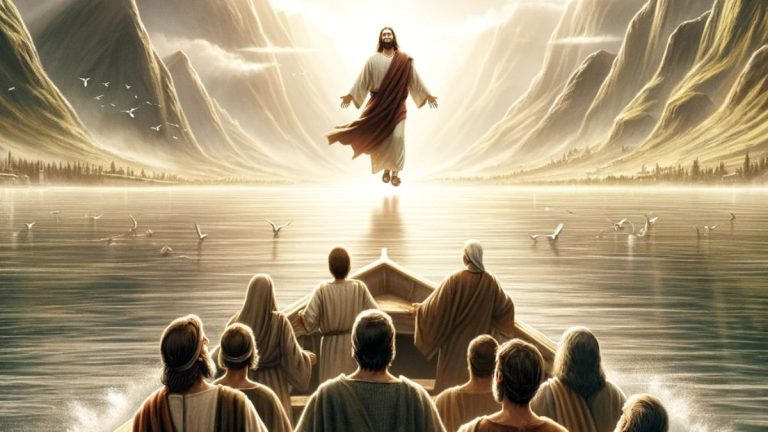
One of the most astonishing miracles recounted in the New Testament is the story of Jesus walking on water. But did this miraculous event really happen? According to the accounts in the Gospels of Matthew, Mark, and John, Jesus did indeed walk on water.

This extraordinary feat, witnessed by His disciples, is a cornerstone of faith for many Christians, symbolizing Jesus’ divine nature and power over the natural world.

But how does this ancient story hold up in the modern world, where science and skepticism often challenge tales of the miraculous?

Is there a deeper meaning or symbolism that we might be missing?

Join us as we dive into the historical, cultural, and theological layers of this famous biblical event!

The Gospel Accounts

The three synoptic Gospels—Matthew, Mark, and John—provide varying perspectives on the event where Jesus is said to have walked on water. This section examines those accounts, offering an analytical and close reading of the pertinent verses from the New Testament.

Synoptic Gospels Overview

The three synoptic Gospels, namely Matthew, Mark, and John, each record the event of Jesus walking on the Sea of Galilee. According to these texts, Jesus demonstrates his mastery over the natural elements, which serves as a significant indication of his divine identity as the Son of God.

This miraculous event unfolded before the disciples and would later become one of the well-cited narratives pointing to Jesus’ divine authority and power.

Analysis of Matthew 14:22-33

In Matthew 14:22-33, the account details how Jesus, after feeding 5,000 men with five loaves of bread and two fish, commanded the disciples to get into a boat and precede him across the sea. At night, Jesus approached them, walking on the water.

The disciples were initially terrified, mistaking him for a ghost. To confirm his identity, Peter asked Jesus to command him to come to him on the waters, which Jesus did. However, seeing the wind, Peter became frightened and began to sink. This account captures a key instance where the themes of faith and doubt collide.

Examination of Mark 6:45-52

Mark 6:45-52 shares similarities with Matthew’s account, with Jesus sending the disciples ahead on the boat and later joining them by walking on the water amidst a storm. Notably, this passage mentions the disciples’ astonishment at this miracle, for they had not understood the significance of the feeding of the 5,000, which had hardened their hearts. It suggests an evolving understanding of Jesus’ nature and his relationship with his apostles, who had yet to grasp the extent of his divinity fully.

Insights from John 6:16-21

In John 6:16-21, the narrative begins with the disciples setting out across the Sea of Galilee without Jesus, who remained behind to dismiss the crowds. As the sea became rough due to a strong wind, they saw Jesus walking on the water near the boat. They were frightened, but he calmed them by identifying himself. Unlike the other gospels, John does not include the episode with Peter; rather, it focuses on Jesus’ declaration, “It is I; do not be afraid,” emphasizing his godly reassurance and dominion over natural forces.

Historical and Theological Context

The accounts of Jesus walking on water hold significant historical and theological implications within Christian beliefs.

They represent the intersection of miraculous events, the divinity of Jesus as the Son of God, and the chronology of his acts as depicted in the New Testament.

Miracles in the New Testament

The New Testament documents several instances where Jesus performs miracles, which are extraordinary events understood as divine acts that transcend human capabilities.

Among these is Jesus’s action of walking on the Sea of Galilee, an event detailed in the gospels of Matthew, Mark, and John. Miracles serve to affirm Jesus’s messiahship and illustrate the power of faith among believers.

Jesus as the Son of God

In Christian theology the act of Jesus walking on water is interpreted as a testament to his divinity and an emblem of his authority over nature.

This event, among others, fuels the Christian belief in Jesus’s unique relationship to God, distinct from the prophets recognized in the Old Testament.

Scientific Theories of Natural Phenomena

In exploring the historical account of Jesus walking on water, scientists have proposed theories that may offer natural explanations for the event, which are often rooted in environmental and physical conditions present during the time period.

These insights come from various studies, some of which have been published in reputable scientific journals.

One notable hypothesis suggests that an unusual set of climatic conditions could have led to the partial freezing of the Sea of Galilee. Israeli and U.S. scientists, including Professor Doron Nof, have theorized that a rare combination of low temperatures and freshwater could cause patches of ice to form, potentially misleading onlookers to think someone was walking on water.

This research takes into account historical climate data that suggests colder weather conditions in the region 2,000 years ago.

Professor Nof further examined the probabilities of ice formations on the Sea of Galilee in a study published in the Journal of Paleolimnology.

The study considered a unique combination of specific atmospheric and hydrological conditions needed for such an event.

Furthermore, the research explored the possibility of whether an earthquake could have led to a temporary freezing phenomenon by disturbing hot springs around the lake, which, in turn, could release a layer of cold water to form a substrate that might be mistaken for walking on water.

These scientific inquiries do not aim to challenge faith-based beliefs but rather to investigate the potential natural occurrences that could intersect with historical and scriptural accounts.

Cultural and Religious Significance

The event of Jesus walking on water resonates deeply within Christian doctrine and worship.

It epitomizes a core belief in miracles and the divine authority of Jesus Christ, reinforcing pivotal aspects of faith within the Christian community.

Christian Doctrinal Implications

Within Christianity, the act of Jesus walking on water is not just a testament to his mastery over nature but also serves as a reinforcement of faith.

Christians widely regard this miracle as a powerful demonstration of Jesus’ divine nature, linking it to the theological concept that Jesus Christ is the Son of God with authority over the physical world.

This narrative strengthens the belief in Christ’s purpose and his ability to perform other miracles, which are foundational to the Christian doctrine.

Symbolism in Christian Worship

In Christian worship, the image of Jesus walking on water is often symbolized to represent spiritual support during times of trouble.

It is invoked during sermons and hymns to remind the congregation of the strength of their faith in times of doubt and fear.

Specifically, it underlines the idea that, just as Jesus led his disciples through the stormy sea, he also guides believers through the metaphorical storms of life.

Additionally, it reinforces the importance of spiritual faith over physical sight, a recurring theme in many Christian practices.

This event is frequently reflected upon during liturgical services, especially those involving discussions of miracles and the power of the spirit.

Modern Reception and Interpretation

The modern reception and interpretation of the event where Jesus is said to have walked on water continue to resonate through various facets of society, from religious teachings to cultural representations in art and media.

Artistic Depictions

Artists have long found inspiration in the biblical account of Jesus walking on water, producing works that reflect both its spiritual significance and the event’s dramatic nature.

Paintings, sculptures, and modern digital art pieces often depict this moment with Jesus as the central figure, exuding calm and authority amidst a turbulent sea.

Churches and religious institutions frequently display these artistic interpretations to visually convey the miracle to their congregations.

Literature and Film

In literature, the story of Jesus walking on water has been analyzed for its thematic depth and symbolism, leading to a variety of interpretations in novels, poetry, and essays.

Films and television shows, ranging from traditional biblical epics to contemporary interpretations, often include this event to underscore Jesus’ divinity or to explore the reactions of his disciples.

This narrative device serves as a potent moment that highlights themes of faith, doubt, and revelation within the broader context of a story.

Christian Teachings

Educators in religious studies often examine the account of Jesus walking on water within the context of Christian teachings.

In many church-based curricula, it is taught to illustrate lessons about faith, trust in God, and the power attributed to Jesus’ ministry.

Moreover, discussions and podcast episodes may analyze how different denominations proclaim their understanding of the Bible’s message through this event.

The figure of Peter, one of Jesus’ disciples, is particularly scrutinized for his doubtful response to Jesus during this episode, providing a human angle to the divine narrative.

The story’s relevance in relation to themes of life, death, and resurrection within the Christian faith illuminates its enduring impact on religious education.

Did Mary Ingalls Really Go Blind?

0

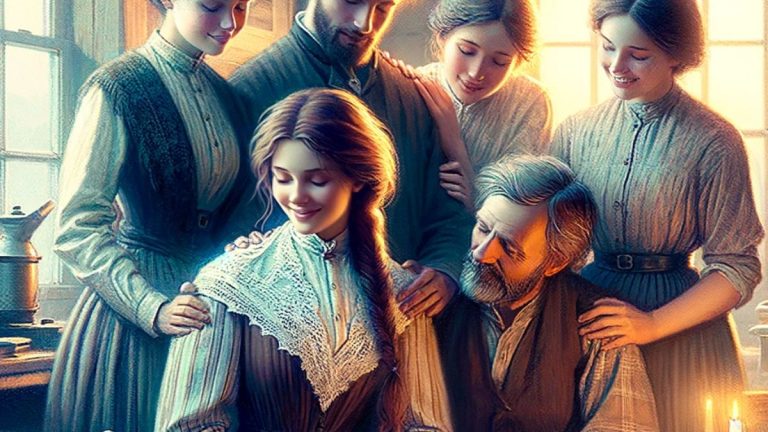
Mary Ingalls, a name familiar to many through the beloved Little House on the Prairie television series, is often remembered for her struggle with blindness. But did Mary Ingalls really go blind? The answer is yes. Mary did lose her sight, but the reasons behind her blindness are more complex and intriguing than many might expect.

Now, you might be wondering: what led to Mary’s blindness? The story is often told as one of scarlet fever, a common belief perpetuated by books and TV series.

But recent discoveries have shed new light on this aspect of her life, suggesting other possible causes.

What if the truth behind Mary’s blindness is a tale untold, a mystery wrapped in the pages of history and medicine? Let’s unravel the facts and explore the real story behind Mary Ingalls’ blindness!

Background of Mary Ingalls

Mary Ingalls was a prominent character in the Little House on the Prairie TV series, based on the book series of the same name written by her sister Laura Ingalls Wilder. Her sister encapsulated her experiences in historical literature, granting us insight into the trials and resilience of the Ingalls family.

Mary Ingalls became blind at the age of 14, likely due to viral meningoencephalitis, not scarlet fever as widely believed. Her education continued at the Iowa College for the Blind, where she developed skills to adapt to her visual impairment.

This crucial phase of her life demonstrates the impact of specialized educational institutions for children with disabilities in that era.

Mary’s courage and the family’s support are reflected in Wilder’s semi-autobiographical account, Pioneer Girl.

Understanding Mary’s Illness

Traditionally, scarlet fever was believed to have caused Mary Ingalls’ blindness. It is an infectious disease associated with fever, a red rash, and sore throat, caused by the bacterium Streptococcus pyogenes. Notably, while scarlet fever can lead to complications that might affect vision, it is not commonly known to cause complete blindness.

In exploring the historical case of Mary Ingalls’ blindness, new research and medical insights have provided us with a clearer understanding. The prevailing belief of scarlet fever being the cause has been challenged, and alternative medical explanations have been suggested.

Dr. Beth Tarini, an associate professor of Pediatrics at the University of Michigan and a respected pediatrician, conducted comprehensive research into the historical diagnosis of Mary Ingalls’s blindness.

Tarini and her colleagues scrutinized past medical assumptions and presented their findings in a notable article published in the Journal of Pediatrics. Their research proposes that Mary did not suffer blindness from scarlet fever, as widely believed.

Dr. Tarini’s work suggests that Mary’s symptoms were more consistent with viral meningoencephalitis, an inflammation of the brain and its membranes, leading to optic nerve damage.

This hypothesis is backed by epidemiologic data and a deeper dive into the illness accounts from Laura Ingalls Wilder’s memoirs.

Dr. Tarini’s research shed light on the importance of revisiting historical diagnoses with modern medical knowledge. Dr. Tarini, herself influenced by her experience as a medical student, reminds the medical community of the advancements in our understanding of health and disease.

The revelation of Mary’s likely diagnosis has had profound implications for both the fields of pediatrics and historical medicine.

Advancements in Pediatric Care

Historically, children on the American Frontier faced numerous health challenges with limited medical intervention. Today, pediatrics is a specialized field, with infectious disease specialists driving the development of effective treatments.

Institutions like the University of Colorado play a pivotal role in researching pediatric conditions. These advancements have significantly improved outcomes for children with diseases that were once considered untreatable.

The introduction of antibiotics marked a milestone in pediatric care, drastically reducing the mortality rate from common infections. Vaccines have also had a profound impact, virtually eradicating diseases such as polio and measles in the United States.

These medical breakthroughs have shielded children from the devastating effects of numerous endemic conditions in past centuries.

Impact of Mary’s Blindness

Mary Ingalls’ blindness had a profound effect on her life and cultural portrayal. The overcoming of this adversity in her personal life and the representation of her story in media both shed light on her strength and the perceptions of disability in society.

The portrayal of Mary’s blindness in the Little House novels by her sister Laura Ingalls Wilder and subsequent adaptations in television and film emphasized her as a pivotal character.

Her disability was portrayed as a significant event affecting the Ingalls family in media, thus contributing to the public’s understanding of the challenges faced by patients with infectious diseases and their families.

Mary’s story, as represented in memoirs and novels, has been pivotal in showcasing the resilience of the human spirit.

Did Rudy Really Get a Sack?

0

Yes, Rudy Ruettiger did indeed achieve a sack during his brief yet storied collegiate football career. In a game against Georgia Tech on November 8, 1975, Rudy, wearing number 45, broke through the line in the final seconds and tackled the quarterback.

As the Georgia Tech quarterback got ready to throw the ball, Rudy made his move. He broke through the other team’s line and tackled the quarterback. This was a big deal – it was a sack. But it wasn’t just any sack. It was Rudy’s dream coming true right there on the field.

But there’s more to this story than a simple yes or no. How did Rudy’s singular act on the field become the stuff of legends, inspiring millions around the world? What can his journey teach us about the nature of dreams, resilience, and the human spirit?

As we peel back the layers of Rudy’s story, we uncover a narrative rich in lessons, emotions, and the eternal question of what it truly means to succeed against all odds.

 The True Story of Rudy’s Sack Against Georgia Tech: November 8, 1975

Rudy wasn’t the kind of player you’d expect to make headlines. But on the night of November 18, 1975, something amazing happened during the very last play. Notre Dame was already set to win, and that’s when Rudy got his moment.

He ran onto the field, wearing number 45, full of excitement and ready to go.

If you watch the video of the play below, you can see it happen. Rudy, who was smaller than most players, did something really cool. He showed that even the smallest player could make a big play if they really wanted it.

Debunking Myths: Hollywood vs. Reality

In the quest to separate fact from fiction, the true account of Rudy Ruettiger’s iconic sack and the Hollywood depiction of this event has sparked considerable debate. This section aims to discern the embellishments of Hollywood’s portrayal against the actual experiences recounted by Joe Montana and other teammates.

Hollywood’s Portrayal

The movie Rudy paints a stirring picture of an underdog’s triumph. It shows Rudy, a character who battled endless odds to play for the Fighting Irish, finally achieving glory with a game-ending sack that leads to his teammates carrying him off the field. This scene does more than just narrate an event; it embodies the dreams and ambitions of any aspiring athlete facing adversity.

Joe Montana’s Perspective

Joe Montana, a teammate of Ruettiger during the depicted events, has painted a quite different picture. Contrary to the Hollywood narrative, Montana speaks to this discrepancy by asserting that while the sack did occur, the movie’s depiction of other players’ reactions and the carrying off the field were significantly dramatized.

According to Montana, the crowd didn’t chant Rudy’s name during the game. The portrayal of Rudy being carried off the field as a hero was exaggerated, too. In Montana’s version of the story, Rudy was carried off more as a humorous gesture by a few teammates, not as an act of grand celebration, as shown in the movie.

Teammates and Evidence

Further inquiry into the claim sees a mix of accounts from various members of that era’s Fighting Irish team. Some support the cinematic rendition, while others, like Montana, suggest a more subdued acknowledgment of Ruettiger’s moment happened in reality.

These discrepancies between the film and the actual event highlight a common practice in cinematic storytelling: exaggerating the truth for emotional impact. While the real Rudy did achieve his dream of playing for Notre Dame and making a sack, the movie version embellished these events to create a more dramatic and inspirational narrative.

So, while the film Rudy is a heartwarming and motivating story, it’s important to remember that it’s a Hollywood portrayal with its usual blend of fact and fiction.

However, despite differing testimonies, all agree that Rudy accomplished the feat of sacking the quarterback, a moment preserved in Notre Dame history. The true story of Rudy’s sack is less dramatic but no less inspiring, showcasing Rudy’s determination and the fulfillment of his lifelong dream.

Rudy’s Legacy and Influence

Rudy’s influence on sports culture is unmistakable. The film Rudy is commonly cited among the greatest sports movies of all time, encapsulating the essence of college football’s emotional and inspiring nature.

His underdog tale is regularly featured in discussions about perseverance and has been documented by prestigious platforms like ESPN and Sports Illustrated. Ruettiger’s narrative has been a popular subject on platforms such as The Dan Patrick Show and has even sparked lively debates on TMZ.

But the true story of Daniel “Rudy” Ruettiger extends beyond his historic sack. Ruettiger’s career outside of NCAA football has focused significantly on empowering others through inspirational public speaking.

His speeches often emphasize the value of hard work and tenacity—a message he lived out during his challenging journey to play for Notre Dame. These engagements reinforce his legend and continue to draw attention to the name Rudy Ruettiger, which is synonymous with the quintessential underdog story.

Victorian Fan Language: The 19th-Century Dating App

0

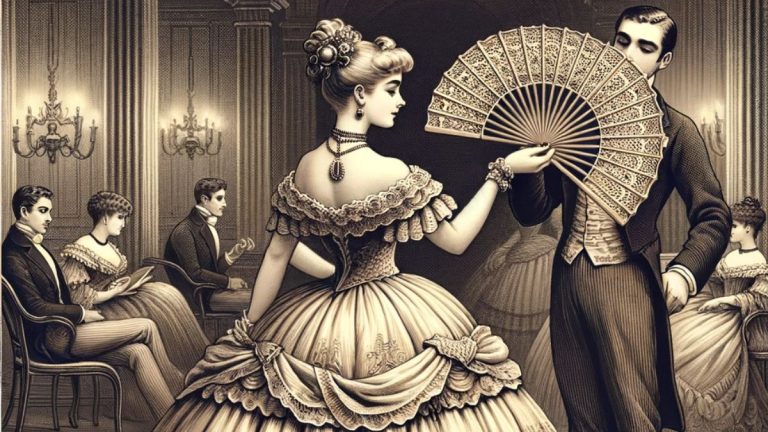
The Victorian era was a time of corsets, top hats, and, believe it or not, fans that did a lot more than keep you cool. Today, I’m taking you on a quirky historical adventure into the world of Victorian fan language. Imagine a time when a simple accessory in your hand could speak volumes, and I mean literally.

In Victorian society, where propriety was the name of the game, and saying “I fancy you” out loud was as scandalous as it gets, fans were the sly wingmen of the day.

These were not just pretty little things fluttering in the hands of ladies. No, they were powerful tools of discreet communication in a world where direct conversation was often seen as “unbecoming” for some reason.

Let’s unfold (pun intended) the fascinating story of how these ornate fans became the secret messengers of love and intrigue in the Victorian age.

Victorian Fan Historical Background

Fan language, while hitting its stride in the Victorian era, wasn’t exactly a new fad. In fact, this intricate dance of gestures has roots that stretch way back to ancient times. Yes, long before our Victorian friends made it cool, people were already whispering secrets through the flutter of a fan.

Fast forward to the 19th century, and this fan language reaches its zenith. Why was that?

The British Empire was teeming with rigid social etiquette and a fascination with symbolic gestures and hidden meanings. It was the perfect breeding ground for a nuanced form of communication that thrived on subtlety and discretion.

But let’s not pigeonhole these fans as mere gossip spreaders. They were the Swiss Army knives of social accessories back in the day. Beyond their covert messaging capabilities, fans were also about style and entertainment.

They were fashion statements, flaunted as symbols of status and sophistication. Walking into a room without a fan? That’s like showing up to a modern-day party without your phone. You’re forced to communicate with words!

Entertainment, you ask? Absolutely! Fans weren’t just for batting eyelashes behind. They were integral to various cultural and social activities. Think of them as props in a performance, where each movement added drama and flair to the social theatrics of the time.

Fans added an extra layer of communication to every social event, from being waved at operas to being fluttered coquettishly at balls.

In essence, fans in the Victorian era were like multi-tools of social interaction. They were the unspoken words, the fashion statements, and the party starters.

Victorian Fan Language Codex

Fan SignalMeaning
Raising to lips“Wanna make out?”
Dropping fan“Let’s just be friends”
Drawing across eyes“Sorry, my bad.”
Twirling in left hand“We’ve got eyes on us, be cool!”
Passing from one hand to another“Hey. HEY. My eyes (and my fan) are up HERE!”
Carrying in right hand“Taken, off the market.”
Carrying in left hand“Single and ready to mingle.”
Opening and closing slowly“I’m off at 8, let’s grab coffee.”
Hiding eyes behind open fan“Totally into you.”
Running fingers through fan ribs“Let’s just be friends.”
Opening and closing fan several times“Stop f*cking around.”
Fanning slowly“Already in a relationship.”
Fanning quickly“I’m seeing someone but it’s not serious.”

So, how exactly did one go about whispering sweet nothings with a fan? Let’s start with the classics. Holding the fan near the heart – now that wasn’t just a pose for a pretty portrait. In the secret language of fans, this was the equivalent of blasting “I love you” on a giant billboard.

Subtle, right?

And here’s another: if a lady was fanning herself slowly, it wasn’t because the room was too warm. Nope, that was her way of saying, “Sorry, chaps, I’m already taken.”

Now, all these gestures and movements weren’t just random. They were part of a well-developed code. Enter Charles Francis Badini, the man who literally wrote the book on this stuff with his “Le Langage des éventails” (The Language of Fans).

And then there was Duvelleroy, a French fan company that became the Apple of the fan world in Victorian England. Jean-Pierre Duvelleroy saw an opportunity and published a leaflet explaining all these fan movements. Why? To boost fan sales, of course! Talk about clever marketing.

Duvelleroy’s leaflet became all the rage, and before you knew it, every lady with a fan was a walking, talking Morse code of romance. The language of the fan was so intricate that it consisted of around two dozen moves or gestures. But here are the basic ones:

So there you have it, the mechanics of Victorian fan language, a world where every gesture was a word and every flick a sentence. It’s a language that spoke volumes in a society where speaking your heart out loud was often frowned upon.

Who knew fans could be so… chatty?

Cultural Significance of Fan Language and Variations

Picture this: a society tightly laced in corsets of decorum and manners, where openly flirting was as scandalous as twerking in a church today. In this world, the fan was a secret telegram, a discreet billboard of intentions and desires. The Victorian Classified section.

The fan was a lady’s silent accomplice in the intricate dance of Victorian courtship, where every move was monitored. It let her express interest, disdain, or even a covert “meet me in the garden for who-knows-what” without uttering a single word.

But here’s where it gets even more interesting – this fan language wasn’t a one-size-fits-all. Oh no, it had its own regional twangs and accents.

Take England and France, where etiquette manuals popularized the fan language as a flirtatious art form. In these countries, a fan wasn’t just an accessory but a tool of allure, a weapon in the subtle art of seduction.

Head over to Spain, and you’ll find the “abanico” – the Spanish fan language. Here, the fan was more than just a flirtation device; it was a means of conversation in conservative social settings. Spanish senoritas wielded their fans with a skill that could put any modern-day texter to shame.

And then there’s Japan, where “tessenjutsu,” (Japanese war fans) were the norm for Samurai warriors as a sidearm in battle.

I’m also betting samurai war fans could lop heads off like celery…but that’s just speculation.

Each culture infused the fan language with its own unique flavor, turning it into a rich tapestry of silent expressions.

Victorian Fan Language Myths and Misconceptions

Now, let’s dim the lights and spotlight the myths and misconceptions swirling around the Victorian fan language.

First off, the big question: Was Victorian fan language a real, universally understood system of communication, or was it the 19th-century equivalent of a viral marketing campaign? The answer is a bit of both.

While there were indeed recognized gestures with specific meanings, a lot of what we associate with the fan language today is steeped in romanticization and, dare I say it, clever marketing.

Enter Duvelleroy, the savvy fan maker who could give today’s ad agencies a run for their money. When fans started to lose their flair as a must-have accessory, Duvelleroy published a leaflet explaining the so-called “secret language” of fans. And voilà, fans were back in vogue!

This leaflet was like the Victorian era’s version of an influencer’s how-to guide (and is apparently up for auction at Sotheby’s in London as we speak), sparking a renewed interest in fans not just as accessories but as tools of clandestine communication.

But here’s the kicker: much of this fan language lore might have been a bit of creative embellishment. Think about it – a society as buttoned-up as the Victorians, where even showing an ankle was scandalous, relying on an elaborate, yet easily misinterpreted system of fan signals?

Seems a bit out there.

So, while there’s no doubt that fans were used for non-verbal communication to some extent, the idea of a complex, universally understood fan language is likely a delightful blend of truth, myth, and great marketing.

Decline of the Victorian Fan

Like all good things, the era of whispering sweet nothings through fan flutters had to come to an end. But why did this charming mode of communication fade into the pages of history?

The simple answer: times changed. Victorian society, with all its strict social codes and etiquette, began to loosen its corset, so to speak.

The dawn of the 20th century brought a wave of social and technological changes that transformed how people interacted. Enter the telephone and the telegraph – the new kids on the block.

These technological marvels made communication faster, easier, and a lot less cryptic than interpreting fan gestures and shady glances.

Moreover, the winds of change were blowing through societal norms as well. The women’s suffrage movement was gaining momentum, challenging the status quo and empowering women to express themselves more openly and directly.

The need for a secret language hidden in the waves of a fan began to diminish. Why rely on subtle gestures when you were suddenly free to speak your mind?

But don’t think for a second that the language of the fan just vanished into thin air. It left a lasting impression, especially in the world of literature and art. Modern literature often romanticizes this form of communication, painting it as a quaint, charming relic of a bygone era.

Article References

  1. (2023, November 11). Fanology: The “Secret” Language of Hand Fans. Owlcation. Retrieved December 21, 2023, from https://owlcation.com/humanities/Fanology-The-Secret-Language-of-Hand-Fans
  2. Starp, A. (n.d.). The Secret Language of Fans. Sotheby’s. Retrieved December 21, 2023, from https://www.sothebys.com/en/articles/the-secret-language-of-fans
  3. Duvelleroy. (2023, September 8). In Wikipedia. from https://en.wikipedia.org/wiki/Duvelleroy

Theodore Roosevelt in the Spanish-American War: An Officer & A President

0

At the dawn of the 20th century, a war erupted that reshaped the geopolitical landscape of two continents and catapulted a charismatic and vigorous leader into the annals of American history.

This figure was Theodore Roosevelt, a man whose name remains synonymous with robust leadership, major accomplishments, and an unbridled zest for adventure.

His exploits during the Spanish-American War, particularly his leadership of the legendary Rough Riders, are more than just footnotes in history books; they are vibrant chapters that illustrate the making of an American icon.

In exploring Theodore Roosevelt in the Spanish-American War, we delve into the depths of his character, the formation of the Rough Riders, and the battles that defined his military career.

Join us as we journey back to a pivotal historical moment, where the spirit of adventure and the call of duty intersected to create a legend!

Lead-Up to the Spanish-American War

USS Maine's explosion in Havana Harbor during the prelude to the Spanish-American War

The Spanish-American War was a brief yet transformative conflict rooted in a complex interplay of political, social, and media-driven forces.

To fully appreciate Theodore Roosevelt’s impact and the dramatic ascension of the United States on the world stage, it’s crucial to understand the intricate backdrop against which this war unfolded.

At the heart of the conflict was Cuba’s arduous struggle for independence from Spanish colonial rule. Cuba had been a jewel in Spain’s dwindling imperial crown for decades, but by the late 19th century, the island was ablaze with revolutionary fervor.

The Cuban quest for freedom, marked by valiant resistance and brutal repression, caught the attention of the American public and policymakers’ attention.

The American press shaped public opinion and policy toward the conflict. Newspapers of the era, notably those under the stewardship of media moguls William Randolph Hearst and Joseph Pulitzer, engaged in a frenzied form of journalism that came to be known as “yellow journalism.”

Sensationalized and often exaggerated reports of Spanish atrocities in Cuba stirred American sympathies and inflamed public demand for intervention. This media landscape did not just report the news; it actively participated in making (or faking) it.

Amid this charged atmosphere, the destruction of the USS Maine in Havana Harbor on February 15, 1898, acted as the proverbial spark in a tinderbox.

The USS Maine, sent to Cuba to protect American interests, mysteriously exploded, killing over 250 American sailors. Although the cause of the explosion remains a subject of debate, the American press was quick to blame Spain, encapsulated in the infamous headline, “Remember the Maine, to Hell with Spain!”

This event galvanized public and political resolve, leading to a U.S. declaration of war against Spain on April 25, 1898.

Theodore Roosevelt’s Audacious Leap from Desk to Battlefield

Theodore Roosevelt’s journey from the mahogany corridors of power to the rugged terrains of war is a tale of audacity and action. As Assistant Secretary of the Navy under President William McKinley, Roosevelt was a vocal advocate for a strong naval force and an assertive American foreign policy.

With the outbreak of the Spanish-American War, Roosevelt saw an opportunity to embody the ideals he had long championed. In a move that stunned many, he resigned from his post in April 1898, a decision that marked a dramatic shift from policymaker to warrior.

This transition symbolized Roosevelt’s belief in leading from the front and his commitment to the cause of Cuban independence.

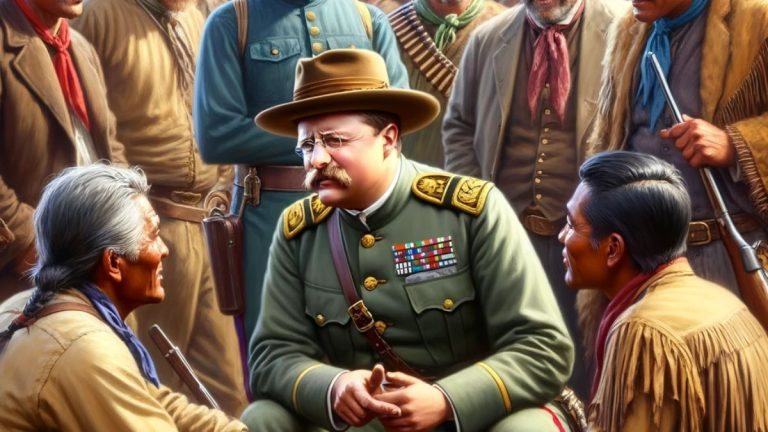
Roosevelt’s next step was the formation of the 1st U.S. Volunteer Cavalry Regiment, famously known as the Rough Riders. This unit was unique, not just in its composition but in the ethos it represented.

Roosevelt, along with his friend and fellow warrior Leonard Wood, set out to recruit a unit as diverse as America itself. They gathered a motley crew of cowboys, Native Americans, college athletes, and even Ivy League graduates from Harvard and Yale.

A shared sense of adventure and patriotism united this eclectic mix of men from various walks of life.

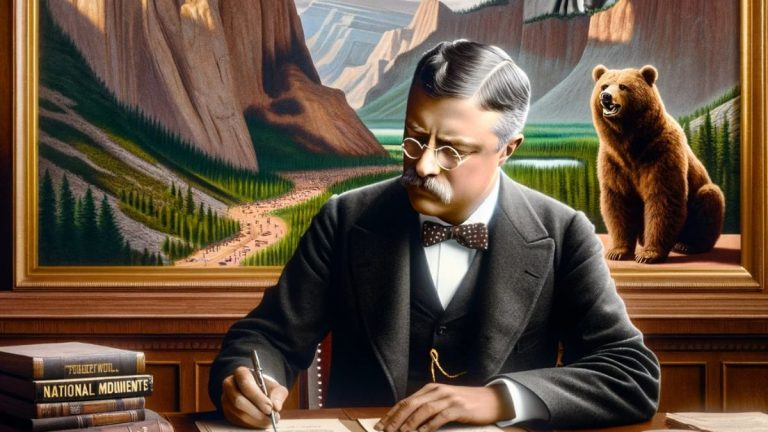
Related: Why Did Theodore Roosevelt Create National Parks?

The Charge of the Rough Riders

Theodore Roosevelt on horseback, leading the Rough Riders

The Rough Riders, under the spirited leadership of Theodore Roosevelt, etched their name into history through their participation in key battles of the Spanish-American War, most notably the Battle of San Juan Hill.

This conflict, a pivotal moment in both the war and Roosevelt’s military career, showcased the unit’s bravery, strategic acumen, and the challenges they overcame.

The Battle of San Juan Hill, fought on July 1, 1898, near Santiago de Cuba, was a defining moment for the Rough Riders. It was here that their courage, tenacity, and resilience were put to the ultimate test.

The battle was part of a larger campaign to seize the port city of Santiago, a strategic objective crucial to ending Spanish resistance in Cuba.

The combat strategies employed by the Rough Riders and the U.S. forces were marked by traditional military tactics and improvisation necessitated by the terrain and the enemy’s fortifications.

The American plan involved a two-front assault, with the Rough Riders assigned to the eastern approach towards the San Juan Heights. The battle terrain was challenging, featuring dense jungle and steep inclines, which made the advance difficult and exhausting.

One of the most significant challenges faced by the Rough Riders was the lack of sufficient support from the regular army due to logistical errors and miscommunications.

Fun fact…those logistical errors and miscommunications included a lack of horses, which meant the legendary calvary unit had to take the hill on foot!

This left Roosevelt and his men in a precarious position, often isolated and exposed to heavy Spanish fire. Despite these setbacks, the Rough Riders, armed with a mix of rifles and revolvers and characterized by their distinctive attire and rugged demeanor, charged forward.

The charge up Kettle Hill, a lesser-known but equally important part of the battle, was led by Roosevelt himself. He demonstrated remarkable bravery and rallied his men in a daring uphill assault against entrenched Spanish forces.

Although costly in terms of casualties, this action was pivotal in breaking the Spanish defensive line and contributed significantly to the capture of the San Juan Heights.

The Rough Riders’ contributions to the overall war effort were not limited to their combat prowess. Their diverse composition and the media attention they garnered helped boost morale on the home front and among the troops.

Their actions embodied the spirit of American determination and played a key role in the eventual U.S. victory in the Spanish-American War.

Related: Who Shot Theodore Roosevelt?

The Leadership of Theodore Roosevelt

Theodore Roosevelt’s leadership during the Spanish-American War, particularly his command of the Rough Riders, was characterized by his hands-on approach and personal bravery

Roosevelt was not a commander who led from the rear; instead, he was always at the forefront of the action, sharing the risks and hardships with his men.

This approach earned him the respect and loyalty of the Rough Riders, who saw in him a leader and a fellow soldier committed to their cause. His ability to inspire and motivate was crucial in maintaining morale under the challenging conditions of war.

Tactically, Roosevelt demonstrated a keen understanding of the realities of the battlefield. He adapted his strategies to the changing circumstances, often making decisions in the heat of the moment.

During the Battle of San Juan Hill, Roosevelt’s decision to lead a charge up Kettle Hill – in the face of heavy Spanish resistance and without orders – was a bold move that exemplified his aggressive and decisive nature.

This action, while risky, was instrumental in breaking the enemy’s line and contributed significantly to the success of the larger battle.

Another aspect of Roosevelt’s leadership was his ability to adapt to the limitations of his unit. The Rough Riders, being a volunteer cavalry, lacked the training and discipline of regular army units.

Roosevelt turned this to his advantage by fostering a spirit of rugged individualism and leveraging his men’s diverse skills and backgrounds. He recognized the value of each soldier, from the seasoned cowboy sharpshooters to the well-educated strategists, and used their unique abilities to enhance the unit’s effectiveness.

The impact of Roosevelt’s leadership on the outcomes of battles was significant. His decisions, often made under intense pressure, were pivotal in achieving tactical advantages and eventual victories. His leadership not only influenced the performance of the Rough Riders but also had a broader impact on the morale and effectiveness of the American forces.

The Spanish-American War & Roosevelt’s Meteoric Rise

Theodore Roosevelt’s courage and leadership during the Spanish-American War were not just a demonstration of his military prowess but also a turning point in his political career. The war served as a springboard, launching him from a relatively minor political position to national fame and ultimately to the presidency of the United States.

Roosevelt’s return from the war was met with widespread acclaim. His exploits with the Rough Riders had captured the nation’s imagination, making him a household name.

The image of Roosevelt charging up San Juan Hill resonated deeply with the American public, symbolizing both bravery and a new, vigorous approach to American leadership. This public adoration translated into substantial political capital.

Leveraging his newfound fame, Roosevelt entered the political arena with increased vigor. In 1898, shortly after returning from Cuba, he was elected Governor of New York.

His tenure as Governor was marked by his characteristic zeal for reform, as he tackled issues ranging from corporate monopolies to urban poverty. This period further solidified his reputation as a progressive reformer, setting the stage for his ascent to the national stage.

Roosevelt’s most significant political advancement came in 1900 when he was selected as William McKinley’s running mate in the presidential election. His war hero status and reformist credentials made him an attractive candidate for the vice presidency, appealing to various factions within the Republican Party.

The ticket’s subsequent victory in the election catapulted Roosevelt to one of the highest offices in the land.

Tragedy struck in 1901 when President McKinley was assassinated, thrusting Roosevelt into the presidency. As President, Roosevelt’s approach was influenced by his experiences in the Spanish-American War.

His foreign policy was assertive and proactive, epitomized by the Roosevelt Corollary to the Monroe Doctrine, which asserted America’s right to intervene in the affairs of Latin American countries. Domestically, his policies reflected the same vigor and reformist spirit he had shown as Governor and military leader.

The war underscored for Roosevelt the importance of a proactive foreign policy, a stance that would later define his presidency. His famous adage, “Speak softly and carry a big stick,” was emblematic of his approach to international relations, advocating for American strength and intervention when necessary to uphold justice and order.

Domestically, Roosevelt’s presidency was marked by a progressive agenda that mirrored the boldness he exhibited in war. He championed significant reforms in various sectors, including industry, conservation, and labor rights.

His efforts in trust-busting, establishing national parks, and advocating for the Panama Canal’s construction are enduring testaments to his dynamic and forward-thinking leadership.

Wrapping it Up

In conclusion, Theodore Roosevelt’s legacy, shaped significantly by his experiences in the Spanish-American War, is multifaceted. It encompasses military heroism, progressive domestic policies, and a robust foreign policy stance.

His journey from the hills of Cuba to the White House encapsulates a pivotal era in American history, marking the rise of the United States as a global power and the emergence of a presidency that actively shaped the nation’s destiny.

Theodore Roosevelt’s impact extended beyond specific policies and redefined the presidency. He utilized the office as a “bully pulpit,” a powerful platform to advocate for change and influence public opinion. This approach was a marked departure from his predecessors’ more reserved use of presidential power.

The Spanish-American War and Roosevelt’s role also signaled a shift in America’s global stance. Under his leadership, the United States began to assert itself more prominently on the world stage, a shift from a policy of isolationism to one of active engagement. This period set the groundwork for the United States’ role in international affairs throughout the 20th century.

Article References

  1. https://www.nps.gov/thrb/learn/historyculture/tr-rr-spanamwar.htm
  2. https://www.history.com/topics/us-presidents/roosevelt-fights-in-spanish-american-war-video
  3. https://constitutioncenter.org/blog/on-this-day-mckinley-is-shot-while-roosevelt-is-traveling
  4. https://history.state.gov/milestones/1899-1913/panama-canal
  5. https://www.archives.gov/milestone-documents/roosevelt-corollary

20 Little-Known Facts About May

0

From historical events to unique traditions, May brings a mix of celebrations and memorable moments. It’s a time when flowers bloom and days get longer, but there’s much more to this month than just springtime charm. 

Let’s explore some fascinating facts about May and discover why May is such a special part of the year!

1) No US Presidents Died in May

Interestingly, every other month has seen the death of at least one US president, but never in May​​​​. 

The curious fact that no U.S. presidents have died in the month of May stands out as a unique historical anomaly. With a total of 46 presidents as of 2023, the United States has seen its fair share of presidential passing.

Each of these passings has occurred in months other than May, spread across various times of the year. This pattern—or lack thereof—does not seem to follow any specific logic or reason, appearing more as a coincidence in the annals of U.S. presidential history.

Interestingly, statistically, every month would likely experience at least one presidential death purely by chance, given the number of presidents and the span of years involved.

However, May has so far remained an exception to this trend, making it a unique month in the context of U.S. presidential history.

2) Eurovision Song Contest

The Eurovision Song Contest, celebrated annually in May, has been a pivotal event in international music since 1956. This event transcends just a competition; it is a cultural phenomenon that brings together nations across Europe and beyond through the power of music.

Eurovision has become famous for its eclectic mix of musical styles, flamboyant performances, and the spirit of unity and diversity it promotes among participating countries.

One of the most notable successes of Eurovision is the rise of the Swedish pop group ABBA, who won the contest in 1974 with their hit “Waterloo.”

This victory was not only a milestone for ABBA, catapulting them to international stardom, but it also marked a defining moment in the contest’s history.

Since then, Eurovision has continued to be a platform for launching the careers of many artists, contributing significantly to the global music scene.

3) Star Wars Day

Star Wars Day, observed annually on May 4th, has become an iconic date for fans of the legendary Star Wars franchise. The date was chosen for its pun on the famous phrase from the movies, “May the Force be with you,” which phonetically echoes “May the Fourth.”

This unofficial holiday celebrates the rich legacy and cultural impact of the Star Wars series, which began with the release of the original film in 1977.

The day is marked by fans around the globe in various ways, including movie marathons, themed parties, dressing up as favorite characters, and engaging in discussions and trivia about the Star Wars universe.

It has also been embraced by Lucasfilm and Disney, with special events, merchandise releases, and promotions often coinciding with the date.

4) Eta Aquariids Meteor Shower

The Eta Aquariids meteor shower is an annual celestial event, observable from about April 19 to May 28. It is renowned for its speed and brightness, with meteors traveling at about 66 kilometers per second and often leaving glowing “trains” (ionized gas trails that last for a few seconds to minutes) in the night sky.

This meteor shower is best viewed just before dawn, offering an impressive display for stargazers.

The Eta Aquariids are associated with Halley’s Comet. As Earth passes through the debris left behind by this famous comet, the bits of comet dust and particles enter the Earth’s atmosphere and burn up, creating the meteor shower.

The shower gets its name from its apparent radiant point in the constellation Aquarius, near one of its brightest stars, Eta Aquarii.

5) Empire State Building Opening

The Empire State Building, a defining symbol of New York City and an architectural marvel, officially opened its doors on May 1, 1931.

Designed by Shreve, Lamb & Harmon and constructed in just over a year, this building was a remarkable feat of engineering and labor, especially considering the constraints of the Great Depression era.

Standing at 1,454 feet tall, including its antenna, it held the title of the world’s tallest building for nearly 40 years until the North Tower of the World Trade Center was completed in 1970.

6) Maypole Celebrations

Maypole celebrations are a charming and colorful tradition rooted in European folklore, dating back to at least 1350 AD. Central to this tradition is the maypole, a tall wooden pole, which is festively adorned with flowers, ribbons, and sometimes greenery, symbolizing the vitality and renewal of spring.

The most prominent aspect of maypole celebrations involves dances, where participants, often children or young adults, hold onto the ribbons attached to the top of the pole and dance around it.

These dances can involve intricate patterns as dancers weave in and out, braiding the ribbons together and then unwinding them in a symbolic representation of the weaving of the community and the cycle of the seasons.

Historically, the maypole was a focal point of village festivities during May Day celebrations, embodying the joy and fertility associated with the onset of spring.

Different regions across Europe have unique variations of this tradition, which remains a popular and picturesque aspect of cultural celebrations, particularly in rural areas.

7) Unique Calendar Feature

The unique calendar feature regarding the month of May is quite intriguing. In any given year, May is the only month that begins and ends on the same day of the week as no other month.

This characteristic results from how the Gregorian calendar is structured, coupled with the specific number of days in each month and the pattern of leap years.

This distinct trait adds a special quirk to May, setting it apart in the annual calendar cycle. The phenomenon occurs because the Gregorian calendar, which is the most widely used civil calendar today, follows a 400-year cycle that is carefully designed to keep the calendar year synchronized with the solar year.

Within this cycle, the distribution of days in each month and the leap year pattern result in May’s unique placement where its start and end days of the week do not align with those of any other month in the same year.

8) May Day

May Day, celebrated on May 1st, is a day with a rich tapestry of history and significance, blending ancient traditions with modern observances. Historically, May Day has its roots in ancient spring festivals, such as the Roman Floralia and the Celtic Beltane.

These festivals were typically marked with flowers, dancing, and rituals to celebrate fertility and the renewal of the Earth after winter.

In a more contemporary context, May Day is also known as International Workers’ Day, a day of political demonstrations and celebrations organized by communists, anarchists, socialists, and labor movements.

This aspect of May Day began in the late 19th century, particularly following the Haymarket Riots in Chicago in 1886, which was a pivotal event in the labor movement advocating for workers’ rights, including the establishment of the eight-hour workday.

9) The May Queen

The May Queen is a symbolic figure deeply rooted in the traditions of May Day, representing the themes of spring, fertility, and beauty. This emblematic character is often envisioned as a young woman adorned with spring flowers, symbolizing the season’s purity, youth, and vitality.

The crowning of the May Queen is a central feature of many May Day celebrations, particularly in European cultures.

In these festivities, the May Queen is typically selected from the community and is often seen as a personification of Flora, the Roman goddess of flowers, or as a representation of the traditional spirit of spring.

Her crowning often involves a procession and a ceremonial placing of a floral wreath or garland upon her head.

Accompanied by music, dancing, and sometimes theatrical performances, the May Queen presides over the May Day celebrations, embodying the joy and renewal associated with the onset of spring.

10) Victory in Europe Day

Victory in Europe Day, commonly known as VE Day, is commemorated on May 8th and marks a significant moment in world history—the end of World War II in Europe.

This day in 1945 signified the formal acceptance by the Allies of Nazi Germany’s unconditional surrender of its armed forces, effectively bringing an end to the European conflict of the war.

Celebrated in various European countries, VE Day is a time of remembrance and reflection on the immense sacrifices made during the war.

It is often marked by various ceremonies and events, including parades, speeches, and moments of silence, honoring those who lost their lives during the conflict.

VE Day is a poignant reminder of the struggle for freedom and the triumph of peace over tyranny in countries like France, the United Kingdom, and Poland.

11) The Kentucky Derby

The Kentucky Derby, known as “The Most Exciting Two Minutes in Sports,” is a prestigious horse race held annually on the first Saturday in May.

This event, inaugurated in 1875, is the oldest continuous sporting event in the United States and forms the first leg of the American Triple Crown, followed by the Preakness Stakes and the Belmont Stakes.

Taking place at Churchill Downs in Louisville, Kentucky, the Derby is renowned for its rich traditions, including the lavish hats worn by attendees, the singing of “My Old Kentucky Home” during the pre-race post parade, and the mint julep, the traditional beverage of the race.

The race features three-year-old thoroughbreds competing over a distance of 1.25 miles (2 km).

12) Indianapolis 500

The Indianapolis 500, often called the “Indy 500“, is one of the most prestigious events in the world of auto racing, held annually on Memorial Day weekend in May. This event takes place at the Indianapolis Motor Speedway in Indiana.

Known for its rich history and tradition, the Indy 500 is a 500-mile race, and it is one of the three most significant motor racing events globally, commonly known as the “Triple Crown of Motorsport.”

The race is conducted over 200 laps around a 2.5-mile oval circuit and is renowned for its high speeds and close competition. First held in 1911, the Indy 500 has become deeply embedded in American culture, attracting fans from all over the world.

Traditions of the event include the performance of “Back Home Again in Indiana,” the release of balloons before the race starts, and the victory lap of the winning driver drinking milk, a custom since 1936.

13) Cinco de Mayo

Cinco de Mayo, celebrated on May 5th, is a holiday that has gained significant popularity in the United States, particularly as a celebration of Mexican culture and heritage.

The date commemorates the Mexican Army’s victory over the French Empire at the Battle of Puebla in 1862, under the leadership of General Ignacio Zaragoza.

In the United States, Cinco de Mayo is not a federal holiday but is observed with various festivities, including parades, music, folkloric dancing, and traditional foods.

A notable aspect of the celebration is the significant consumption of beer, with spending exceeding $600 million. This reflects the holiday’s commercialization and its widespread acceptance as a part of American cultural celebrations.

14) Memorial Day

Memorial Day in the United States is a federal holiday observed annually on the last Monday of May. It is a day of remembrance and honor for the men and women who have died while serving in the U.S. military.

Originally known as Decoration Day, it originated in the years following the Civil War and became an official federal holiday in 1971.

This day is marked by various activities and traditions across the country. Many people visit cemeteries and memorials to pay their respects to fallen soldiers, often decorating graves with flowers and flags.

Memorial Day is also known for its parades, featuring both active military personnel and veterans of past wars.

15) Asian Pacific American Heritage Month

Asian Pacific American Heritage Month, observed in May, is a significant period in the United States dedicated to recognizing and celebrating the contributions, culture, history, and achievements of Asian Americans and Pacific Islanders (AAPI).

This commemoration was officially designated in May to mark two important historical events: the arrival of the first Japanese immigrants to the United States on May 7, 1843, and the completion of the transcontinental railroad on May 10, 1869, largely built by Chinese immigrants.

Throughout this month, various activities and events are organized across the country, including educational programs, cultural exhibitions, public performances, and community gatherings.

16) National Foster Care Month

National Foster Care Month, observed annually in May, is a crucial time designated for raising awareness about the needs and well-being of children in foster care.

This month-long observance focuses on understanding the challenges faced by children in the foster care system and acknowledges the dedication of those who contribute to enhancing their lives, including foster parents, family members, volunteers, mentors, child welfare professionals, and policymakers.

During National Foster Care Month, various organizations and communities engage in activities aimed at supporting and celebrating foster families, while also driving efforts to increase public awareness about the foster care system.

The goal is to encourage more individuals and families to get involved, whether through fostering, adoption, or other forms of support.

17) Mental Health Awareness Month: 

Mental Health Awareness Month, observed each year in May, plays a critical role in highlighting the importance of mental health and aims to break the stigma surrounding mental health issues.

This month is dedicated to raising awareness about mental health conditions and advocating for strategies to support mental well-being.

Throughout the month, various organizations, health professionals, and communities engage in activities to educate the public about mental health.

This includes providing information on recognizing mental health problems, promoting effective strategies for maintaining mental well-being, and encouraging people to seek help when needed.

Mental Health Awareness Month also emphasizes the importance of understanding mental health as an integral part of overall health. It’s a time to acknowledge the challenges faced by individuals with mental health conditions and to advocate for policies and practices that support mental health care access and treatment.

18) National Walking Month in the UK

National Walking Month, observed in May across the United Kingdom, is an initiative designed to encourage people of all ages to walk more and embrace the numerous health benefits associated with regular walking.

This month-long campaign emphasizes the importance of physical activity and aims to make walking a natural choice for everyday local journeys.

Organized by Living Streets, a UK charity dedicated to everyday walking, National Walking Month features a variety of events and challenges to motivate individuals and communities to walk more.

These include campaigns like the #Try20, which encourages people to add at least 20 minutes of walking to their daily routine. The initiative highlights how walking can improve physical health, mental well-being, and facilitate social connections.

It also addresses the barriers that might prevent people from walking, such as safety concerns or unfavorable weather conditions, and offers solutions to overcome them.

19) Famous Birthdays

In May, we celebrate the birthdays of several iconic personalities who have significantly contributed to culture and history. Cher, born on May 20th, is a multi-talented artist known for her distinctive singing voice, trendsetting fashion, and versatile acting skills. Her career spans over six decades, encompassing music, television, and film, and she is often referred to as the “Goddess of Pop.”

Bob Dylan, born on May 24th, is a monumental figure in music, renowned for his profound and poetic lyrics. His work, particularly from the 1960s, became anthems for the civil rights and anti-war movements. Dylan’s influence on contemporary music culture is immense, earning him accolades like the Nobel Prize in Literature.

Queen Victoria was a significant historical figure born on May 24th, 1819. Her reign, known as the Victorian era, was marked by industrial, cultural, political, scientific, and military changes in the United Kingdom, and her influence extended across the British Empire. Her birthday also became celebrated as the Empress of India, marking her as a pivotal figure in British history.

20) Weather Patterns

In May, the weather patterns in the United States and the United Kingdom present a notable contrast in average temperatures, reflecting the diverse climatic conditions of these regions.

In the US, the average temperature during May is approximately 66°F (19°C). This period typically marks the transition from spring to summer, with many areas experiencing a significant increase in warmth and daylight.

In contrast, the UK experiences cooler average temperatures around 57°F (14°C) in May. This difference is partly due to the UK’s geographical location and maritime climate, which generally results in milder temperatures.

May in the UK is characterized by the late spring season, where days are longer and brighter, but the temperatures are not as high as in many parts of the US.

This month often sees a mix of sunny days interspersed with spring showers, contributing to the lush greenery typical of the British countryside at this time of year.


Why Did Theodore Roosevelt Create National Parks?

0

Theodore Roosevelt created national parks primarily to preserve the American landscape’s breathtaking natural beauty and unique geological features for future generations.

His vision was driven by a deep-seated belief in conservation and the need to protect these natural wonders from the rapid industrialization and development sweeping across the country.

But why did this rugged outdoorsman, known for his “speak softly and carry a big stick” approach, turn his presidential power towards conserving vast tracts of wilderness?

What stirred in Roosevelt’s heart that made him see America’s wild spaces as more than mere resources to be exploited?

Dive deeper with us as we explore the compelling story behind his pioneering actions in the realm of environmental conservation.

Roosevelt’s Tool for Conservation: The Antiquities Act and National Monuments

In 1906, Theodore Roosevelt made a bold move with the Antiquities Act, a piece of legislation that was like a game-changer for American conservation. This act was pretty revolutionary because it gave the President the power to declare national monuments without needing a thumbs up from Congress.

Using this newfound authority, Roosevelt didn’t waste any time. He went on to proclaim several significant sites as national monuments, setting a precedent for protecting America’s natural and historical treasures.

One of the first on his list was Devil’s Tower in Wyoming. This isn’t just any rock formation; it’s like nature’s skyscraper, standing tall and majestic, demanding awe and respect.

But Roosevelt’s ambitions went even bigger. Here’s a fun fact: He also declared the Grand Canyon a national monument. Yes, the Grand Canyon – that vast, jaw-dropping chasm that’s practically synonymous with natural wonder.

By designating it as a national monument, Roosevelt ensured that this incredible landscape would be preserved for future generations to marvel at.

In essence, the Antiquities Act was Roosevelt’s way of putting a protective arm around America’s natural and historical gems.

National Park Creation: The Visionary Efforts of Theodore Roosevelt

In the early 20th century, President Theodore Roosevelt embarked on a visionary journey to conserve America’s natural wonders. His commitment to preserving the nation’s beauty and heritage led to the establishment of several national parks, each a testament to his foresight and dedication to environmental conservation.

Teddy Roosevelt’s transformation into a conservationist president wasn’t just a political move; it was deeply personal. This journey began in the rugged, open spaces of North Dakota.

Here, amidst personal grief, Roosevelt found not just a retreat but a profound connection with nature. In this starkly beautiful landscape, he lived the life of a cowboy and a hunter, learning firsthand about the unspoiled wilderness.

The plot thickens with John Muir, the era’s leading voice in wilderness protection, especially around Yosemite. In 1903, Roosevelt and Muir camped out in Yosemite, swapping stories and perspectives under the vast Californian sky.

Muir’s fervent belief in safeguarding natural spaces struck a chord with Roosevelt.

Crater Lake National Park

One of Roosevelt’s most notable achievements in this realm was the creation of Crater Lake National Park in 1902. Nestled in Oregon, Crater Lake is renowned for its stunningly deep blue waters and serene landscape.

It epitomizes the essence of natural beauty and stands as a symbol of the need to protect such unique ecosystems for future generations.

Mesa Verde National Park

Equally significant was Roosevelt’s establishment of Mesa Verde National Park in 1906. Located in Colorado, Mesa Verde safeguards an invaluable archaeological treasure: the well-preserved cliff dwellings of the Ancestral Puebloans.

This park not only highlights the importance of natural preservation but also emphasizes the need to protect historical and cultural sites that offer insights into the past.

These parks, among others established under Roosevelt’s leadership, reflect a profound commitment to the idea that natural and historical wonders should be preserved for posterity. They serve as enduring reminders of Roosevelt’s pioneering role in the conservation movement and his enduring legacy in the stewardship of America’s natural and cultural heritage.

Related: Theodore Roosevelt in the Spanish-American War: An Officer & A President

Native Lands: A Controversial Legacy

While Theodore Roosevelt’s conservation efforts left a significant legacy in preserving natural landscapes, they also cast a shadow over the lives and cultures of Native American peoples. The creation of national parks and monuments, often hailed as a triumph for environmental preservation, had a darker side: the displacement of indigenous communities from their ancestral lands.

The establishment of these protected areas meant that lands once freely roamed and inhabited by Native Americans were now under federal control. This often led to the forced relocation of indigenous peoples, severing their deep-rooted connections to these lands.

For example, the creation of parks like Yosemite involved the removal of Native tribes who had lived in these regions for centuries. The narrative of conservation and national pride overshadowed the narratives and rights of the original inhabitants.

This displacement was more than just a loss of land; it was a cultural upheaval. Indigenous communities were not only removed from their homes but also from a landscape imbued with spiritual, historical, and cultural significance.

The conservation policies of Roosevelt’s era failed to acknowledge or respect these deep connections, leading to a legacy of controversy and loss for many Native American tribes.

Roosevelt’s Conservation Methods: A Holistic Approach

Theodore Roosevelt’s approach to conservation was comprehensive and forward-thinking, extending far beyond the establishment of national parks.

He understood that preserving America’s natural heritage required a multifaceted strategy, and so, he pioneered the creation of wildlife refuges and the expansion of national forests, marking a significant shift in environmental policy.

Roosevelt’s establishment of wildlife refuges was crucial in protecting America’s fauna. These refuges provided safe havens for a myriad of species, some of which faced the threat of extinction due to overhunting and habitat loss.

By setting aside these areas, Roosevelt ensured that wildlife could thrive in their natural habitats, free from the pressures of human encroachment and exploitation.

Moreover, Roosevelt’s tenure saw a massive expansion of the national forest system. He utilized the Forest Reserve Act of 1891 to set aside 150 million acres of land as national forests.

This move was pivotal in conserving watersheds and forestlands, crucial for maintaining ecological balance and preventing overexploitation of timber resources.

These forests also played a vital role in safeguarding biodiversity and contributing to the overall health of the environment.

Roosevelt’s holistic conservation methods reflected his deep understanding of the interconnectedness of ecosystems. By protecting varied landscapes through wildlife refuges and national forests, he laid the groundwork for modern environmental policies that recognize the importance of conserving diverse habitats.

Article Sources

  1. https://www.nps.gov/thrb/learn/historyculture/trandthenpsystem.htm
  2. https://www.nps.gov/thro/learn/historyculture/theodore-roosevelt-and-conservation.htm
  3. https://savingplaces.org/antiquities-act
  4. https://www.fs.usda.gov/learn/our-history