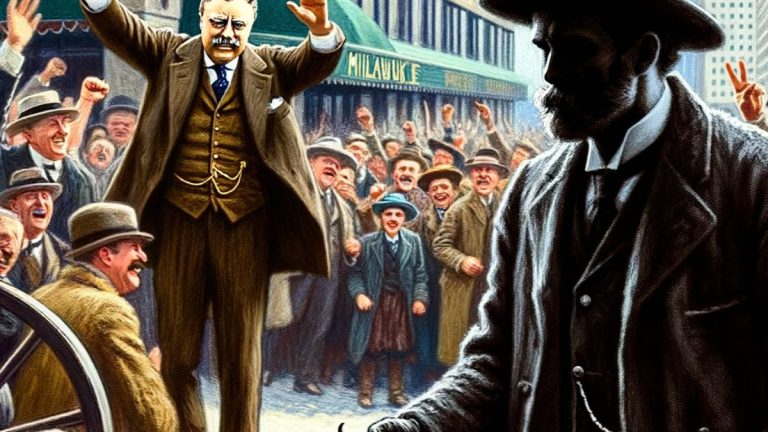
October 14, 1912. Milwaukee, Wisconsin. The air is thick with political fervor as Theodore Roosevelt, the larger-than-life former President gunning for an unprecedented third term, steps into the spotlight.
The stage was set not just for a campaign speech but for an event that would etch itself into the annals of American history.
Now, folks, this wasn’t just any campaign trail. Teddy, our beloved Rough Rider with numerous accomplishments, was no longer sitting comfortably in the Republican saddle.
He had spurred his own horse, leading the charge of the Progressive Party, famously known as the Bull Moose Party. Why “Bull Moose,” you ask? Because Teddy was as tough and unstoppable as one, or so the people thought.
But even Bull Mooses, Moosi…let’s stick with Moose- can find themselves in the crosshairs. Enter John Schrank, a name not etched in gold but scribbled in the margins of a dark page of history.
A New York saloonkeeper with a mind tangled in delusions, Schrank trailed Roosevelt, fueled by a haunting dream where the ghost of President McKinley pointed a spectral finger at Roosevelt as his assassin.
As Roosevelt waved his hat to the gathered crowd outside the Gilpatrick Hotel, Schrank took his shot. History held its breath. The bullet, aimed with deadly intent, was destined for Roosevelt’s heart.
But fate, my friends, had a different script in mind.
Who Was John Schrank?
Let’s meet the man behind the gun, John Schrank. Picture a character plucked straight from a dark, twisted novel, and you’ve got our guy, Schrank.
He wasn’t your run-of-the-mill villain, though. Born in Bavaria in 1876, Schrank emigrated to the U.S., where life seemed to unravel around him.
After losing his parents and his beloved aunt and uncle, followed by his girlfriend in the tragic General Slocum disaster, Schrank’s world was a canvas of loss and sorrow.
But here’s where things take a turn for the bizarre. Schrank, now a saloonkeeper in New York, found his mind ensnared by dreams, not of sugarplums and fairies but of a dead president.
William McKinley’s ghost, no less, who seemed to have a bone to pick with Roosevelt.
In these eerie nighttime visitations, McKinley fingered Roosevelt as his assassin and tasked Schrank with preventing a Rooseveltian third-term presidency.
It’s like something out of a psychological thriller, isn’t it? Schrank, armed with a mission bestowed upon him by a spectral president, decided to take matters into his own hands.
Drifting along the East Coast, he became a devoutly religious man and a keen Bible scholar, his mind increasingly clouded with the delusion of his divine mission.
This was no mere political disagreement or a case of campaign rivalry gone too far. When Schrank pulled that trigger, he was firing a bullet loaded with delusion, loss, and a twisted sense of justice.
The mental state he was in? Well, let’s just say it wasn’t one for making sound, rational decisions. His mind was a tangled web of grief, religious fervor, and insanity, culminating in that one fateful moment in Milwaukee.
Roosevelt’s day was as packed as a sardine can. He began his day in Chicago, charging through his campaign trail with the vigor of a man half his age. His journey took him to Racine, Wisconsin, before he steamed into Milwaukee, the city where destiny awaited with a sinister twist.
As the evening approached, the air at the Gilpatrick Hotel was charged with anticipation. People gathered, eager to catch a glimpse of the man who had taken San Juan Hill and now sought to reclaim the highest office in the land.
Clad in his Army overcoat, Roosevelt was the picture of robust health and unflagging spirit. In his breast pocket was a thick, folded 50-page speech – little did he know he’d soon learn exactly why good writing is important!
Then came the moment that would freeze in time. As Roosevelt stepped out to greet the public, a figure emerged from the crowd. John Schrank, a man whose mind was a maze of delusions and vendettas, raised his .38 caliber revolver.
The shot rang out, slicing through the evening air and finding its mark in Roosevelt’s chest.
But fate, in a twist befitting a Roosevelt tale, intervened. The bullet, slowed down by the manuscript and a steel eyeglass case, spared Roosevelt’s life, embedding itself in his chest but not his heart.
In a legendary display of grit, Roosevelt, after a quick self-examination, decided the show must go on. Blood staining his shirt, he refused immediate medical attention.
Instead, with a bullet still lodged in his body, he headed straight for the auditorium. The crowd, unaware of the drama that had just unfolded, awaited the words of a man who had just cheated death.
Roosevelt’s Response and His Famous Speech
Upon realizing he’d been shot, Roosevelt did something that would make most modern-day action heroes blush. He coolly probed his chest, looking for blood on his fingertips and in his mouth – the old Rough Rider’s way of checking if his lungs were hit.
Finding none, he surmised the bullet hadn’t reached his lung.
His conclusion? He was fit enough to speak. The man was practically a walking medical marvel!
Now, let’s not forget the unsung heroes of this story – a steel eyeglass case and a 50-page speech manuscript.
Folded in Roosevelt’s breast pocket, they absorbed the brunt of the bullet’s impact, cushioning its deadly force. In a world without Kevlar, Roosevelt had unwittingly equipped himself with the best protection a man could have – his own words.
Then came the moment of sheer Rooseveltian drama. Standing before the stunned audience at the Milwaukee Auditorium, he began with words that would echo through time:
“Friends, I shall ask you to be as quiet as possible. I don’t know whether you fully understand that I have just been shot; but it takes more than that to kill a Bull Moose.”
If ever there were words that encapsulated the indomitable spirit of a man and a president, these were it.
For the next hour, Roosevelt, with a bullet still inside him, spoke not just with his voice but with the unyielding spirit of a true American legend.
He didn’t just give a speech; he gave a performance that was part defiance, part drama, and all Roosevelt.
Aftermath: Medical Response and Roosevelt’s Campaign
Now, picture this: Roosevelt, fresh off the stage, still in his bloodied shirt, surrounded by doctors backstage. They discovered the bullet had lodged in his chest wall.
But here’s the kicker – they decided not to remove it. That’s right, the risks of surgery in those days outweighed the benefits, so they left it there. Roosevelt carried that bullet as a literal and figurative badge of honor for the rest of his life.
But what about his campaign? Well, Teddy was a tough cookie, but even tough cookies can crumble. This incident, as electrifying as it was, couldn’t catapult him back into the presidency.
Despite his valiant efforts and the sympathy he garnered, Roosevelt lost the 1912 election to Woodrow Wilson. It seems the American electorate admired his moxie but perhaps wondered if a man who had just been shot was up to the strenuous demands of the presidency.
Nevertheless, Roosevelt’s campaign post-shooting was nothing short of remarkable. He bounced back into the fray with the same vigor and passion, refusing to let a mere bullet slow him down.
This incident only added to the legend of Teddy Roosevelt – a man who could take a bullet and still deliver a rousing speech, but who, in the end, couldn’t quite clinch the electoral victory.
John Schrank’s Trial and Life Afterwards
After the smoke cleared and Roosevelt had made his dramatic exit, the spotlight turned to John Schrank, the would-be assassin.
Schrank’s trial was as much a spectacle as the assassination attempt itself. Here was a man who shot a former president, but his motives, rooted in delusion, painted a tragic picture of mental illness rather than calculated malevolence.
Schrank’s defense didn’t revolve around denial of the act but rather focused on his mental state. The court-appointed psychiatrists delved into the depths of his psyche, uncovering the layers of his delusions and unraveling the threads of his tormented mind.
Their conclusion? Schrank was not a criminal mastermind but a man deeply afflicted with paranoid schizophrenia. The verdict was clear: instead of prison, Schrank was committed to the Central State Hospital for the Criminally Insane in Wisconsin.
There, in the confines of the mental institution, Schrank spent the remainder of his days.
He lived there, largely forgotten by the world, until his death in 1943. Schrank’s story is a poignant reminder of the fine line between sanity and madness, a human life derailed by mental illness and a dream that turned into a nightmare.
Wrapping it Up
Roosevelt’s decision to carry on with his speech despite a bullet in his chest has become the stuff of legend. It’s a tale that speaks volumes about his toughness, commitment to his cause, and unyielding determination.
This incident, often recounted in history books and Roosevelt biographies, has helped to perpetuate the image of Roosevelt as the quintessential “Bull Moose,” a man whose physical and mental fortitude were seemingly unbreakable.
Moreover, this incident highlights Roosevelt’s complex legacy as a leader who symbolized strength and a man of flesh and blood.
It humanizes him, showing that even the most powerful figures can be vulnerable, yet resilient. The incident has been used to draw parallels to Roosevelt’s approach to life and politics – fearless, direct, and unflinchingly honest.
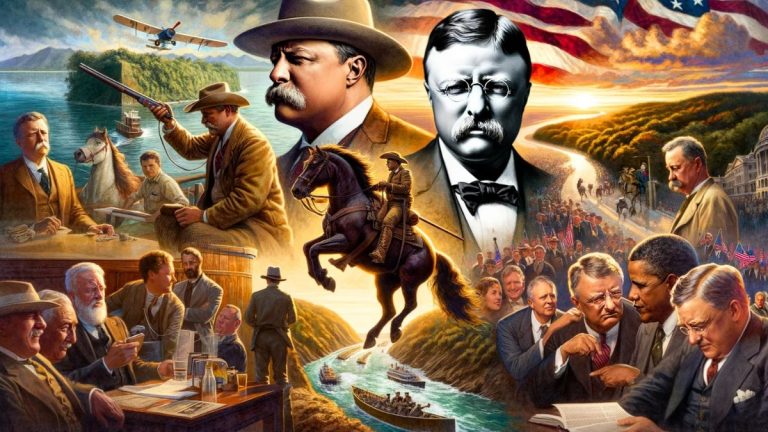
Theodore Roosevelt, the 26th President of the United States, left an indelible mark on American history through his numerous accomplishments and progressive policies.
From his decisive actions in foreign affairs to his groundbreaking reforms in domestic policy, Roosevelt’s presidency marked a turning point in the role and power of the executive branch. His legacy is one of conservation, trust-busting, and a commitment to social justice.
In this article, we will explore the major accomplishments of Theodore Roosevelt, highlighting his contributions to the nation and the lasting impact of his presidency.
Early Life and Political Career
Born into a prominent New York family on October 27, 1858, Theodore Roosevelt was raised with a sense of privilege and a strong moral compass. His upbringing instilled in him a deep appreciation for nature and a desire to make a difference in the world.
After graduating from Harvard University, Roosevelt embarked on a political career, starting as a member of the New York State Assembly in 1882. He quickly gained a reputation for his progressive views and his commitment to fighting corruption.
The Spanish-American War and the Rough Riders
One of the defining moments of Roosevelt’s early political career was his involvement in the Spanish-American War.
When war broke out in 1898, Roosevelt resigned from his position as Assistant Secretary of the Navy and formed the First US Volunteer Cavalry Regiment, known as the Rough Riders.
As their leader, Roosevelt played a pivotal role in the Battle of San Juan Hill, displaying courage and leadership that earned him national recognition.
Trust-Busting and the Square Deal
Upon assuming the presidency in 1901 following the assassination of President William McKinley, Roosevelt wasted no time in asserting his authority and pushing for progressive reforms.
One of his key initiatives was trust-busting, aimed at breaking up monopolies and ensuring fair competition in the economy. Roosevelt enforced the Sherman Antitrust Act and initiated numerous lawsuits against large corporations, earning him the nickname “trust buster.”
His efforts resulted in the dissolution of several major trusts and set a precedent for future antitrust actions.
Roosevelt’s commitment to social justice extended beyond trust-busting. He championed the concept of the “Square Deal,” which aimed to create a fair balance between the interests of labor, business, and consumers.
He advocated for workers’ rights, supported regulatory measures to protect consumers, and pushed for reforms in areas such as healthcare and education. Roosevelt’s Square Deal programs laid the foundation for the progressive movement and set the stage for future social reforms.
Foreign Policy: The Roosevelt Corollary and the Panama Canal
Roosevelt’s foreign policy initiatives were characterized by a belief in American exceptionalism and a commitment to maintaining peace and stability in the world. He famously stated, “speak softly and carry a big stick,” emphasizing the importance of diplomacy backed by a strong military.
One of his major foreign policy achievements was the Roosevelt Corollary, an extension of the Monroe Doctrine that asserted America’s right to intervene in Latin American affairs to protect its interests.
This policy solidified American influence in the region and set the stage for future interventions.
Perhaps one of Roosevelt’s most significant contributions to global infrastructure was his instrumental role in the construction of the Panama Canal.
By supporting Panama’s struggle for independence from Colombia and negotiating the Hay-Bunau-Varilla Treaty, Roosevelt paved the way for the creation of this vital waterway.
The Panama Canal revolutionized global trade and cemented America’s position as a global power.
Conservation and Environmental Stewardship
Theodore Roosevelt’s commitment to conservation and environmental stewardship was unparalleled among American presidents. As a passionate outdoorsman and naturalist, he recognized the importance of preserving America’s natural resources for future generations.
During his presidency, Roosevelt established numerous national parks, wildlife reserves, and national monuments, setting aside vast tracts of land for protection and public use.
His efforts to conserve the nation’s forests and wildlife laid the foundation for the modern American conservation movement.
Progressive Party and Later Years
After leaving office in 1909, Roosevelt remained active in politics and continued to advocate for progressive reforms. In 1912, he ran as the candidate for the Progressive Party, also known as the Bull Moose Party, on a platform of increased government regulation and social welfare.
Although he lost his bid for the presidency (and took a bullet in the process) Roosevelt’s campaign laid the groundwork for future progressive movements and shaped the direction of American politics.
Throughout his life, Theodore Roosevelt embodied the principles of leadership, courage, and a commitment to public service. His accomplishments as President of the United States left an indelible mark on the nation and continue to shape American politics and policy to this day.
From trust-busting to environmental conservation, Roosevelt’s legacy is one of progress and dedication to the betterment of society.
Disclaimer: The information provided in this article is based on historical accounts and research. It is important to note that interpretations of historical events and individuals may vary.
From political leaders who have turned against their own people to military commanders who have sold out their countries to the enemy, history is filled with stories of treachery and betrayal.
In this article, we’ll look at some of the most infamous traitors in history, examining their motivations, actions, and the consequences of their choices.
Because, after all…who can resist a captivating tale of villainy?
So, without further ado, let’s delve into the murky world of betrayal and treason, filled with historical figures who made their mark in the most despicable ways possible!
Infamous Traitors in History
1) Benedict Arnold
The infamous Benedict Arnold. His name is synonymous with treason in the United States (as well as breakfast).
As one of the most notorious traitors in American history, Benedict Arnold’s fall from grace is a chilling reminder of the consequences of greed and ambition.
Despite being a celebrated general in the Continental Army during the Revolutionary War, Arnold’s lust for power and wealth led him down a treacherous path of betrayal.
His plan to surrender West Point to the British would have dealt a major blow to the American cause, potentially prolonging the conflict and resulting in even more loss of life.
Yet, Arnold’s plot was uncovered, and he was forced to flee to the enemy side to avoid prosecution, forever staining his name as a traitor to the country he once fought to protect.
2) Julius Rosenberg
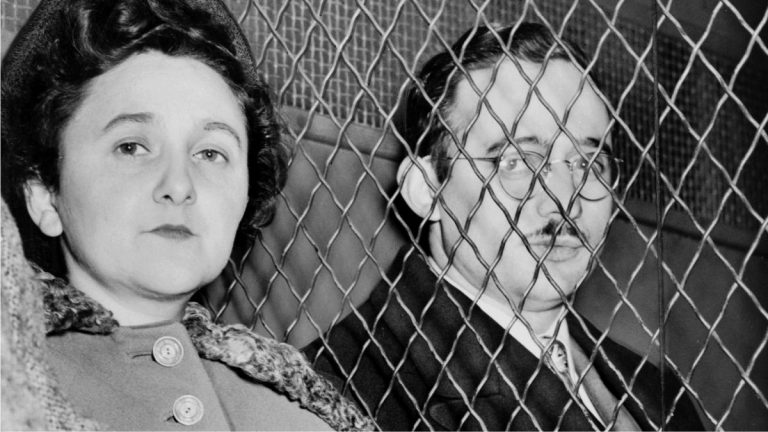
During the height of the Cold War, Julius Rosenberg was at the center of one of the most controversial espionage cases in American history. Accused of spying for the Soviet Union, he and his wife Ethel were alleged to have passed on sensitive information about the development of the atomic bomb.
This move was considered a significant breach of national security. Big surprise.
The Rosenbergs’ trial was highly charged and politically fraught, with both sides presenting arguments that captured the entire nation’s attention.
Despite mounting criticism over the legitimacy of the evidence presented against them, the US government remained convinced of the couple’s guilt.
Eventually, Julius and Ethel were found guilty of espionage and sentenced to death, sparking widespread outrage and condemnation. The controversy surrounding the Rosenbergs’ execution has endured for decades, with passionate arguments on both sides of the debate.
While some maintain that the couple were innocent victims of a government witch hunt, others argue that they were indeed guilty of the crimes they were accused of and that justice was served in their execution.
3) Vidkun Quisling
Vidkun Quisling was a Norwegian politician who infamously collaborated with the Nazis during World War II.
After the German invasion in 1940, Quisling seized power in Norway and established a puppet government under Nazi control.
He was appointed as the prime minister of this government.
He soon pledged allegiance to Adolf Hitler and the Nazi party, becoming known as one of Hitler’s most loyal and zealous followers.
Quisling’s betrayal of his own people went beyond just political collaboration. He volunteered Norwegian troops for the Eastern Front and assisted the Germans in the deportation of Jews and other minority groups to concentration camps.
After the war, Quisling was arrested and charged with high treason. He was found guilty and executed by firing squad in October 1945.
His legacy remains a shameful stain on Norwegian history. His name is still synonymous with traitor, as a stark reminder of the dangers of betraying one’s country for personal gain.
4) Mir Jafar
In the 18th century, Mir Jafar played a prominent role in the Bengal region as the commander of the Nawab’s army, and he was widely regarded as a loyal subject. However, his ambition and greed drove him to conspire against the Nawab in favor of the British East India Company.
During the Battle of Plassey in 1757, Mir Jafar secretly pledged his support to the British in exchange for the throne of Bengal once the Nawab was defeated.
He deliberately withdrew his troops from the battlefield, thereby enabling the British to secure a decisive victory over the Nawab’s forces. This treacherous act opened the door to British colonization of India.
The East India Company gained control over Bengal and established a strong foothold for the Empire in the subcontinent.
The British rewarded Mir Jafar for his betrayal by granting him the title of Nawab. However, he soon found himself in the same position as his predecessor.
When he failed to comply with the British demands, he was replaced by another puppet ruler. Mir Jafar’s reputation was forever ruined. His treachery is now regarded as one of the most significant betrayals in Indian history and a crucial turning point in the country’s colonial past.
5) Guy Fawkes
“Remember, remember, the 5th of November” – the day Guy Fawkes attempted to blow the English Parliament sky-high.
On the night of November 4, 1605, Guy Fawkes and his co-conspirators placed 36 barrels of gunpowder in the cellar beneath the House of Lords.
The plan was to blow up the building during the State Opening of Parliament the next day, killing King James I and the members of Parliament.
However, an anonymous letter alerted the authorities, and Fawkes was caught red-handed guarding the explosives.
After being interrogated and tortured, Fawkes confessed to his role in the plot and revealed the names of his fellow conspirators. He was then tried, convicted, and sentenced to be hanged, drawn, and quartered.
Fawkes’ failed attempt to overthrow the government has become a significant event in British history. It is still remembered every year on November 5th with bonfires, fireworks, and the burning of effigies of Fawkes.
Guy Fawkes’ distinctive appearance, with a pointed beard and a hat, inspired the iconic mask seen in the 2006 film V for Vendetta. The mask has since become a symbol of resistance and protest worldwide.
6) Marcus Junius Brutus
“Et tu, Brute?”
Yup, Brute too.
Marcus Junius Brutus, a prominent senator and military commander, is infamous for his role in one of the most significant betrayals in Roman history.
For years, Brutus was a close ally of Julius Caesar, a man he respected and admired.
However, as Caesar’s rule became increasingly autocratic, Brutus became convinced that overthrowing him was the only way to save the Roman Republic from a dictatorship.
Brutus joined forces with a group of like-minded senators and plotted to assassinate Caesar. Their plan came to fruition on the Ides of March in 44 BC when they stabbed Caesar to death in the Senate chamber.
Brutus saw himself as a hero, a defender of Roman values against Caesar’s tyranny, but the Roman people viewed his actions as treacherous. Caesar’s assassination only intensified the man’s popularity, and Brutus’ justification fell on deaf ears.
As a result, Brutus and his fellow conspirators were forced to flee the city and eventually met Caesar’s supporters in battle in Greece. In the end, Brutus chose to take his own life rather than face capture and humiliation at the hands of his enemies.
Despite his initial intentions, Brutus’ legacy is forever tainted by his betrayal of Caesar. He will always be remembered as a traitor to the Roman Republic and a cautionary tale of how personal ambition and idealism can lead to treachery and downfall.
7) Ephialtes of Trachis
Ephialtes of Trachis depicted (likely inaccurately) in the movie “300”.
Ephialtes of Trachis was a man from ancient Greece who played a significant role in the Battle of Thermopylae.
A little background here…In 480 BC, King Xerxes I of Persia led his army to invade Greece to expand his empire.
To stop the Persians, King Leonidas I of Sparta led the Greek forces to confront them at the narrow pass of Thermopylae. The pass was an ideal strategic location for the Greeks because of its narrowness, allowing only a few soldiers to pass at a time.
This effectively limited the number of Persian troops that could attack the Greeks simultaneously, giving them a tactical advantage.
The Greeks held their ground against the Persians for two days, but Ephialtes ultimately betrayed their defense.
Ephialtes, a resident of Trachis, knew of a secret path that led through the mountains, allowing the Persian army to outflank the Greek forces. He approached Xerxes and offered to show him the path in exchange for a reward.
Xerxes agreed, and Ephialtes led a detachment of Persian soldiers through the mountains, bypassing the Greek defense and attacking them from the rear.
The Greek soldiers were caught off guard and overwhelmed, leading to a crushing defeat. King Leonidas and his men fought valiantly but were vastly outnumbered and eventually killed.
The Battle of Thermopylae was a significant defeat for the Greeks, clearing the way for the Persians to invade and conquer Athens.
Ephialtes, meanwhile, never received the reward he was promised. The Greeks and the Persians despised him for his treachery, and he fled to Thessaly, where a rival eventually killed him for his betrayal.
8) Mata Hari
Now let’s talk about the one and only Mata Hari, the OG “femme fatale”. Born Margaretha Zelle in the Netherlands, she reinvented herself as Mata Hari, an exotic dancer who captured men’s hearts and the public’s imagination.
But behind her seductive facade lay a web of intrigue and espionage that would eventually lead to her downfall. Hari was accused of some serious espionage shenanigans during World War I.
Mata Hari’s glamorous lifestyle and activities caught the attention of both the French and German intelligence agencies. The French suspected she was providing sensitive information to the Germans, while the Germans believed she was a double agent working for the French.
In 1917, the French arrested Mata Hari, and she was accused of spying for the Germans.
Her trial was marred by inconsistencies and questionable testimony, leading many to believe she was a convenient scapegoat for the French intelligence agency.
Despite the lack of solid evidence against her, she was swiftly convicted and sentenced to death by firing squad.
The truth, however, remains a mystery to this day.
But whether or not she was truly a spy, Mata Hari’s story is one of intrigue, seduction, and betrayal. Her reputation as a double agent and international spy has inspired countless books, films, and songs for decades.
Mata Hari may have been caught, but her legacy as one of the most notorious traitors in history continues to capture the imagination of people around the world.
9) Aldrich Ames
Get this: Aldrich Ames, former CIA hotshot turned Soviet and Russian spy.
Aldrich Ames was a high-ranking CIA officer responsible for counterintelligence operations against the Soviet Union. However, in the early 1980s, he became disillusioned with his job and the government he worked for.
Ames was in severe debt and started to drink heavily. He began to see himself as a victim of the system and deeply resent the United States.
In 1985, he contacted the Soviet Embassy and offered to sell classified information to the KGB.
For the next several years, Ames provided the KGB with top-secret information, compromising numerous CIA assets and operations. His actions led to the execution of at least 10 American agents, and he received millions of dollars in return.
Despite his lavish spending and conspicuous lifestyle, Ames avoided suspicion for years.
Eventually, though, the gig was up. Ames was caught and sent to the slammer for life.
10) Kim Philby
Kim Philby, a high-ranking member of British intelligence, was a notorious double agent working for the Soviet Union. He was part of a group of British spies known as the Cambridge Five. He passed vital information to the Soviets during World War II and the Cold War, significantly damaging Western intelligence efforts.
Philby’s position within the British intelligence community allowed him to gain access to highly sensitive information, which he shared with his Soviet handlers.
For years, Philby remained undetected and even rose to a position of considerable influence within MI6, the British intelligence agency. However, in 1963, he was finally exposed as a Soviet spy and fled to the Soviet Union, where he was granted asylum.
Philby lived out the rest of his days in Moscow, where he was regarded as a hero by the Soviet government.
Despite the damage he caused to Western intelligence efforts, Philby remains a controversial figure. Some view him as a traitor who betrayed his country, while others see him as a committed Communist who acted on his beliefs, even in the face of severe consequences.
11) Robert Hanssen
A former FBI agent, Robert Hanssen dealt a heavy blow to American intelligence operations by betraying his country to the Soviet Union and Russia.
In 1979, Robert Hanssen, a senior FBI agent, began to sell highly classified intelligence to the Soviet Union and later to Russia, all while retaining his position within the agency.
Over the next two decades, Hanssen provided crucial information to the enemy, including the exposure of US intelligence operations and the disclosure of the identities of at least 50 American agents working for the FBI and CIA, placing their lives in peril and endangering national security.
Robert Hanssen’s actions as a spy had far-reaching consequences beyond exposing US intelligence operations and endangering the lives of American agents. His betrayal severely damaged the FBI’s reputation and raised questions about its ability to protect the nation’s secrets.
After his arrest in 2001, Hanssen’s home was searched and authorities found that he had accumulated a considerable fortune from his espionage activities.
He had received more than $1.4 million in cash and diamonds from the Russians, and had also used his position within the FBI to enrich himself by engaging in illegal financial activities.
Hanssen’s long-running espionage also caused the FBI to overhaul its counterintelligence operations and procedures, leading to new training and technology to better detect insider threats.
The Hanssen case also highlighted the need for greater oversight and accountability within the agency to prevent future betrayals.
Despite his cooperation with authorities, Hanssen’s actions remain a black mark on the FBI’s history and a reminder of the devastating impact that can result from the actions of a single insider.
12) David Greenglass
David Greenglass, a key figure in one of American history’s most notorious espionage cases, was a machinist who worked on the top-secret Manhattan Project during World War II. As such, he had access to highly classified information about the development of the atomic bomb.
In 1944, Greenglass began selling this information to the Soviet Union, marking the start of a career as a spy that would have far-reaching consequences.
It wasn’t until six years later that Greenglass’ involvement in espionage was discovered. In 1950, he was arrested by the FBI and charged with espionage, along with his sister Ethel Rosenberg and her husband Julius Rosenberg.
Facing the prospect of the death penalty, Greenglass made a deal with the government and agreed to testify against his sister and brother-in-law.
Greenglass’ testimony proved crucial to the prosecution’s case. He claimed that Julius had recruited him to pass secrets to the Soviets and that Ethel had typed up classified documents on a typewriter at their apartment.
Despite his cooperation, Greenglass was sentenced to 15 years in prison.
The impact of Greenglass’ actions on his family was profound. His testimony against his sister and brother-in-law ultimately led to their execution in 1953, causing a rift between him and his family that never fully healed.
Greenglass was released from prison in 1960, but he lived the rest of his life in relative obscurity, a shadow of the man who had once been at the center of one of the most explosive spy cases in American history.
13) Wang Jingwei
Wang Jingwei was a Chinese politician whose actions during World War II continue to be a source of shame for many Chinese people today. In 1937, when the Japanese invaded China, Wang was one of the highest-ranking officials in the Nationalist government led by Chiang Kai-shek.
But instead of joining the fight against the invaders, Wang collaborated with the Japanese and established a puppet government under their control.
Wang believed his collaboration with the Japanese would enable him to advance his political ambitions and gain power in China. He saw the Japanese as a means to achieve his ends, and in 1940 he established the “Reorganized National Government of China” in Nanjing, with himself as the head of state.
Under Wang’s leadership, the puppet government sought to undermine the Chinese resistance movement and crush any opposition to the Japanese occupation.
Wang’s collaboration with the enemy made him one of the most vilified figures in Chinese history. He was seen as a traitor who had sold out his country and his people for his own gain.
After the war ended and the Japanese were defeated, Wang went into hiding, but he was eventually captured by Chinese authorities and committed suicide in 1944.
14) Pierre Laval
Pierre Laval, one of the most controversial figures in French history, was the head of the Vichy government during World War II. This regime collaborated with the occupying Nazi forces.
As the prime minister of France, Laval worked closely with the Nazis and implemented policies that led to the deportation of over 75,000 French Jews to concentration camps.
Laval’s collaborationist policies included the enactment of anti-Semitic laws, such as the requirement for Jews to wear the Star of David and the establishment of internment camps for Jews and other marginalized groups.
He even went so far as to propose a plan to deport all Jews in France to Madagascar, which the Nazis rejected as unfeasible.
Following the liberation of France in 1944, Laval was arrested and tried for his collaborationist actions. He was convicted of treason and sentenced to death.
During his trial, Laval argued that he had only worked with the Nazis to try to protect France from further harm, but the court rejected this defense.
On October 15, 1945, Laval was executed by firing squad. His death marked the end of a dark chapter in French history and a warning of the dangers of collaboration with oppressive regimes.
15) Judas Iscariot
Last but not least, we have the traitor of all traitors, Judas Iscariot.
Judas Iscariot’s part in the betrayal of Jesus Christ has been a topic of intrigue and speculation for centuries. As one of the twelve disciples, Judas was privileged to be among Jesus’ closest confidants and was tasked with significant responsibility.
Yet according to the Gospel of Matthew, Judas approached the religious authorities at the Temple and offered to betray Jesus for 30 pieces of silver.
Judas’ actions led to Jesus’ arrest and eventual crucifixion, considered some of the most significant events in Christian history. The betrayal has been portrayed in numerous art and literature, from paintings to plays and even films.
So why did he do it?
The Gospels of Luke and John suggest that Satan’s dark influence had played a part in Judas’s betrayal.
However, John emphasizes Judas’s preexisting immorality, describing him as a thief who often pilfered from the common purse that Jesus and his disciples used for their ministry.
This depiction of Judas as a greedy and treacherous figure has endured throughout history, cementing his status as the ultimate traitor.
Wrapping it Up
And there you have it, folks. Our list of the biggest traitors in history.
While the reasons for their treachery varied, from greed and ambition to ideology and personal gain, their actions have left a lasting impact on history.
But even as we reflect on the betrayals of these individuals, it is important to remember that these actions do not define the entirety of their lives. They were complex individuals with their own stories, struggles, and motivations.
As we move forward, we can learn from their actions and strive to be better ourselves. We can uphold our values, remain loyal to our beliefs, and stand up for what is right, even when difficult.
In the end, the stories of these traitors serve as a reminder that our choices can have a profound impact not just on ourselves but on the world around us.
Greek mythology is one of the world’s most popular and enduring mythologies. It is a collection of stories and legends about gods, heroes, and monsters that ancient Greek people created.
These myths have been passed down through the ages and continue to captivate people today. The gods and goddesses of Greek mythology were a central part of this mythology, and they played a significant role in the lives of the ancient Greeks.
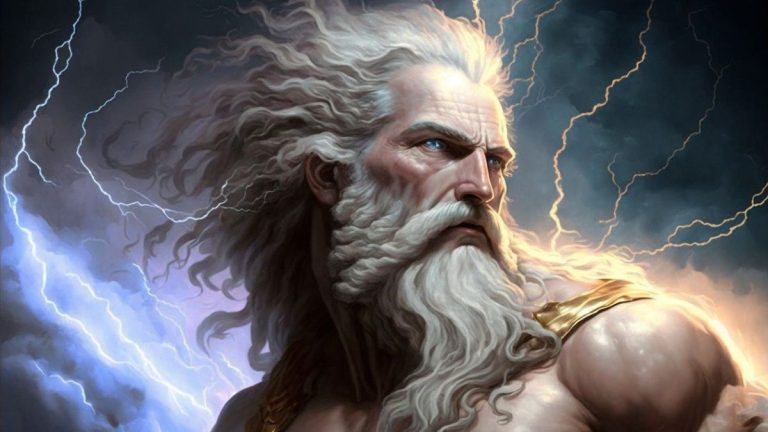
The Greek gods were believed to live on Mount Olympus, and they were considered to be immortal and all-powerful. They were responsible for the world’s creation and controlled the forces of nature.
The Greeks worshiped these gods and goddesses and believed that they had the power to influence their lives.
But what happened to the Greek gods? Let’s take a look!
How Many Gods are there in Greek Mythology?
Greek mythology has a large and complex pantheon of gods, goddesses, and other divine beings. The number of gods in Greek mythology is not fixed, as it includes various lesser-known deities and demigods.
However, twelve major Olympian gods and goddesses are considered the most influential figures in the Greek pantheon. They are:
Zeus – God of the sky and thunder
Hera – Goddess of marriage and childbirth
Poseidon – God of the sea and earthquakes
Demeter – Goddess of agriculture and fertility
Athena – Goddess of wisdom, war, and crafts
Apollo – God of the sun, music, and prophecy
Artemis – Goddess of the hunt and the moon
Ares – God of war and violence
Aphrodite – Goddess of love and beauty
Hephaestus – God of fire and craftsmanship
Hermes – God of commerce, thieves, and travelers
Dionysus – God of wine and celebration
In addition to these twelve Olympian gods and goddesses, there are numerous other deities, such as Hades, the god of the underworld, and Pan, the god of the wild.
Greek Gods and What They Represent
The Greek gods significantly influenced the lives of the ancient Greeks. They were believed to be responsible for everything in the world, from the weather to the success or failure of a battle.
The Greeks believed that the gods could be appeased through offerings and sacrifices, and they would often pray to them for guidance and protection.
The gods were also an essential part of Greek culture and society. They were the subject of art, literature, and drama and used to explain the world’s mysteries.
Each god had a unique personality and set of powers, and they were often depicted in mythical stories and legends.
Differences Between Greek and Norse Gods
While Greek mythology is well-known, Norse mythology is also popular, and the two have some significant differences. One of the main differences is that the Norse gods were seen as more mortal than the Greek gods.
They were believed to be immortal but could still be killed and were vulnerable to disease and injury.
Another difference is that the Norse gods were more closely associated with war and battle than the Greek gods. The Norse gods were worshipped by warriors and were believed to help them in battle.
In contrast, the Greek gods were associated with various activities, including agriculture, the arts, and commerce.
Differences Between Greek and Roman Gods
The Greek and Roman gods are very similar, and many Roman gods were based on the Greek gods. However, there are some differences between the two sets of deities.
Here are some key differences between Greek and Roman gods:
Names: The Greek and Roman gods have different names, although their characteristics and powers are often similar. For example, the Greek god of the sky and thunder is Zeus, while the Roman equivalent is Jupiter.
Personalities: The Greek and Roman gods have different personalities, even though they share many of the same attributes. For example, the Greek god of love, Aphrodite, was known for her beauty and sensuality, while the Roman goddess of love, Venus, was also associated with fertility and prosperity.
Stories: The myths and stories associated with the Greek and Roman gods are slightly different, even though they often have similar themes. For example, the Greek god of the underworld, Hades, abducted the goddess Persephone and made her his wife, while the Roman god of the underworld, Pluto, did the same with the goddess Proserpina.
Influence: The Greek gods had a more significant impact on art and culture than the Roman gods. Greek mythology was a primary source of inspiration for artists and writers throughout the centuries, while Roman mythology was less influential in the arts.
Overall, while the Greek and Roman gods are similar in many ways, they have distinct differences that reflect the unique cultures from which they emerged.
Greek Animal Gods – The Mythical Creatures
In Greek mythology, there were many gods and goddesses associated with animals. For example, Apollo was associated with the wolf, Hermes with the ram, and Artemis with the deer. These animal associations were often used to explain the characteristics and powers of the gods.
Another important aspect of Greek mythology was the use of mythical creatures. These creatures were often used to explain natural phenomena or to represent human emotions and desires.
Some of the most famous creatures in Greek mythology include the Minotaur, the Sphinx, and the Chimera.
Greek Fire Gods – The Power of Flames
Fire was an important symbol in Greek mythology, and several gods and goddesses were associated with it.
One of the most important fire gods was Hephaestus, the god of fire and metalworking. He was responsible for creating weapons and tools for the other gods.
Another vital fire goddess was Hestia, the goddess of the hearth and home. She was responsible for keeping the fires burning in the temples and houses of the Greeks.
Fire was also associated with the god Prometheus, who stole fire from the gods and gave it to humans.
Greek Gods’ Last Names – What Do They Mean?
Each Greek god had a last name, which was used to describe their powers and responsibilities. For example, Zeus was known as Zeus Olympios, meaning he was the god of the sky and thunder. Apollo was known as Apollo Pythios, meaning he was the god of prophecy and music.
The last names of the Greek gods were an essential part of their identity, and they were often used to distinguish them from other gods. They were also used to explain their powers and responsibilities to the Greeks.
Evolution of Greek Mythology
Greek mythology evolved, and the stories and legends changed as they were passed down through the ages. The Mycenaean civilization created the earliest myths from around 1600 BCE to 1100 BCE.
As Greece became more civilized, the myths became more complex and sophisticated. The Greeks began to create more elaborate stories and legends, using the gods to explain the world’s mysteries.
The Fate of the Greek Gods
The Greek gods eventually fell out of favor with the Greeks, and Christianity replaced them. The Christians saw the Greek gods as pagan and idolatrous, and they worked to suppress the worship of these gods.
Despite this, Greek mythology has continued to be popular throughout the ages. The stories and legends continue to captivate people today, and the gods and goddesses of Greek mythology remain an essential part of our cultural heritage.
Legacy of Greek Mythology
Greek mythology has significantly influenced Western culture and inspired many great works of art, literature, and drama. The myths have been retold and adapted in countless ways, and they continue to inspire new generations of artists and writers.
The legacy of Greek mythology can be seen in many aspects of our culture, from our language to our philosophy. The Greeks were the first to develop the concept of democracy, and their ideas about justice and freedom continue to influence us today.
Frequently Asked Questions (FAQs)
Are Greek gods stronger than Norse gods?
Whether one set of gods is stronger is a matter of personal interpretation and belief. It is worth noting that the strength and abilities of the gods were often influenced by the specific stories and cultural beliefs associated with them.
Are Greek gods in the Bible?
No, Greek gods are not mentioned in the Bible. The Bible is a religious text that primarily focuses on the Abrahamic religions, Judaism and Christianity. The Greek gods are part of Greek mythology, a separate belief system that originated in ancient Greece.
Who are the 6 original Greek gods?
The six original Greek gods were Zeus, Poseidon, Hades, Hera, Demeter, and Hestia.
Wrapping it Up
The gods and goddesses of Greek mythology played a significant role in the lives of the ancient Greeks. While the Greek gods eventually fell out of favor, their legacy continues.
The stories and legends of Greek mythology continue to inspire new generations of artists and writers, and they have had a significant influence on Western culture. Whether we realize it or not, the gods and goddesses of Greek mythology continue to shape our world today!
Have you ever been stumped by an impossible question? In life, many questions have no definite answer – questions that have us debating with our friends and family for hours on end. If you want to challenge unanswerable questions, then look no further!
We’ve compiled 166 of the most impossible questions to answer right here in this blog post – let’s see if you can tackle ’em all!
Funny Unanswerable Questions
1. Why do we drive on parkways and park on driveways?
2. What would a chair look like if your knees bent the other way?
3. If you’re stuck in traffic, are you going nowhere fast?
4. How does a dove know when it’s time to migrate?
5. Can nothing be something?
6. If people from Poland are called Poles, why aren’t people from Holland called Holes?
7. How is it that we put a man on the moon before we figured out it would be a good idea to put wheels on luggage?
8. Do bald people wash their heads with soap or shampoo?
9. What was the best thing before sliced bread?
10. If you eat pasta and antipasto, do they cancel each other out?
11. If an ambulance is on its way to save someone, but runs someone over, does it stop to help them?
12. Why do some people think it’s funny when someone gets hurt, but not when they get injured?
13. Why is the time of day with the slowest traffic called rush hour?
14. How do you know when it’s time to tune your instrument?
15. If a tree falls in the forest and no one is around to hear it, does it make a sound?
16. What would happen if you had a foolproof plan that was made to fail?
17. Can you cry underwater?
18. If a person taking a test has their answers in front of them, is it still considered cheating?
19. Does the sun ever set on an optimist?
20. If a criminal breaks the law in a virtual world, is it still a crime?
21. If ghosts can walk through walls and glide down stairs, why don’t they fall through the floor?
22. How many people does it take to change a lightbulb if everyone involved is procrastinating?
23. If you give a mouse a cookie, will he ask for milk after?
24. If a deaf person has to go to court, is it still considered a hearing?
25. Why do we say something is out of whack, but never in whack?
26. Is having an imaginary friend the same as talking to yourself?
27. How does one become the best at something they’ve never done before?
28. If electricity comes from electrons, where do you think morality comes from?
29. Is it possible to be too late or too early for something that hasn’t even happened yet?
30. Does a person with amnesia remember forgetting things?
31. What would happen if the moon suddenly disappeared?
32. Does a bee ever get tired of making honey?
33. Would a fish be considered drunk if it swims in vodka?
34. Can one trust the untrustworthy?
35. What would happen if time stopped for an entire day?
36. If you cloned yourself, would your clone be considered a sibling? 37. If an alien came to visit Earth, would they be considered an immigrant or a tourist?
38. If the early bird gets the worm, why do good things come to those who wait?
Weird Unanswerable Questions
39. What color is a chameleon on a plaid shirt?
40. If money doesn’t grow on trees, where does it come from?
41. How can something be both new and improved at the same time?
42. Are miracles possible if you don’t believe in them?
43. Does a fish ever get thirsty?
44. What would happen if everyone suddenly became honest?
45. If a person has two left feet, do they still have ten toes?
46. Is it possible to be too old to learn something new?
47. What would happen if the entire world decided to stop talking for one day?
48. Can you be allergic to your own thoughts?
49. If life is so short, why do we do so many things we don’t like and like so many things we don’t do?
50. Is it possible to fall in love with someone you’ve never met?
51. Can a person be too smart for their own good?
52. What would happen if all the oceans dried up?
53. Why is it that when some products go off the market, people refer to them as being discontinued rather than extinct?
54. Is it possible to have a nightmare about something you’ve never experienced before?
55. Can a person be addicted to knowledge?
56. Is it possible to be in two places at once?
57. What would happen if the sun suddenly stopped shining?
58. Is it possible to make a wish on a shooting star that has already passed by?
59. If all the trees on Earth were cut down, would they eventually grow back?
60. How do we know what we are dreaming about while we are dreaming?
61. Do animals dream?
62. If time is money, how much is love worth?
63. Is there a limit to how much knowledge one can have?
64. What would happen if the laws of gravity suddenly changed?
65. How deep can a rabbit hole go?
66. Is it possible to outsmart yourself?
67. Can money buy happiness?
68. If animals could talk, what would they say?
69. What do dogs dream about when they sleep?
70. Is it possible for a snake to eat itself?
71. Does everyone have a doppelganger somewhere in the world?
72. Is it possible to tickle yourself?
73. Why do we laugh at funny things?
74. Does the human brain ever get tired?
75. What makes us forget things that we should remember?
76. Do fish cry when they are in pain?
77. Is it possible for a tree to talk?
78. How do bees know the best flowers to collect nectar from?
79. Can a bird really fly backward?
80. Does time actually exist or is it just an illusion?
81. What makes us human and different from animals?
82. Are there really aliens out there or is that just a fantasy?
83. Do stars twinkle because they are actually moving?
84. Can a person really die of laughter?
85. Why do some people have better memories than others?
86. Does the universe ever end or is it just infinite?
87. Are dreams just random thoughts or do they have a deeper meaning?
88. What is the purpose of rainbows?
89. Are there really such things as lucky charms?
90. Do fish sleep with their eyes open?
91. How can cats see in the dark?
92. What is the cause of deja vu?
93. Do plants have feelings too?
94. Can humans really read each other’s minds?
95. Are there really such things as witches or is it just folklore?
96. How does gravity keep us from floating away in space?
97. Is it possible to have superhuman abilities if we tap into the power of our minds?
98. Does energy ever really die or is it just converted into something else?
99. Are there really such things as guardian angels?
100. Is it better to experience life in full or live in ignorance?
101. Is there such a thing as perfect health?
102. Could humans ever learn to control the weather?
103. How can we measure the speed of darkness?
104. What does a memory feel like?
105. Is there a limit to our imagination?
106. Can an egg be unscrambled?
107. Why do we perceive time differently depending on our age?
108. Could you ever have enough love and compassion?
109. Is it possible for human beings to reach a higher state of consciousness, or are we forever doomed to live in the world as it appears to us?
110. Are humans capable of true objectivity, or are all perspectives subjective?
111. Is morality a human construct, or is it embedded in the natural order of things?
112. Are all truths relative, or are there some that are absolute?
113. Is there a way to prove that death is not the end, or are our beliefs ultimately determined by faith alone?
114. Are all things connected and interdependent, or do individual objects exist separately from one another?
115. Are some people predisposed to creativity, or can anyone learn it?
116. Is it possible to create a perfect utopia?
117. Could we ever create a machine with its own consciousness?
118. Could humans ever become cyborgs?
119. Is the soul an actual entity, or is it merely a metaphor for our innermost being?
120. Are we capable of ever knowing our true selves?
Unanswerable Philosophical Questions
121. Is it ever possible to know anything with absolute certainty?
122. Is our perception of time an illusion, or is it concretely real?
123. Are reality and truth the same thing, or do they differ in some way?
124. If predestination is true, then what is the point of free will?
125. Is it possible to ever understand the complete truth about anything?
126. Can a realm of perfect justice exist in the face of human imperfection?
127. Does life have any inherent purpose or value beyond what we ascribe to it?
128. Are all ethical systems ultimately reducible to one fundamental principle?
129. Is the apparent randomness of the universe actually evidence of a hidden order?
130. Is perfect happiness an achievable goal, or is it a utopian fantasy?
131. Should humans strive for complete self-reliance, or is dependence on others inevitable?
132. Is it possible to know what the future holds, or are we stuck in a state of perpetual uncertainty?
133. Are all forms of knowledge equally valid, or are some superior to others?
134. Are human beings truly capable of progress, or are we doomed to repeat our mistakes?
135. Is the universe governed by a fixed set of rules, or is it ever-changing and unpredictable?
136. What would be necessary for us to achieve true world peace?
137. Are humans naturally selfish, or can we learn to overcome our self-centeredness?
138. Is the concept of original sin real, or is it simply a cultural construct?
139. How can we ever be sure that our decisions are truly “the right ones”?
140. Are there limits to what science and technology can accomplish?
141. Can the power of faith help us overcome the odds, or is it merely a crutch for the weak-minded?
142. Is free will an illusion or does it actually exist in some form?
143. What does it mean to be moral?
144. Is there a universal truth that is applicable to all cultures and beliefs?
145. How can we create a world of peace and harmony?
146. Why do we need laws and regulations?
147. Is it possible to create a just society?
148. How can we bring about social change in an unfair world?
149. What is the true nature of human behavior?
150. Is there such a thing as too much freedom?
151. What would happen if the entire world decided to stop spinning?
152. Can a person be too young to make a difference?
153. What would happen if you were able to predict the future?
154. Is it possible for someone to live without ever making mistakes?
155. Is it possible to be too self-aware?
156. How can we find peace within ourselves?
157. Are psychic experiences real or just a product of wishful thinking?
158. Is the concept of karma real or simply a product of our beliefs?
159. Is there a fundamental theory of everything that could unlock all the secrets of existence?
160. What is the ultimate fate of our universe?
161. Is there a hidden purpose to our existence that we are unaware of?
162. Is true happiness attainable, or is it merely a concept that varies from person to person?
163. Is there an algorithm for happiness?
164. How does the brain store and retrieve memories?
165. What would happen if the laws of gravity were suddenly changed?
Are you a fan of ketchup? Do you smother it on everything from fries to burgers? Well, have you ever wondered about the fascinating history behind this beloved condiment?
From its humble origins as a fermented fish sauce to its current status as a staple in households around the world, the story of ketchup is one that deserves to be told.
So grab a bottle (or two) and join me for a saucy trip down memory lane!
The Origins of Ketchup
Ketchup is a condiment from tomatoes, vinegar, sugar, and spices. However, the original versions of ketchup were quite different from what we know today.
The first ketchup was a fermented fish sauce that originated in Southeast Asia, particularly in Vietnam and Malaysia. This sauce, known as “kecap” or “kicap,” was made by fermenting fish with salt and spices.
When European traders arrived in Southeast Asia in the 17th century, they were introduced to kecap. They brought this sauce back to Europe, gradually modifying it to suit European tastes.
The earliest European versions of ketchup were made from mushrooms, walnuts, or oysters, mixed with spices, but no vinegar or sugar like today’s recipe.
These early kinds of ketchup were used as a condiment for meat or fish dishes and allegedly had medicinal properties.
When Was Ketchup Actually Invented?
James Mease (Left) and Henry “J.H.” Heinz
As we have seen, ketchup has a long and complex history. However, if we define ketchup as a tomato-based condiment, we can narrow it down for you.
The first recorded recipe for tomato ketchup was published in 1812 by a Philadelphia scientist named James Mease. Mease’s recipe called for tomato pulp, spices, and brandy and was intended to preserve tomatoes for the winter.
However, Henry Heinz’s ketchup, introduced in 1869, popularized tomato ketchup. Heinz’s ketchup was made from ripe tomatoes cooked and blended with vinegar, sugar, and spices.
Heinz’s ketchup was also thicker, sweeter, and more flavorful than previous versions of ketchup and soon became a household staple.
How Did Ketchup Evolve?
Ketchup has gone through many changes and adaptations over the years. In the 19th century, ketchup was still primarily a homemade condiment made from various ingredients such as mushrooms, walnuts, and anchovies.
However, with the rise of industrial food production, ketchup became a mass-produced product.
The introduction of tomato ketchup in the late 19th century led to a boom in ketchup production. By the early 20th century, ketchup had become ubiquitous in America.
During World War II, tomato ketchup production was limited due to a shortage of tomatoes. In response, ketchup manufacturers began using other vegetables, such as carrots and pumpkins, to make ketchup.
In recent years, ketchup has continued to evolve. Many brands have introduced new flavors, such as spicy ketchup, and have experimented with different ingredients, such as balsamic vinegar or jalapenos.
Ketchup has also become more health-conscious, with many brands offering low-sugar or organic options.
Ketchup in America
Ketchup has a special place in American culinary culture. It is commonly used as a condiment for hamburgers, hot dogs, and French fries. In fact, Americans consume over 10 billion ounces of ketchup each year!
One of the reasons for ketchup’s popularity in America is its versatility. Ketchup can be used as a dipping sauce, a marinade, or a cooking ingredient. It is also relatively inexpensive and widely available.
While ketchup is most commonly associated with America, it is also popular in many other parts of the world. In Europe, ketchup is often used as a sauce for pasta or meat dishes.
In Asia, ketchup is often used as a dipping sauce for fried foods, such as spring rolls or chicken nuggets.
However, it is worth noting that ketchup is not universally beloved. In some countries, such as Australia and New Zealand, ketchup is often referred to as “tomato sauce”. It is considered a poor substitute for more traditional condiments, such as brown or barbecue sauce.
Different Types of Ketchup
While tomato ketchup is the most popular type of ketchup, many other types are available. Some popular variations include:
Mushroom ketchup: Made from mushrooms and flavored with spices, this ketchup has a savory, umami flavor.
Banana ketchup: Popular in the Philippines, this ketchup is made from mashed bananas, vinegar, and spices. It has a sweet, tangy flavor and is often used as a dipping sauce for fried foods.
Curry ketchup: A popular condiment in Germany, curry ketchup is a spiced tomato ketchup flavored with curry powder. It is often used as a dipping sauce for French fries or sausages.
Frequently Asked Questions (FAQs)
How much ketchup can kill you?
It is highly unlikely that consuming ketchup in a reasonable amount would lead to death. Ketchup is a common condiment made from tomato concentrate, vinegar, sugar, and various seasonings, and its consumption is generally considered safe for healthy individuals. The amount of ketchup required to cause death would be so excessive that it is impossible to consume.
What does banana ketchup taste like?
The taste of banana ketchup can be described as sweet and tangy with a hint of spiciness. The sweetness comes from the mashed bananas and sugar, while the tangy taste comes from the vinegar. The spices used in the recipe give the sauce its distinct flavor and aroma.
Can ketchup kill dogs?
While ketchup is generally not toxic to dogs, consuming large amounts of it can lead to digestive issues that may make your dog uncomfortable and require medical attention. Additionally, some ketchups may contain toxic ingredients like onion or garlic, so it is best to avoid feeding your dog ketchup or any human food that may contain these ingredients.
Can you have ketchup on Daniel Fast?
Ketchup typically contains sugar and other additives, so it may not be allowed on the Daniel Fast. However, it ultimately depends on the individual’s interpretation of the rules of the fast and their personal beliefs.
Can you freeze ketchup?
Yes, you can freeze ketchup. Ketchup can be stored in the freezer for several months without affecting its quality or taste. However, it is important to note that freezing may cause the texture of the ketchup to change slightly, and it may become slightly runnier once thawed.
Wrapping it Up
In conclusion, the history of ketchup is a long and complex one. From its origins as a fermented fish sauce in Southeast Asia to its modern incarnation as a tomato-based condiment, ketchup has undergone many changes and adaptations.
Today, ketchup is ubiquitous in almost every household and restaurant. Whether you prefer classic tomato ketchup or one of the many other variations available, there is no denying the enduring popularity of this versatile and delicious sauce.
So, the next time you dip your French fries in ketchup or slather it on your burger, take a moment to appreciate the fascinating history behind this humble condiment.
No, Mary Queen of Scots is not the same person who had the nickname “Bloody Mary”. The confusion is understandable– they’re both “Queen Marys”, after all. But they were two different people.
Two of the most powerful women in history, Mary Queen of Scots and Queen Mary I of England, are often linked to the savage legacy of the nickname “Bloody Mary”.
But which Mary is the true owner of the gruesome moniker?
Mary Queen of Scots
Mary Queen of Scots was one of the most influential monarchs in British history. She was born on December 8, 1542, and ascended to the throne at just six days old. As a young girl, she went through exile in France after her father’s death before returning to Scotland to take the crown.
Throughout her reign, Mary faced numerous challenges and threats, including civil unrest and attempts by Protestant figures like John Knox to replace her with their own ruler.
Mary also made enemies within her own court, like James Hepburn, Earl of Bothwell, who would later become the husband of Mary’s half-brother James Stuart V.
Mary was eventually overthrown by Protestant forces and fled to England, where she was imprisoned for almost two decades by her cousin Elizabeth I.
Though largely unsuccessful in restoring Catholicism in Britain or achieving freedom from imprisonment, Mary achieved martyrdom through her execution on February 8, 1587, which only increased public support for Catholicism.
Today, Mary Queen of Scots remains an inspiration as a symbol of Catholic resistance against English rule and a powerful female leader who refused to give up hope in even the most desperate circumstances.
Queen Mary I (The Real “Bloody Mary”)
Queen Mary I was a powerful Queen of England and Ireland in the 1500s. Born in 1516 to King Henry VIII and his first wife Katherine of Arragon, she was declared illegitimate when her father married Anne Boleyn.
As a result, she lost both her throne and her position in the royal court.
Mary would regain power after her half-brother King Edward VI died at age fifteen and her sister, Lady Jane Grey, was placed on the throne by their father’s will.
After nine days, Mary overthrew Jane, reclaimed the crown, and began solidifying her rule by executing those who opposed it.
“Bloody Mary” was how English Protestants referred to Queen Mary I. Mary I’s graphic execution of Protestants earned her the flattering nickname we know today.
The reign of Queen Mary I ended abruptly in November 1558 when she fell ill with what is now thought to have been cancer or ovarian tumors; she passed away at about forty-two years old with no surviving children or heirs.
Who is the Bloody Mary Ghost – Origins of the Urban Legend
The Bloody Mary urban legend is one of American folklore’s most classic and well-known ghost stories.
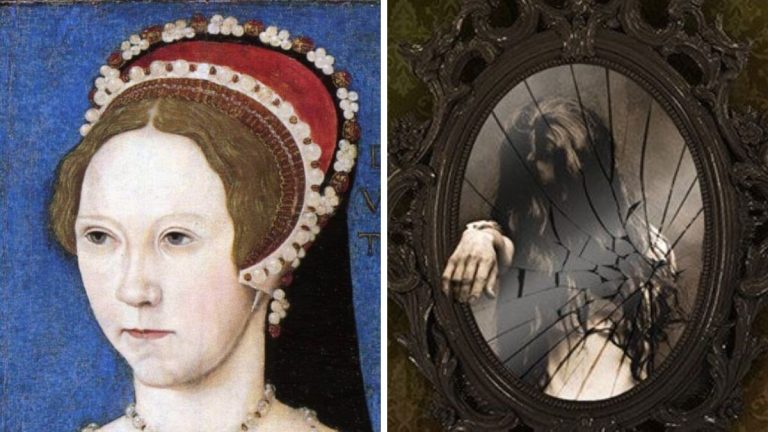
The tale states that if you stand in a dark bathroom, turn off the lights, and call out “Bloody Mary” three times, the spectral she-thing will appear in the mirror and try to claw out your eyes.
This urban legend has evolved over time as well. Originally, the ghost in the mirror was said to be Queen Mary I.
But by the 19th century, it had changed so that calling out Bloody Mary would summon a witch instead of the Queen—and by the 20th century, more gruesome details were added, involving blood and murder.
Today, there are still some variations on this folktale, but all versions are united by their connection to Queen Mary I’s reign and her reputation for violence.
Of course, these days, most people consider it an amusing way to pass the time with friends, though some still believe in its supernatural power.
The Bloody Mary legend has been popularized by films and television shows such as Supernatural, American Horror Story, and even an episode of Scooby-Doo.
The Story of Mary Worth – Is She Bloody Mary?
Interestingly enough, another possible identity of Bloody Mary’s ghost stems from a story about an alleged witch named Mary Worth in my home state of Illinois.
Mary Worth was an old, haggard woman who lived on a farm near present-day Gurnee during the 19th century. According to local historians, Worth took perverse pleasure in catching and torturing runaway slaves in her barn.
Worth kept slaves chained to the wall with crude shackles until she decided to kill them in satanic rituals.
The rest of the community got wind of Worth’s horrible deeds and formed a vigilante mob one night determined to rid themselves of her.
Mary Worth was dragged screaming from her home and (keeping with the traditional method of witch disposal) burned at the stake.
The barn where Worth’s witchcraft occurred was also burned to the ground.
Nobody knows what happened to Mary Worth’s remains. People claim she was buried in St. Patrick’s Cemetery…but if she was some kind of Pagan witch, it’s unlikely she would have received anything close to a Christian burial.
Another much more plausible theory is that she was buried on her property. Her body has never been found, but according to Ghost Stories of Illinois, all the crazy was let out when the property’s new owners removed a plain square stone in the middle of the field.
Supernatural phenomena and a string of horrific tragedies would plague both those owners and all subsequent owners of the property.
Behind the dusty pages of history textbooks and photographs are tales of some of the most daring female gunslingers to make a mark on the Wild West.
Armed with a gun, quick wits, and even quicker draws, these fearless ladies were forces to be reckoned with.
Today, we celebrate the bold trailblazers who embraced their independence and carved out remarkable lives for themselves despite the constraints of a male-dominated society.
These female gunslingers shot the hat off the Old West through sheer grit, determination, and a steadfast refusal to conform to society’s expectations.
Ready to meet ’em?
Table of Contents
1. Annie Oakley
No compilation of female gunslingers would be complete without Annie Oakley, a legendary trick shooter who contributed to the popularity of iconic American guns. She was born Phoebe Ann Mosey in 1860 in Darke County, Ohio, and grew up in poverty.
As a child, Oakley began hunting and shooting to help provide food for her family. She soon discovered she had a natural talent for marksmanship and began competing in shooting contests.
In 1875, at 15, she won a shooting match against renowned marksman Frank Butler, whom she would later marry.
Oakley’s career took off when she joined Buffalo Bill’s Wild West show in 1885. She became one of the show’s biggest stars, performing feats of marksmanship that amazed audiences worldwide.
Oakley could shoot targets while standing, sitting, or even riding a horse, and she could shoot the thin edge of a playing card from 90 feet away. And she had some awesome hats.
Oakley’s skills earned her the nickname “Little Sure Shot,” and she became one of the most famous women in the world at the time.
After retiring from the Wild West show in 1901, Oakley continued to perform and teach marksmanship until she died in 1926.
In short, Annie Oakley was a well-hatted badass who could easily outshoot any man in the West.
2. Sally Skull
Sally Skull was a female gunslinger who was ahead of her time in terms of gender norms. Born in 1817 to Rachel and Joseph Newman, she grew up to become a rancher and horse trader in Civil War Texas.
Her combative personality, the dual French pistols hidden under her skirts, and world-class profanity earned her a reputation as one of the most terrifying women in all of Texas.
Sally’s life was full of adventure and danger. She freighted wagons of cotton to Mexico during the Civil War era, where she would swap them for supplies that were scarce in Texas at the time. She also traded horses and cattle, which made her quite wealthy.
Once, while Sally was transporting cargo to Mexico, she spotted a preacher in distress. He had unintentionally gotten his two-horse buggy stuck in the mud, and all of his shouting at the horses only seemed to make them more stubborn.
With no other options left, Sally charged forward and shouted as loud as she could: “Get the hell out of there, you sons of bitches!!! Get the hell out!!!”
Miraculously, her voice got through to them; they pulled together with renewed strength and freed themselves from their sticky situation.
Sally Skull was married several times throughout her life, but none of her marriages lasted long. Her husbands often met mysterious ends, making many speculate that Sally had black-widowed them.
No one knows for sure what happened to Sally Skull. The last confirmed sighting of her was in Goliad, where she was acquitted of perjury in 1866. After that, she disappeared under mysterious circumstances and was never heard from again.
3. Belle Starr
Myra Maybelle Shirley Reed Starr, more commonly known as Belle Starr, was an American outlaw and one of the deadliest female gunslingers of the Old West. She was born in 1848 in Carthage, Missouri, and grew up in a family connected to the Confederacy.
As a young woman, Belle Starr became involved in a life of crime, including horse theft and bootlegging. She also had several relationships with notorious outlaws, including Cole Younger and Jesse James.
In the 1870s, she married a man named Sam Starr, who was also a well-known outlaw. Belle Starr and her husband lived a life of luxury, spending their time between hideouts in Missouri and Indian Territory (now Oklahoma).
Belle Starr was also known for her flashy style, which included wearing a black velvet riding habit and carrying two pistols.
It turns out that there’s a fine line between outlaw and humanitarian. Starr once held up a stagecoach carrying a large shipment of cash but left enough money for each stranded passenger to buy food and hotel accommodations.
In 1883, Sam Starr was killed in a gunfight, and Belle Starr was left with little means of support. She continued to operate as an outlaw, but her criminal activities were less than successful. In 1889, she was killed by an unknown assailant (possibly a bounty hunter) who shot her as she sat atop her horse.
Belle Starr became a legendary female gunslinger in her own time, and her life has been the subject of many books and films. She is often portrayed as a glamorous outlaw queen, but in reality, her life is marked by poverty, violence, and tragedy.
4. Calamity Jane
Martha Jane Cannary, more popularly known as Calamity Jane, was an American frontierswoman and professional scout. Born in Princeton, Missouri, in 1852, she moved with her family to Virginia City, Montana when she was 12 years old.
Calamity Jane began her adventurous life as a female gunslinger working as a scout for the U. S. Army during the Indian Wars. She gained fame through her association with Wild Bill Hickok, whom she claimed to have saved from a group of Indians during an attack in Wyoming.
Calamity Jane garnered notoriety for her hard-drinking, gun-toting, and unconventional lifestyle. She was often spotted in bars with soldiers and other frontiersmen, where she liked drinking and gambling.
Her career as a gunslinger ended in the 1880s when she started performing in Wild West shows across America.
Calamity Jane’s last words included a request to be buried next to her best friend/possible lover, Wild Bill Hickok. Her wish came true in 1903 when she was laid to rest beside him at the Mount Moriah Cemetery in Deadwood, South Dakota.
5. Pearl Hart
Pearl Hart, born in Canada in 1871 and raised within a pious family, made history as one of the most renowned female gunslingers after she robbed a stagecoach in Arizona during the early 1900s.
Pearl wed Fred Hart, an irresponsible man, at the tender age of sixteen. Unfortunately, their marriage was nothing to write home about, and they had two children before she eventually decided to leave him to follow her own pursuits.
In 1899, Pearl ventured to Arizona and began cooking in a mining camp. While there, she came across Joe Boot – the man who would later become her accomplice. With bold determination, they collaborated on an ambitious scheme: robbing a stagecoach and amassing wealth beyond their wildest dreams!
On May 30, 1899, Pearl and Joe robbed a stagecoach that contained a cargo of gold and silver. After their daring heist, they got away with approximately $431 in cash and miscellaneous valuables.
Unfortunately, the duo’s lucky streak ran out shortly after, as only days later, they were tracked down by an armed posse and brought in for trial.
Despite the mounting evidence against them, Pearl and Joe became pseudo-celebrities as captivated newspapers printed accounts of their exploits nationwide.
Pearl was particularly popular with the press, being one of the few women at that time to perpetrate crimes that serious.
During her trial, Hart wore a man’s suit and smoked cigarettes in court, scandalizing jurors and spectators alike.
She was ultimately found guilty and sentenced to five years in prison.
However, her sentence was commuted after only two years, and she was released in 1902.
After her release, Pearl disappeared from the public eye, and little is known about her later life. Some accounts suggest that she may have worked as a nurse during World War I and may have eventually settled in Chicago.
Etta Place was a mysterious female figure associated with the notorious American outlaws and train robbers Butch Cassidy and the Sundance Kid in the late 1800s.
Not much is known about her background or early life, and many aspects of her life remain a mystery.
Place reportedly met Harry Alonzo Longabaugh (the Sundance Kid) in 1899 while working as a prostitute in San Antonio, Texas. She soon became his girlfriend and joined him in his life of crime.
Etta Place accompanied Cassidy and the Sundance Kid on many infamous robberies and heists, including the Great Northern train robbery in Montana in 1901. She was reportedly well-liked by the gang members and was known for her beauty, charm, and wit.
In 1902, after a train robbery in Colorado, Cassidy, the Sundance Kid, and Etta Place fled to South America to escape the law. They spent several years in Argentina, where their criminal activities continued.
However, Place decided she was tired of life on the run and returned to the United States.
In 1908, Butch Cassidy and the Sundance Kid were ambushed and killed by Bolivian soldiers. Etta Place’s ultimate fate remains a mystery.
7. Laura Bullion
Laura Bullion (1876-1961) was an American outlaw and member of the Wild Bunch gang, which included famous outlaws such as Butch Cassidy and the Sundance Kid. She was born in Knickerbocker, Texas, and grew up in the company of outlaws– including her own father, bank robber Henry Bullion.
Bullion became involved with the Wild Bunch in the early 1900s, and she participated in several train robberies with the gang. In 1901, she was arrested and convicted for her role in the Great Northern train robbery in Montana and served three years in prison.
After her release, Bullion returned to Texas and lived a quiet life. She worked as a seamstress and never spoke publicly about her time as a female gunslinger and outlaw. She died in Memphis, Tennessee, in 1961 at the age of 84.
8. Rose Dunn
Rose Dunn, also known as “Rose of the Wild Bunch” or “Rose of the Cimarron,” was legendary in the American West during the late 1800s and early 1900s. She was born in Oklahoma in 1879 and grew up in a family of outlaws, with several of her brothers involved in criminal activity.
At 14, Rose became romantically involved with George “Bitter Creek” Newcomb, an infamous Wild Bunch gang member. Newcomb and Rose’s brothers were all wanted for various crimes, including train and bank robberies.
Rose became known for her loyalty to Newcomb and her fierce protectiveness of him. In 1899, when a group of marshalls led by legendary lawman Bill Tilghman caught up with the Wild Bunch, Rose warned Newcomb of the impending raid.
Although the marshalls wounded Newcomb, Rose ran through the hail of bullets and opened up on the marshalls with her own rifle until he could get to safety.
That right there puts her front and center on our list of female gunslingers.
She was later arrested and brought to trial for harboring a fugitive but was ultimately acquitted.
After Newcomb died in 1899, Rose disappeared from public view for several years. However, she resurfaced in 1903 when she was arrested for her role in a train robbery in Oklahoma. She was sentenced to five years in prison but released after three.
After her release, Rose lived a quiet life, working as a seamstress and eventually marrying and settling in Kansas. She died in 1955 at the age of 76.
9. Kitty Leroy
In 1850, Kitty Leroy was born in Michigan and, by the late 1860s, had already become a renowned American dancer and actress. Known for her bold performances, she developed a reputation as an unrelenting entertainer that captivated audiences everywhere.
In the early 1870s, Kitty moved to San Francisco and began performing in variety shows and theaters. She became involved with several prominent men, including notorious gambler and gunfighter Doc Holliday, who was said to have taught her how to use a gun.
Kitty was also married several times, and her last husband was William “Billy” Burke, a well-known gambler and saloon owner.
Kitty’s life was cut short when Burke murdered her in 1877. The couple had a volatile relationship, and Burke shot Kitty in a fit of jealousy during an argument. He was tried and convicted of her murder and sentenced to life in prison.
10. “Stagecoach Mary” Fields
Mary Fields, nicknamed “Stagecoach Mary,” was a trailblazing African-American woman who gained fame as a stagecoach driver of the American Frontier in the late 19th century. She was born in 1832 in Hickman County, Tennessee, and was a slave until the end of the Civil War.
Following the war, Mary relocated to Montana and worked at St. Peter’s Mission with the Ursuline Sisters.
In no time, she became recognized for her tenacity and dependability – traits that quickly earned her respect from all who knew her.
In 1895, at 63, she became the second woman and first African-American woman to work as a U.S. Postal Service star route carrier, delivering mail by stagecoach.
Mary was known for her sharpshooting skills and fearless personality, earning her the nickname “Stagecoach Mary.” She always carried a .38 pistol under her apron and a rifle and was not afraid to use them to defend herself and her passengers.
Mary worked as a stagecoach driver for eight years before retiring in 1903. She lived the rest of her life in Cascade, Montana, where she worked as a tavern owner, laundress, and babysitter.
She remained a beloved figure in the community until she died in 1914. She’ll also be immortalized in my list of great female outlaws in Wild West history as long as this site stays live!
11. Mary Catherine “Big Nose Kate” Horony
Mary Katherine Horony, also known as “Big Nose Kate”, was born on November 7, 1850, in Érsekújvár, Hungary, and later emigrated to the United States with her family.
So how did that flattering nickname come to be? Interestingly enough, it wasn’t because her nose made her two minutes early wherever she went, if you catch my drift…it came from the fact that Horony had a rather obnoxious habit of sticking her nose into other peoples’ affairs.
Horony is best known for her association with the legendary gunfighter Doc Holliday. The two met in Fort Griffin, Texas, in 1877 and had an on-again, off-again romantic relationship for several years.
Despite these difficulties, Horony was Holliday’s common-law wife.
Horony was involved in several escapades with Holliday, including a famous incident in which she helped him escape from jail in Colorado. She also accompanied him to the infamous gunfight at the O.K. Corral in Tombstone, Arizona, in 1881, although she was not present at the actual shootout.
Despite her reputation as a wild and unpredictable character, Horony was also known for her intelligence and resourcefulness. She was well-educated and spoke several languages, and later in life, she worked to provide comfort to other residents of the Arizona Pioneers’ Home where she herself resided.
Horony passed away on November 2, 1940, in Prescott, Arizona, just five days short of her 90th birthday.
12. Lillian Smith
Lillian Smith was born in Coleville, California, on January 14, 1871-1872. She was a prominent trick shooter known as the “California Huntress.”
Lillian Smith joined Buffalo Bill’s Wild West Show at a young age and quickly gained popularity for her sharpshooting skills. She was a rival of Annie Oakley, one of the show’s most famous performers.
Lillian Smith was a skilled sharpshooter and a talented trick rider. She performed various stunts on horseback, including hitting challenging targets while in motion.
Lillian Smith traveled with the Wild West Show for several years, performing in front of large crowds in the United States and Europe.
Smith had had several husbands but no children by her death in 1930.
13. Ellen “Cattle Kate” Watson
Cattle Kate, whose real name was Ellen Liddy Watson, was born in Canada in 1860 and later moved with her family to the United States.
In 1884, Watson settled in Wyoming after fleeing from her abusive husband. She became a homesteader and began raising cattle.
Watson soon became the target of harassment and intimidation by local cattlemen who wanted her land. Some of these cattlemen accused Watson of cattle rustling and other crimes, although there was little evidence to support these allegations.
In July 1889, Watson and her new husband, Jim Averell, were arrested by a group of men led by the shady cattleman Albert John Bothwell and charged with cattle theft. They were taken to a makeshift jail and held without trial.
A few days later, a mob of cattlemen stormed the jail, dragged Watson and Averell outside, and lynched them.
The lynching of Cattle Kate Watson and Jim Averell was widely condemned at the time, and it remains a controversial incident in the history of the American West.
Some historians believe that Watson and Averell were innocent of the charges against them and were targeted because of Watson’s gender and her defiance of traditional gender roles.
Others argue that Watson was involved in cattle rustling and other criminal activities and that the execution was a form of vigilante justice.
So which side is actually right? We may never know.
Ah, plate armor. This medieval defensive gear takes me back to a simpler time, where all you needed to march into battle was a sword, a shield, and a good can opener to pry yourself out of your armor afterward.
Whether you take an interest in historical combat tactics or enjoy viewing museum displays of ornate steel outfits from days gone by, there’s no denying that plate armor is woven into the magnitude and mystique of warfare throughout the years.
Today, we’re going to take a closer look at the history and details of medieval plate armor. The OG flak jacket, if you will.
Ready to roll? Let’s do it!
Origins of Plate Armor
Plate armor is a type of armor made from metal plates that cover and protect the body. The development of plate armor can be traced back to the Middle Ages when knights wore chain mail armor made of interlocking metal rings.
While chain mail armor provided good protection against slashing attacks, it was less effective against thrusting attacks from weapons like spears and arrows.
As a result, armorers began to experiment with different materials and designs to create armor that provided better protection.
One of the first innovations was the addition of metal plates to the mail armor, which could deflect thrusting attacks more effectively.
Over time, these plates became more specialized, eventually evolving into the full-plate armor we associate with medieval knights.
The use of full-plate armor reached its peak in the 14th and 15th centuries, particularly in Europe, as kingdoms fought many wars to expand their empires.
During this time, armorers developed increasingly sophisticated designs that provided greater protection while allowing increased mobility and flexibility.
Some of the key innovations in plate armor during this period included:
Full-body coverage: By the late 15th century, full plate armor covered the entire body, including the head, hands, and feet.
Articulated joints: Plate armor was designed with articulated joints, allowing greater mobility and flexibility.
Fluting: Armorers added fluting, or decorative grooves, to the metal plates to improve their strength and reduce weight.
Engraving and etching: Plate armor became about artistic expression, with armorers engraving elaborate designs onto the metal plates.
Despite its effectiveness, plate armor began to fall out of use in the 16th and 17th centuries as the development of firearms made it increasingly vulnerable.
However, plate armor remains an iconic symbol of medieval warfare and has continued to influence modern depictions of knights and warriors in popular culture.
Parts of Plate Armor
If you were in the market for plate armor, you would have had to know that all armor was not created equal. Two different types were available depending on the level of protection you wanted.
Let’s look closer at the components of half-plate armor and full-plate armor!
Half-Plate Armor
Half-plate armor was a popular type during the late medieval period because it provided a good balance of protection and mobility. It was lighter and more flexible than full-plate armor, making it easier to move around and fight.
Half-plate armor typically consisted of the following pieces:
Breastplate: A metal plate that covered the chest and upper torso.
Backplate: A metal plate that covered the back.
Pauldrons: Shoulder plates that protected the upper arms and shoulders.
Vambraces: Arm plates that protected the forearms.
Half-plate armor was often worn by infantry soldiers, providing some protection while allowing for mobility and ease of movement. It was also less expensive than full-plate armor, making it more accessible to common soldiers.
However, it was not as protective as full plate armor and was vulnerable to attacks on exposed areas such as the face and legs.
Full-plate armor consisted of metal plates that protect the entire body. The specific parts of plate armor can vary depending on the time period and region, but generally, full plate armor included:
Helmet: A metal headpiece that covers the head, face, and neck. It often includes a visor or other face protection.
Gorget: A collar-like piece that protects the neck and the lower part of the face.
Breastplate: A metal plate that covers the chest and upper torso.
Backplate: A metal plate that covers the back.
Pauldrons: Shoulder plates that protect the upper arms and shoulders.
Gauntlets: Metal gloves that protect the hands.
Vambraces: Arm plates that protect the forearms.
Cuisses: Thigh plates that protect the upper legs.
Greaves: Shin plates that protect the lower legs.
Sabatons: Foot armor that protects the feet.
Some sets of plate armor may also include additional pieces such as a codpiece to protect the groin or a fauld to protect the waist and hips.
How Did Blacksmiths Make Plate Armor?
The process of making plate armor involved several steps that required the skills of experienced blacksmiths and armorers. Here are the basic phases of plate armor creation:
Design and pattern-making: The first step in making plate armor was to design and create a pattern for the armor pieces. This involved taking measurements of the wearer’s body and creating templates for each armor piece.
Cutting and shaping: Once the patterns were created, the armor pieces were cut from sheets of metal using a variety of tools such as chisels, saws, and shears. The pieces were then shaped and formed using hammers, anvils, and other tools to create the desired shape and curvature.
Joining and riveting: The individual armor pieces were then combined using rivets or other fasteners, which were hammered into place to secure the pieces together. The rivets were often hidden on the inside of the armor to improve its appearance.
Finishing and polishing: Once the armor was assembled, it was polished and finished using various techniques, including sanding, buffing, and burnishing. The armor was often decorated with etched designs or other embellishments to make it more visually appealing.
The process of making plate armor required a great deal of skill and experience, and it could take weeks (even months) to create a single suit of armor.
Blacksmiths and armorers often worked closely with their clients to ensure the armor fit well and provided the necessary protection. Many armorers developed reputations for their exceptional artistry and attention to detail.
Medieval Plate Armor’s Impact on Combat & Society
The superior protection of plate armor allowed knights and soldiers to engage more effectively in close combat.
But I would be remiss if I didn’t talk about how plate armor shaped the course of both battlefield strategy and social economics during its heyday.
Psychological impact
Wearers of plate armor would appear intimidating and larger than life – an effective psychological weapon that could unnerve the enemy while boosting their own side’s morale.
The metal clanging of the marching armies added to this effect, resonating a booming warning to the enemy that they were not to be trifled with.
Effectiveness
Plate armor’s effectiveness against cutting and piercing weapons such as swords, arrows, and spears made it possible for knights to charge into battle without fear of being easily wounded or killed.
This led to the development of new combat tactics, such as the cavalry charge, which relied on the speed and strength of heavily armored horses and riders to break through enemy lines.
Modernized weapons
New weapons like the poleaxe and the Warhammer were developed to penetrate or bypass plate armor.
These weapons required specialized training and tactics to use effectively, and they were often wielded by special forces of soldiers whose main directive was to disable heavily armored opponents.
Social & economic impact
The cost of producing and maintaining plate armor was high, which meant that only the wealthiest members of society could afford to wear it.
This created a division between the noble class, who could afford to equip themselves with plate armor, and the lower classes, who were ill-equipped and less likely to engage in direct combat.
The Decline of Plate Armor’s Popularity
Plate armor’s popularity declined during the Renaissance period, which lasted from the 14th to the 17th century. Although some soldiers and knights continued to use plate armor well into the 17th century, wearing armor had become little more than a strange custom to most by the end of the Renaissance.
Several factors contributed to this decline:
The development of firearms: As firearms became more common and effective, plate armor became less practical for protection. Guns could penetrate or bypass the armor, making it less useful in battle.
Changes in warfare: The nature of warfare began to change during the Renaissance period, with more emphasis on siege warfare and less emphasis on close combat. Plate armor was less useful in sieges, where soldiers were more likely to be exposed to artillery and other long-range weapons.
Changes in fashion: As the Renaissance progressed, fashion shifted towards lighter, more flexible clothing. Plate armor was heavy, making it less comfortable and fashionable.
Cost: Plate armor was expensive to produce and maintain, meaning it was only accessible to the wealthiest members of society. As warfare became more costly and professionalized, the cost of outfitting an army with plate armor became prohibitive.
As a result of these factors, plate armor was gradually replaced by lighter and more flexible forms of armor, such as cuirasses and helmets made of hardened leather or metal.
Plate Armor Today
Today, plate armor is often used in movies and reenactments for historical purposes. Here are some examples of how plate armor is used in modern times:
Medieval reenactments: One of the most common uses for plate armor is in medieval reenactments, where people dress up in period costumes and act out battles, tournaments, and other events from the medieval period. Plate armor is an essential part of the costumes worn by participants, and it makes the experience more authentic by serving as a fond reminder of forgotten civilizations.
Historical fencing: Historical fencing is a sport that involves using replica weapons and armor to simulate medieval combat. Participants often wear plate armor to protect themselves from blows, which adds to the sport’s realism.
LARPing: Live-action role-playing (LARP) is a game where participants dress up in costumes and act out roles in a fictional world. Plate armor is often used in LARPing to add to the costumes’ authenticity and protect players during combat.
Jousting: Jousting is a sport that involves two armored knights riding on horseback and charging at each other with lances. Plate armor is essential for both the knights and their horses to protect them from serious injury during the competition. You will likely have seen jousting if you’ve ever been to the Medieval Times restaurant.
Film and television: Plate armor is often used in film and television productions set in medieval times to create an authentic look and feel. Actors wearing plate armor can perform realistic fight scenes and stunts while still being protected from harm.
Famous Examples of Plate Armor Throughout History
Throughout history, armor has been worn by brave warriors and powerful leaders alike as a way to protect themselves from danger and…to flaunt their obscene wealth and power.
I’m willing to bet that Sigmund Freud would’ve had a field day analyzing men and their armor. But sometimes, as I’m sure the good doctor would tell us, sometimes plate armor is just plate armor.
Anyway, there are a few famous examples of plate armor from history, including:
King Henry VIII’s armor
England’s King Henry VIII, who was known for quite literally playing with his wives’ heads, was also known for his elaborate and ornate suits of armor.
One of Hank’s most famous suits of armor was the Greenwich armor, which was made in 1511 and featured elaborate engravings of Tudor roses and fleur-de-lis.
Maximilian I’s armor
Maximilian I was Holy Roman Emperor in the late 15th and early 16th centuries and was known for his passion for jousting and chivalric culture.
He commissioned several suits of armor that were highly decorated and featured intricate designs, including the “Gothic Armor,” which is now on display in the Hofburg Palace in Vienna.
FAQs (Frequently Asked Questions)
How much does plate armor weigh?
Generally speaking, plate armor worn by medieval knights and soldiers typically weighed between 40 to 60 pounds.
Is plate armor bulletproof?
No, plate armor is not bulletproof. Plate armor was designed to protect against the weapons used in medieval times, such as swords, axes, and arrows. While plate armor is very effective at stopping these weapons, it is not designed to stop modern firearms.
What is the oldest piece of armor?
The Dendra Panoply is a suit of armor that dates back to the Mycenaean period of ancient Greece, around 1400 BCE. It was discovered in the tomb of a warrior in the village of Dendra in the Argolid region of Greece and is considered the oldest intact piece of armor today.
From military-style tactics to top-secret operations in dangerous environments, these special police forces are among the best in the world at protecting citizens and maintaining order.
In this post, we’ll discuss 11 of the most highly-trained special police forces from around the globe, exploring their histories and what makes them stand out from other security forces.
If you’ve ever wanted to know more about some of humanity’s bravest protectors, read on!
1: GSG 9 (Germany)
During the Munich Olympics of 1972, 11 Israelis were murdered in a terrorist attack that would later become known as “The Munich Massacre.”
In response to this unspeakable crime and Germany’s lack of readiness, GSG 9 was founded – a special counter-terrorism unit dedicated to ensuring that nothing like that would ever happen again.
The GSG 9 is trained to respond quickly and effectively to situations ranging from hostage rescue to counter-terrorism operations.
Operatives are highly trained in hand-to-hand combat, counterterrorism tactics, and firearms/explosives expertise. They have access to some of the most advanced weapons – from assault rifles to sniper rifles or even helicopters at their disposal.
The GSG 9 has seen its share of successes over the years, most notably during Feuerzauber (Operation Fire Magic) in 1977 when they successfully rescued 86 passengers being held hostage on a hijacked Lufthansa plane and in 1988 for their part in catching the perpetrators responsible for a major bank heist in Gladbeck, West Germany.
Not only have they taken part in a multitude of raids and operations against potential terrorists all over Europe, but they also provide other police forces with comprehensive training on counterterrorism tactics.
To join the prestigious GSG 9 unit, officers must have two years of service and pass a demanding medical and psychological assessment. This selection process consists of an arduous sixteen-week basic training followed by nine weeks of specialized classes that require applicants to demonstrate their commitment.
Only a small percentage (1-2%) of applicants make it through the program.
The Junglas is an elite special operations unit of the Colombian National Police. The unit was established in 1982 to combat drug trafficking, terrorism, and other organized crime in the country.
Their primary mission is to protect Colombian citizens from threats posed by armed militant groups and cartels operating within Colombia’s borders. These courageous individuals venture into Colombia’s dense jungles, where they square off against cocaine smugglers and lay siege to FARC bases.
The Junglas undergo a rigorous training and selection process. To qualify for the unit, candidates must pass an extensive background check, physical fitness tests, psychological evaluations, and technical aptitude assessments.
Those who make it through the initial application process are then put through a series of specialized courses, including counter-terrorism tactics, urban patrolling methods, hostage rescue operations, jungle survival techniques, and close-quarter combat.
The Junglas are equipped with a wide range of weapons, including machine guns, rifles, handguns, explosives, and knives. The unit also has access to specialized equipment, including night vision goggles, body armor, and communication devices.
From working to put an end to drug trafficking and guerrilla warfare to dismantling criminal empires and liberating hostages from captivity – their heroic exploits are well-known throughout Latin America (maybe even the world).
After enduring six years of captivity at the hands of FARC forces, Ingrid Betancourt and eleven other hostages were finally liberated in 2008 with the help of Junglas forces.
3: BOPE (Brazil)
The Batalhão de Operações Policiais Especiais (BOPE) is the most esteemed law enforcement in Rio, Brazil’s stunning yet often tumultuous coastal city. BOPE is officially regarded as an urban warfare force responsible for conducting police operations in the sprawling favelas – where hardcore gangs and drug crime run rampant.
Despite their many successful missions, BOPE has received heavy criticism for allegedly carrying out extrajudicial killings of suspects and other offenses.
There’s no mistaking the powerful message behind BOPE’s all-black uniforms, masks, and the skull and patches with crossed pistols. And with a training song that starts with “Man in black, what is your mission? To invade the favela and leave the bodies on the ground,” it’s clear that they’re not messing around.
The BOPA officers’ other duties include handling prison riots and fighting on the front lines during times of war.
The fail rate of the BOPA program is high. It’s been reported that out of 100 applicants, only three make the cut.
During the final three days of training, participants stay alert and go without sustenance while running simulated missions. The culminating test requires them to ascend a steep hill to their HQ as they engage in MMA-style combat.
Following the tragic Ma’alot massacre of 1974 in which 21 children were killed, the Israeli Border Police’s Yamam unit was formed. Intended to help prevent any similar crisis from arising again and provide an effective response should it occur, this special police force quickly gained a reputation as a highly-skilled counterterrorism outfit.
As expected, they are well-armed; however, one of their favorite tools is an armored bulldozer with which they can quickly demolish structures suspected of housing terrorists.
The Yamam has demonstrated its might and prowess by taking home the gold twice in America’s Urban Shield competition, a tournament that tests all special forces.
Yamam’s operations remain shrouded in secrecy. However, we know that its 200 officers must undergo a rigorous training program.
Israel is renowned for its superior security standards, leading to these stringent procedures being enforced.
To be eligible for the Yamam, applicants must have served in the military for at least three years and possess an outstanding service record.
Some Yamam candidates even come from elite special forces units. Their training period lasts six months and culminates in a “hell week” that is one of the most grueling training experiences in the world.
5: Special Task Force (Sri Lanka)
The Sri Lankan Police’s Special Task Force (STF) is a highly respected counter-insurgency unit that has taken the lead in dealing with Tamil Tiger separatism. It also provides combat training and security services worldwide.
Back in 1983, a Sri Lankan Olympian founded this unit, and their training initially consisted of knowledge obtained from the nation’s armed forces.
To further enhance their preparedness, experts from Britain’s Special Air Service (SAS) and officers from Israel’s Shin Beth intelligence agency also provided invaluable input.
Although the STF has proven itself as a formidable special forces unit, their agressive military tactics often come under scrutiny.
In fact, for years there have been accusations of unlawful executions and kidnappings without due process.
Besides guns, the STF has access to an impressive array of weaponry, such as mortars, grenade launchers, rocket launchers, and even armored personnel carriers.
6: Royal Mounted Police (Canada)
The Royal Canadian Mounted Police (RCMP), also known as “the Mounties”, is one of the most iconic law enforcement agencies in Canada. Established in 1873, the organization has become synonymous with safety, security, and justice.
As a federal police force, the RCMP’s duties include protecting federal property, ensuring the safety of national leaders, and enforcing federal laws.
The RCMP has a rigorous training program that recruits must pass before becoming Mounties. Applicants must go through physical strength tests to ensure they can perform the duties of an officer, including high-speed pursuits, combat training, and first aid.
Additionally, applicants must pass extensive background checks and psychological assessments to ensure they are suitable for the job.
In terms of equipment, Mounties carry firearms such as Glock 17s and Sig Sauer P226 pistols, along with various non-lethal weapons like stun guns, batons, and pepper spray.
On average, only 10-15% of applicants make it through the training program and become RCMP officers. Those who do are proud to serve their country, upholding justice and protecting the people of Canada.
Today, the Royal Canadian Mounted Police continue to be a symbol of law and order across Canada, proudly protecting and serving their country.
The comprehensive training program is far from a walk in the park – candidates must be ready to endure marching as early as 6:15 AM, jogging between classes, vigorous sparring rounds, push-ups, and a four-mile run before lunchtime.
On top of that, expect to take on nine long flights of stairs by noon!
7: Police Nationale RAID (France)
Affectionately nicknamed “the Black Panthers” for their distinctive black uniforms, the RAID was established in 1985 to combat violent criminals and terrorists.
This elite squad of only 60 members is on duty when foreign dignitaries arrive in Paris – ensuring that important visitors can safely enjoy their stay.
The selection process for Nationale Police officers is completely voluntary. However, only the fittest and most experienced candidates with a minimum of five years on the force are chosen.
Of those 600 applicants, an average of 10 will successfully make it through to join this elite squad.
For nine months, trainees undergo six hours of grueling daily physical training.
Martial arts, tactics, and sharpshooting become second nature to the RAID as they learn how to board planes, trains, and buses; rescue hostages; perform attacks from helicopters; outdrive their opponents with reckless abandon, and even parachute!
Once they have mastered the basics, many proceed to elite military units to further hone their skills.
8. Grupo Especial de Operaciones (Spain)
As a collaborative effort between the Spanish government and law enforcement, the Grupo Especial de Operaciones (GEOs) has been at the forefront of counter-terrorism operations since their establishment in 1977.
Joining the GEO is no mean feat – 97% of applicants are denied entry each year. To be eligible, you must have served as a police officer for two years and demonstrate proficiency in martial arts, scuba diving, marksmanship, or explosives.
9. US Marshals (United States)
The U.S. Marshals Service is a highly sought-after branch of American law enforcement, and has been a constant force for justice since its founding in 1789.
With their unwavering dedication, these brave individuals act as guardians of the federal court system and beyond, keeping our courts safe from any external threats while hunting down wanted criminals.
If you have dreams of becoming a U.S. Marshal, the competition is fierce. Those who are accepted must undergo intense training to live up to the high standards of this organization.
To be considered, an applicant must possess either a four-year degree or equivalent work experience as a law enforcement professional.
Before beginning their training, applicants must pass an exam and a rigorous interview board evaluation. They will then need to undergo full vetting processes, medical exams, drug tests, and complete a physically demanding test.
Only 5% of all applicants make it through training, which lasts 19 weeks and is considered one of the toughest programs in the U.S.
10. SWAT (United States)
A SWAT (Special Weapons and Tactics) team is a highly trained law enforcement unit designed for special operations. They are typically tasked with managing large-scale and high-risk events, such as hostage situations, riots, or active shooters.
The Los Angeles Police Department formed the first official SWAT team in 1967 in the aftermath of the Watts Riots.
Since then, numerous police departments across the United States have established their own SWAT teams to address high-risk situations.
The training requirements of a SWAT team are rigorous and require specialized skills such as marksmanship, tactical driving, hostage negotiation, breaching techniques, and urban assault operations.
Members must also pass physical fitness tests, psychological evaluations, and firearms tests.
To complete the grueling demands of SWAT training, true dedication is essential. Only 10-15% of those undertaking this endeavor prevail.
It requires tremendous physical and mental strength to come out on top. But in the end, those who deserve the badge earn it!
SWAT teams have accomplished several impressive feats, including arresting the notorious serial killer Ted Bundy.
They have also responded to terrorist attacks in Paris and London, helped stop an active shooter at a shopping mall in Oregon, and successfully diffused a hostage situation at an elementary school in Connecticut.
SWAT’s specialized training allows them to keep order even in moments of chaos, making them an invaluable asset during times of crisis.
11. EKO Cobra (Austria)
Austria’s EKO Cobra is an elite counter-terrorism and special operations unit that reports directly to the Federal Ministry of the Interior.
The EKO Cobra force was inspired by the Gendarmerieeinsatzkommando Bad Vöslau, a security force originally established by the regional police in Lower Austria to protect Eastern European Jews from potential terrorist attacks during their passage through Austria en route to Israel.
EKO Cobra was officially founded in 1978 in response to the 1972 terrorist attacks during the Munich Olympics.
It was initially established as a rapid response team to handle hostage situations and barricaded suspects but has since evolved to become the country’s premier counter-terrorism and special operations unit.
The unit is renowned for its rigorous training regimen, which requires recruits to undergo extensive physical and psychological conditioning.
Candidates must pass a series of tests measuring strength, endurance, marksmanship, and tactical knowledge before their induction into the unit.
The EKO Cobra arsenal includes a wide variety of weapons ranging from machine guns and submachine guns to precision-targeting rifles and specialty equipment such as gas masks and rappelling ropes.
The unit is also outfitted with a range of specialized vehicles, including armored personnel carriers and helicopters.
The EKO Cobra has achieved numerous operational successes throughout its history, including successfully thwarting an attempt to hijack Aeroflot Tupolev Tu-154 mid-flight and the 1996 liberation of hostages from Graz-Karlau Prison.
In addition, the unit has routinely conducted joint operations with other international counter-terrorism units around the world.
Due to its rigorous selection process and high standards, hundreds of hopefuls aim to join the esteemed Eko Cobra brotherhood. Unfortunately, only 20 make it through.
Those who do make it must demonstrate exceptional mental and physical strength, tactical knowledge, and a commitment to uphold the values of the unit.
Frequently Asked Questions (FAQs)
Do military police have special forces?
Special Reaction Teams, or SRTs, are advanced military units composed of highly-trained and experienced personnel. They frequently work in situations where force might be necessary to bring about a resolution or prevent an altercation from escalating into violence.
Is SWAT a special force?
SWAT teams are considered special forces due to their specialized training and expertise. Their primary focus is on tactical operations, such as critical counterterrorism, hostage rescue, or barricaded suspects. They are capable of responding to incidents quickly and effectively and are equipped with more advanced weaponry than police officers typically possess.
Is SRT the same as SWAT?
SRT (Special Response Teams) and SWAT (Special Weapons & Tactics Teams) are generally considered to be the same thing. However, they are not exactly interchangeable terms. SRT is often designated as the official name of a department’s response unit while SWAT is seen as more of an informal acronym to describe a team performing similar tasks.