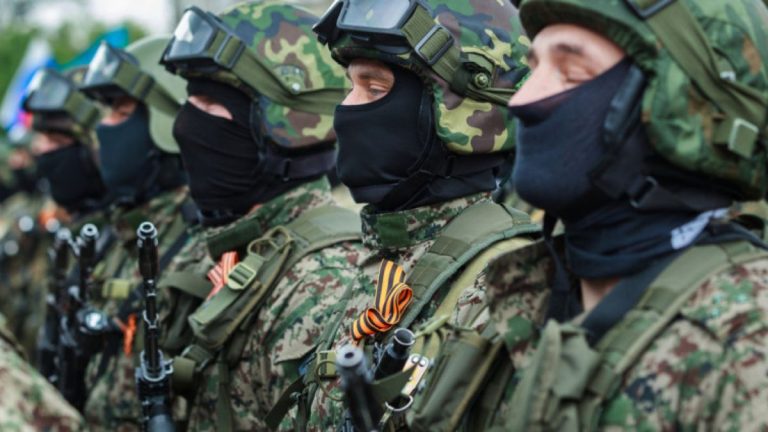
Ever heard of Russia’s Wagner Group? It has become increasingly notorious inside and outside Russia in recent years due to its involvement in conflicts across the Middle East, North Africa, Europe, Asia, and Latin America.
This shady network of private military contractors is said to have engaged in proxy wars on behalf of Russian President Vladimir Putin. Still, not much is known about their specific operations.
In fact, officially, the group doesn’t exist.
Confused yet? No worries.
We’re here to help decode the mysteries of this shadowy organization. From recruitment tactics to allegations of torture and unlawful killings, this blog post dives deep into everything you need to know about the Wagner Group.
Yevgeniy Prigozhin is a close friend and ally of Russian president Vladimir Putin. He recently revealed that he leads the Wagner Group, despite dropping a lawsuit on a journalist who made the same claim several months earlier.
Prigozhin has used his considerable wealth to fund several pro-Kremlin initiatives, such as a media company called Russia Today and an IT company called The Internet Research Agency.
Prigozhin is nicknamed “Putin’s Chef” because he often organizes lavish dinners for the Russian president and his guests. He also allegedly was involved in setting up the now-infamous “troll factory”, where internet trolls were employed to spread pro-Kremlin messages online.
Despite being suspected of countless wrongdoings, Yevgeniy Prigozhin has skirted justice due to his immense wealth and powerful connections and is wanted for questioning by the FBI because of his alleged interference with the 2016 US Presidential Election.
Allegations of War Crimes
Reports have emerged stating that Russian mercenaries operating with the Wagner Group have been involved in the torture and killing of civilians, as well as other violations of international law.
Unlike many other countries’ special police forces, the Wagner group does not adhere to regulations set forth by the UN, the Red Cross, or other international peacekeeping organizations.
For example, in March of 2022, a United Nations report confirmed that the Wagner Group was involved in a massacre of more than 300 Syrian civilians. Witnesses in Mali reported that the group’s members rounded up anyone trying to escape and opened fire.
But wait…there’s more.
In October of 2022, the UN uncovered evidence of war crimes in Ukraine committed by members of the Wagner Group. The ultimate goal of these criminal acts was to support the Russian-backed separatists in the region.
In response to these injustices, the United States has taken action by imposing sanctions against Russia and the Wagner Group.
Recent media stories indicate that the Wagner Group is still heavily involved in the Ukraine conflict.
Evidence Linking Prigozhin’s Network to an Alliance with Putin
Prigozhin’s companies are part of a larger effort to consolidate his influence in Russia and abroad, with the ultimate goal of bolstering the Kremlin’s political and economic interests.
In January of 2023, the US Treasury Department released a report detailing its investigation into the Wagner Group and its alleged links to Yevgeniy Prigozhin.
According to the report, Prigozhin has used his business network as a front for “maligned activities” linked to Putin’s foreign policy agenda.
“Today, the Wagner Group is being redesignated pursuant to Executive Order (E.O.) 13581, as amended by E.O. 13863, for being a foreign person that constitutes a significant transnational criminal organization.”
The Wagner Group is currently active in Ukraine, where it has been accused of supporting pro-Russian separatists and interfering in the country’s internal affairs.
According to reports, the group has provided military training and supplies to pro-Russian separatist forces in eastern Ukraine.
The presence of the Wagner Group in Ukraine has sparked widespread condemnation from Western governments and human rights organizations alike.
Since last year, there have been numerous reports that Yevgeny Prigozhin was seeking Wagner Group volunteers from Russia’s prison population to supplement its constrained military force in Ukraine.
According to reports, prison wardens were assigned the task of recruiting for the Wagner group and had been instructed to target prisoners with a prior military background.
In return for their participation, upon completing a six-month tour of duty, those convict volunteers would receive a presidential pardon and an income of 100,000 rubles (approx. $1,315) per month.
Although it is difficult to determine how many volunteers were recruited as part of this campaign, recent findings by Reuters indicate that U.S. intelligence believes that Wagner had 40,000 convict fighters deployed in Ukraine by December 2022.
According to Yevgeny Prigozhin, recruiting efforts within the Russian prison system have ceased as of February 2023.
Timeline of Russia’s Wagner Group
2014: Russia annexes Crimea and begins its campaign to destabilize Ukraine. Prigozhin’s company wins lucrative contracts to supply pro-Russian forces in eastern Ukraine.
2015: Reports emerge of a mysterious mercenary force fighting in Syria on behalf of the Assad regime.
2018: The Wagner Group has grown to more than 1,000 personnel. The group is now active in multiple theatres including Syria, Ukraine, and Sudan.
2019: Prigozhin is sanctioned by the US Treasury Department for his involvement with the Wagner Group.
2020: Approximately 2,000 mercenaries from the Wagner Group arrive in Libya and the Central African Republic to aid local guerilla fighters in their efforts to destabilize the government.
2021: Wagner Group mercenaries begin fighting in the Caucasus and Nagorno-Karabakh region. Prigozhin is accused of war crimes by Amnesty International.
2022: Prigozhin identifies himself as the financier behind the Wagner Group. The Wagner Group continues to expand its operations around the world, and Prigozhin is actively pursued by international authorities for his role in the group’s war crimes.
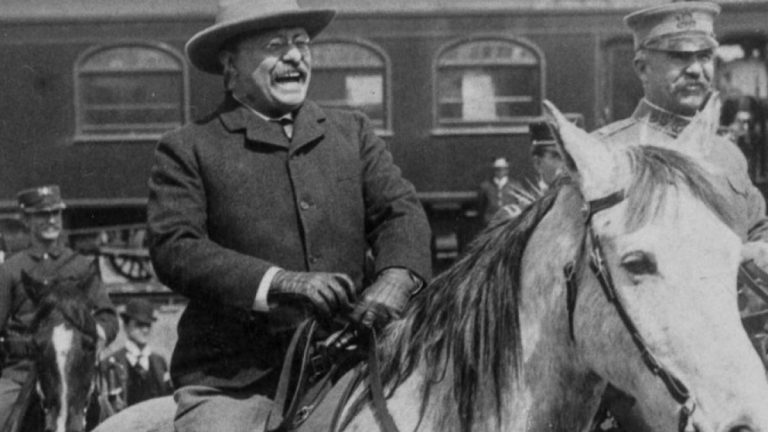
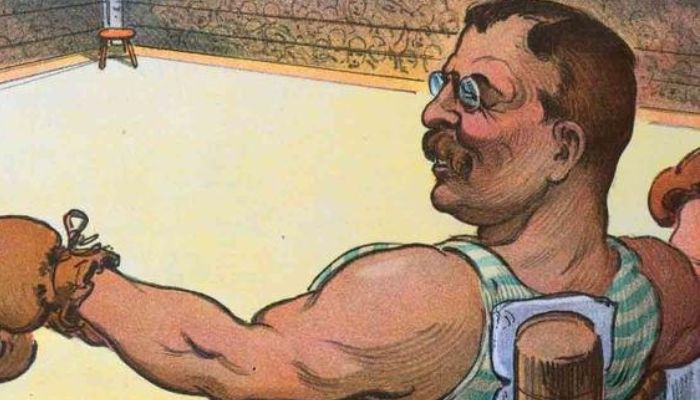
Theodore Roosevelt, the 26th president of the United States, is known for his many achievements. The Roosevelt we know was a boxer, leader of the Rough Riders during the Spanish-American War, and a cowboy- in other words, the most interesting president in the world!
He doesn’t always drink beer…but when he does, he goes and builds the Panama Canal.
In all honesty, I could probably write an entire book on Theodore Roosevelt’s amazing exploits. But rather than risk universal panning from book critics, I decided on a powerhouse article instead.
So here it is, cooked fresh to order… 25 fun facts about Theodore Roosevelt!
Top Interesting Facts About Theodore Roosevelt
Although the Office of the President requires a certain degree of austerity, I think we can all appreciate instances of pure, unfiltered humanity from the Commander-in-Chief.
Here are some of the gems!
1) “Impeach me. See if I care.”
When Roosevelt seized the Isthmus of Panama without Congressional approval and moved forward with his plans to build the Panama Canal, members of Congress called for his impeachment.
Roosevelt’s response? “I regard the Senate as a collection of angleworms. If they do not like my leadership, they can impeach me.”
2) Hold your horses
Theodore Roosevelt was the first president to ride in a car, fly in an airplane, and dive in a submarine.
Ironically, after his daughter Alice expressed the desire to travel in automobiles more often, he angrily yelled, “The Roosevelts will always be nothing but a horse family!”
Roosevelt opened his speech with, “Ladies and gentlemen, I don’t know whether you fully understand that I have just been shot, but it takes more than that to kill a Bull Moose.”
He then gave his 90-minute speech and only accepted medical attention when he finished. Miraculously, his folded speech and eyeglasses case absorbed some of the contact from the bullet.
4) Sheriff Ted
In 1889, Roosevelt moved to North Dakota to be a cowboy and became a deputy sheriff after rounding up a gang of outlaws.
5) Have one on the house
Theodore Roosevelt once entered a saloon in Mingusville, Montana, where a drunken local bully began harassing him.
Calling Roosevelt names like “Four-Eyes” and going as far as to point a gun at him, the bully nevertheless found himself on the receiving end of a mean right hook from the future Commander-in-Chief.
“Bully!”
6) Bear name-cessities
During a hunting trip, Roosevelt encountered a lone bear cub and decided it would be barbaric to shoot it, so he didn’t.
A journalist got ahold of this story, and a toy company got ahold of that story and created the first stuffed “Teddy Bear” toys we know today.
Roosevelt earned a new nickname due to this attention from the press and the toy company…Teddy. He grew to despise that nickname for the rest of his days.
7) Egg-celsior
Theodore Roosevelt’s breakfast usually consisted of 12 eggs and several cups of coffee. Boys and girls, can you say “arteriosclerosis”?
I thought not. Me neither.
8) The horseless cavalry
The Roosevelt-formed First Volunteer Cavalry (the one that charged up San Juan Hill without horses because they were accidentally left behind in Florida), was Teddy’s pride and joy.
From college athletes to farmers to Ivy League scholars, this ragtag group of volunteers received training from a career military officer and became the most distinguished fighting force in the Spanish American War.
Theodore Roosevelt actually went on tour with the troop, announcing every arrival with a bugle call.
9) Turning a blind eye
While sparring with military aide Daniel T. Moore in the White House, Roosevelt took a shot in the eye from Moore that left him completely blind in his left. The president kept this injury from the public for years.
10) President Dolittle
Theodore Roosevelt, like Calvin Coolidge and many other presidents, loved animals. The White House was full of unusual pets– the Roosevelt family zoo consisted of dogs a lion, a zebra, a parrot, several bears, a hyena, rats, a coyote, a couple of alligators, snakes, a few horses, and a one-legged rooster.
Quick Presidential Facts About Theodore Roosevelt
Theodore Roosevelt’s Presidential Firsts
First sitting president to travel outside the United States
First to install a boxing ring in the White House
First president (and American) to win the Nobel Peace Prize for his role in ending the Russo-Japanese War
First president to have a telephone in the White House
First to install a swimming pool at the White House
First president to dive in a submarine
First president to invite an African-American (Booker T. Washington) to dine at the White House
First president to send a trans-Atlantic, full-length, diplomatic cable (San Francisco to Manilla)
First president to fly in an airplane
First president to make a public appearance in a car
Sources
Stebben, G., Hill, A., & Durst, W. (2016). White House Confidential: The Little Book of Weird Presidential History (Third ed.). Skyhorse.
O’Brien, C. (2004). Secret Lives of the U.S. Presidents. Quirk Books.
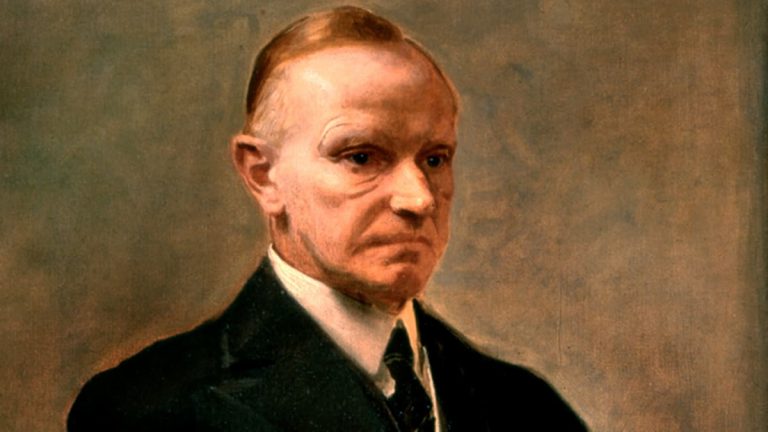
Anyone who did their history homework probably knows the basic facts about Calvin Coolidge. 30th President of these great United States from 1923 to 1929, graduated summa cum laude from Amherst College in 1895, served as the governor of Massachusetts, looks like the perpetually racist old man on the bus that no one wants to sit next to…
But in my humble bro-pinion, the presidential career of Mr. Coolidge was definitely underrated. Nobody ever talks about him.
Well, no time like the present to pluck a well-deserving soul out of the wretched depths of historical obscurity. Here are some cool fun facts about Calvin Coolidge that the history books left out!
Calvin Coolidge Fun Facts
1) Coolidge was the only U.S president born on the 4th of July.
2) Calvin Coolidge was the last president to actually write his own speeches.
3) He would read classic literature in the original Greek and Latin languages for fun
4) Known for his quiet personality and being a man of few words, “Silent Cal” was once approached by a woman at a White House gala who told him she had a bet that she could get him to say more than three words before the evening was through. His response? “You lose.”
5) Calvin Coolidge was a prolific sleeper. In addition to napping for two to four hours every day without fail, he slept for 11 straight hours every night. Despite achieving a record-breaking amount of shut-eye, Coolidge was always tired and sluggish.
6) One day, someone walked up to President Coolidge and said, “I didn’t vote for you.” In typical Coolidge fashion, he replied, “Well, somebody did.”
7) Calvin Coolidge’s 16-year-old son, Calvin Jr., died of sepsis after a blister he received while playing lawn tennis at the White House got infected. Experts believe President Coolidge suffered from major depressive disorder in the aftermath of this incident.
8) Coolidge was made an honorary Sioux chief in 1927 after he signed the Indian Citizenship Act, which stated “all non-citizen Indians born within the territorial limits of the United States be, and they are hereby, declared to be citizens of the United States.”
9) Coolidge’s preferred way of exercising was riding a mechanical horse he had installed in the White House- a pastime that even his Secret Service agents also gleefully enjoyed.
10) President Coolidge strongly objected to Herbert Hoover’s appointment to the office of the President once his own term was over. His exact words were, “For six years that man has given me unsolicited advice – all of it bad.”
11) The Coolidge Administration’s tax cuts made it so that 98% of the American population wasn’t paying income taxes by 1927.
12) Calvin Coolidge was a huge animal lover- in fact, when two lion cubs were sent to him as a gift from the mayor of Johannesburg, he named them “Tax Reduction” and “Budget Bureau”. He also owned a collie named Rob Roy.
13) When Charles Lindbergh returned from his 1927 solo flight across the Atlantic, President Coolidge was there to meet him and present the legendary aviator with the Distinguished Flying Cross medal.
14) During a live performance of the Marx Brothers’ Animal Crackers (which the president was attending), Groucho Marx spotted him in the audience and yelled, “Hey Calvin…isn’t it past your bedtime!?”
15) Every day when Coolidge woke up from his afternoon nap, he asked an aide, “Is the country still there?”
16) Coolidge was so quiet and so antisocial at public gatherings that when he passed away in 1933, poet Dorothy Parker, in her infinite compassion, asked, “How can you be sure?”
17) The “Coolidge Cooler” was a cocktail that was created in memory of the former president. The ingredients: 1.5 ounces of Vermont White vodka, ½ ounce of American whiskey, 2 ounces of orange juice, and club soda.
Famous Calvin Coolidge Quotes
“No person was ever honored for what he received. Honor has been the reward for what he gave.”
“Little progress can be made by merely attempting to repress what is evil. Our great hope lies in developing what is good.”
“Any man who does not like dogs or wants them about does not deserve to be in the White House.”
“I think the American public wants a solemn ass as president and I think I’ll go along with them.”
“Nothing in this world can take the place of persistence. Talent will not: nothing is more common than unsuccessful men with talent. Genius will not; unrewarded genius is almost a proverb. Education will not: the world is full of educated derelicts. Persistence and determination alone are omnipotent.”
“No man ever listened himself out of a job.”
“No enterprise can exist for itself alone. It ministers to some great need, it performs some great service, not for itself, but for others; or failing therein, it ceases to be profitable and ceases to exist.”
“Industry, thrift, and self-control are not sought because they create wealth, but because they create character.”
“We must eternally smite the rock of public conscience if the waters of patriotism are to pour forth. We must ever be ready to point out the success of our country as justification of our determination to support it.”
“Patriotism can neither be bought nor sold. It is not hire and salary. It is not material, but spiritual. It is one of the highest human virtues. To attempt to pay money for it is to offer it an unworthy indignity which cheapens, debases, and destroys it.”
O’Brien, Cormac. “Calvin Coolidge.” Secret Lives of the U.S. Presidents: What Your Teachers Never Told You about the Men of the White House, Hallmark Gift Books, Quirk Books, United States, 2012, pp. 168–172.
Will-Weber, Mark. “The Coolidge Cooler.” Mint Juleps with Teddy Roosevelt: The Complete History of Presidential Drinking, Regnery Publishing, Washington, D.C., 2014, p. 239.
Hayward, Steven F. “Calvin Coolidge.” The Politically Incorrect Guide to the Presidents, Regnery Publishing, a Division of Salem Media Group, Washington, DC, 2017, pp. 161–166.
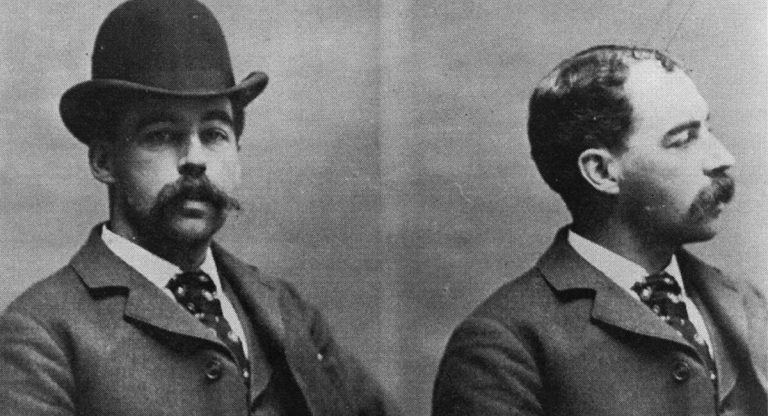
As ingenious and murderous as any psychopath in history, serial killer H.H. Holmes is an enduring icon of the twentieth century’s most famous unsolved murder spree. His legacy is one of deception, power, and death—and to this day, no one knows who he really was or how many people he murdered in his lifetime.
Holmes confessed to 27 murders over a 20-year period, but the true number of victims is probably extraordinarily higher – some estimate it could be as high as 200.
His crimes are unmatched by any other killer in the history of America and his actions are considered the first to fit the FBI’s new profile of a serial killer.
Here are 16 H.H. Holmes quotes to give you a more complete picture of the man…and the murderer.
The Quotes of H.H. Holmes
“I was born with the devil in me. I could not help the fact that I was a murderer, no more than the poet can help the inspiration to sing. I was born with the evil one standing as my sponsor beside the bed where I was ushered into the world, and he has been with me since.”
-H.H. Holmes, according to his confession
“I love children… they are tasty.”
-Holmes said this according to a police officer during interrogation
“I will not die by the hand of man.” -Holmes said this according to a police officer during interrogation
“I was born with the evil one standing as my sponsor beside the bed where I was ushered into the world, and he has been with me since.” -H. H. Holmes to Dr. Ferdinand C. Gaucher
“It’s fun to be a butcher.” -H.H. Holmes to Dr. Ferdinand C. Gaucher
“I would give them potassium cyanide.” -H. H. Holmes was quoted in a Chicago paper as saying this about how he would murder his victims.
“This was my first experience with insane persons, and so terrible was it that for years afterwards, even now sometimes, I see their faces in my sleep.”‘
-H.H. Holmes reflecting on his time working in an insane asylum
“There are none who do not believe that I am guilty; I admit it freely. There are many with whom I could have lived happily, but those who know me only from what I have said and done in my confession would dread to associate with me. I am a monomaniac on the subject of killing, and I have no desire for any peace of mind. I do not wish to be at large, and if it were not for that detective [Geo. W. Dilley] who is still in search of me, I would run my head against the first stone wall in sight.” -H. H. Holmes to Dr. Ferdinand C. Gaucher
“My idea is right… It will work, it must work.” -H.H. Holmes while working on his hotel in Englewood, IL
“I am convinced that since my imprisonment I have changed woefully and gruesomely from what I was formerly in feature and figure…My head and face are gradually assuming an elongated shape. I believe fully that I am growing to resemble the devil—that the similitude is almost completed.”
“My mental powers are perfectly clear. I have no delusions, and certainly no hallucinations…I am not deranged, but right as rain in regard to everything… My mind is as active to-day as it has ever been…”
“At first I did not understand what caused these fumes, but now I attribute them to the decaying bodies in the barrels which settled down into the earth as they caved in one after another.”
“I have always found something peculiarly fascinating about fire, about its mysterious power and its destructive range. I have had such a liking for fire that I have frequently started conflagrations.”
“I do not think that I am guilty of any crime in the way the public can understand it.”
“The sight was disgusting, yet when I looked upon it, and realized that at least $20,000 would come to me after a little further trouble, I gazed on it as a very good investment which was about to mature.”
-H.H. Holmes on his stealing a corpse identical in appearance to himself with the intention of faking his death for insurance money
The tragic deaths of all who perished in the September 11 terror attacks in the US are remembered on that date each year.
Images of the aftermath of those terrible events in 2001 are forever ingrained in the minds of those who witnessed them.
Many people have since shared their stories of how close they came to being killed in the attacks themselves, not least many famous individuals who might otherwise have perished.
Here are 10 famous people who dodged death on 9/11!
1. Rob Lowe
In 2011, actor Rob Lowe revealed that he had shared a plane with the hijackers who eventually took control of the famed United Flight 93 before passengers overwhelmed them. The plane would later crash in a field in Shanksville, Pennsylvania.
Ten days before the attacks, Lowe and the hijackers sat on the very same Flight 93, departing Washington’s Dulles airport, on the terrorists’ practice run.
Lowe found out in 2002 when he received a letter informing him he had been deposed for the defense of the alleged ’12th hijacker’, Zacarias Moussaoui.
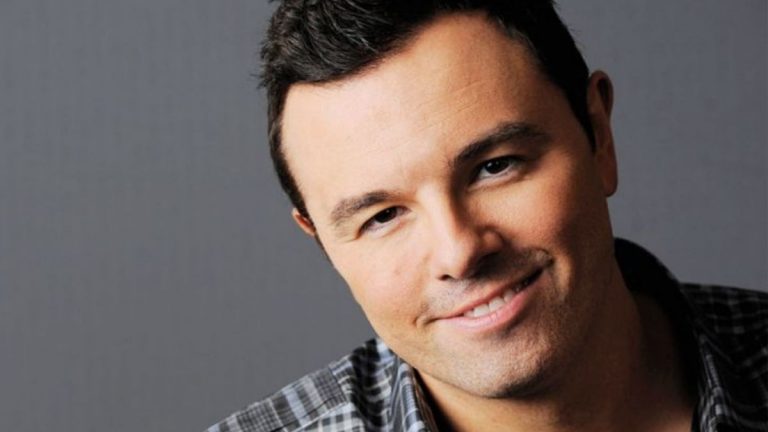
2. Seth MacFarlane
The famous creator of television shows like Family Guy, American Dad, and The Orville came a little closer to being directly involved in the attacks.
MacFarlane had actually booked a seat on American Flight 11, which later crashed into the WTC North Tower.
MacFarlane’s agent had mistakenly informed him that the flight left 30 minutes later than it did, and this misinformation (along with an earth-shattering hangover) caused him to miss boarding the flight by just a few minutes.
3. Mark Wahlberg
Wahlberg had also planned to fly to Los Angeles on the same Flight 11 with a group of friends.
He decided to change his plans at the last minute to attend a film festival in Toronto, where he eventually flew before transferring to LA.
In recent interviews, Wahlberg claims that he has had over 50 dreams in which he has tried to come to terms with the near-miss and wondered how he would have reacted had he been on board.
4. Ian Thorpe
The Australian multi-Olympic medal-winning swimmer, affectionately known as “The Thorpedo”, was spending a few days in New York when he went out for a run on the morning of September 11.
While he was out, he decided to go to the observation deck at the top of the WTC but realized he did not have a camera with him and returned to his hotel to get it.
Once he was in his hotel room, he turned on the TV to see the North Tower aflame.
5. Lara Lundstrom Clarke & Gwyneth Paltrow
Lara Lundstrom Clarke was crossing the street when she caught the eye of movie star Gwyneth Paltrow as she sat behind the wheel of her car.
Going over to her, the two chatted briefly before Clarke went on to the subway station, where she consequently missed her train to work at the World Trade Center.
Clarke got the next train, only to emerge from the station and see a plane fly into Tower 1, causing her to flee instead of heading to her office on the 77th floor of Tower 2.
6. Larry Silverstein
The leaseholder on the buildings of the World Trade Centre, Silverstein’s company, had temporary offices on the North Tower’s 88th floor.
In a turn of events that would later fuel internet conspiracy theories, Silverstein was badgered by his wife into going to a scheduled dermatologist appointment on the morning of September 11, ultimately leading to his being away from the office at the time the planes hit.
7. Patti Austin
The R&B singer was booked onto the LA-bound United 93 at the end of a two-concert series in New York but flew out a day earlier on September 10 following the news that her mother had been taken ill after suffering a stroke.
If not for her family tragedy, she would have been involved in the national one that was to follow the very next day.
8. Jim Pierce
Nephew of George H.W. Bush and cousin to then-president George W, Jim Pierce, and several hundred other business people were booked to attend a conference on the South Tower’s 105th floor on September 11.
Excess demand forced the conference to relocate to a bigger room in the Millennium Hotel across the street.
This last-minute change of plans ensured that he and most of the conference’s attendees were not in the WTC when the planes hit.
9. Julie Stoffer
Stoffer gained fame through her appearance on the MTV reality show The Real World: New Orleans in 2000 and was in Boston in the days preceding September 11.
On the morning of the attacks, she had a fight with her then-boyfriend, which caused her to miss her flight to Los Angeles.
The plane she had been booked to fly on was American Airlines Flight 11, which was hijacked and flown into the WTC’s North Tower.
10. Sarah Ferguson
The Duchess of York was on NBC giving an interview when the first cutaway occurred to report on the first plane hitting the WTC.
Her charity, Chances for Children, was based on floor 101 of 1 World Trade Center, and she was working out of their offices during her time in the city.
None of the charity’s workers were in the tower when it came down, though many financial firm employees who donated the space sadly did perish when the building collapsed.
In a world overshadowed by unimaginable horror, there were those who refused to bow to evil.
As the Nazi regime spread its terror across Europe, a handful of brave souls rose up—risking everything to protect their fellow human beings.
These ten Holocaust heroes remind us that, even in the face of monstrous cruelty, courage and compassion can still prevail.
Join us in honoring their stories of selfless bravery.
Here are ten holocaust heroes who helped countless Jews to safety during World War II!
No Time to Read? Watch the Video Below!
#1: Oskar Schindler (1908 – 1974)
Oskar Schindler is, thanks to Thomas Kenneally’s novel and Steven Spielberg’s film, probably the most famous helper of the Jewish people in World War II.
Schindler was a Nazi spy in Czechoslovakia and Poland before the Germans invaded, and a member of the Nazi party from 1939. He was also a businessman and, in 1939, was in charge of an enamelware factory in Krakow.
Many of his employees were Jewish and should have been killed. It’s believed Schindler initially saved their lives for financial reasons but eventually came to act for more humanitarian reasons.
He saved 1,200 Jews when he moved his factory west as the Nazi empire collapsed. By the end of the war, all the money was gone. Schindler had spent it bribing Nazis to keep his workers safe.
He never really made much of his life after the war and often had to rely on the help of those whose lives he saved to keep body and soul together. In 1963, Israel named him Righteous Among the Nations.
Schindler seems to have converted upon witnessing the Nazi liquidation of the Jewish ghetto in Krakow. After that, he became a committed defender of Jews whenever and wherever he could.
When some of his workers were sent to Auschwitz, he managed to get them out and also got 3,000 women transferred to textile factories from the camp in the hope that they might survive.
He and his wife set up a hospital in their factory to care for 250 Jews who had been considered not fit enough to work in the mines.
Schindler is the only member of the Nazi Party to be buried in Mount Zion cemetery in Jerusalem.
#2: Archbishop Damaskinos Papandreou (1891 –1949)
Leaders who stood up to the Nazis didn’t usually last very long. Archbishop Damaskinos told them where to go and survived.
His churches gave out thousands of baptismal certificates to Jews, enabling them to claim Christianity and survive the deportations in Nazi-occupied Greece.
As Archbishop of Athens and All Greece, Damaskinos was the spiritual leader of his country. He’d been elected first in 1938, but the Greek dictator, Metaxas, didn’t like him and put his own man in place.
The German invasion got rid of Metaxas, and Damaskinos was elected again.
When, in 1943, the Germans started deporting Greek Jews, the Archbishop sent a document to the occupation authorities that is believed to be unique, the only such formal protest made to the Nazis.
In it, he speaks of the country’s anger at the treatment of their fellow citizens: “Our holy religion does not recognize superior or inferior qualities based on race or religion, as it is stated: ‘There is neither Jew nor Greek’ and thus condemns any attempt to discriminate or create racial or religious differences.”
Despite the promise of a firing squad, he published his letter, telling the Nazi who threatened him that it was the local tradition to hang rather than being shot prelates of the church, “Please respect our traditions!”
#3: Ho Feng-Shan (1901 – 1997)
Ho is known as the “Chinese Schindler” for his efforts to save Jews while working as a diplomat in Vienna.
Ho was the First Secretary of the ROC Chinese (the government of China until the communist takeover in 1949) legation in Vienna from 1937, the year before the Germans took over Austria.
The situation for Jews was getting desperate, and after the Kristallnacht attacks in 1938, it became obvious to anyone that the only way to survive was to get out of Europe.
Austria had 200,000 Jewish citizens, but to be allowed to leave, they needed proof that somewhere would accept them.
Unfortunately, 31 countries had just signed an agreement at the Evian Conference that effectively shut most of the world’s borders to Jewish refugees.
Ho didn’t care and went against his bosses to issue hundreds of visas to Jewish families to travel to Shanghai at enormous speed.
He signed around 2,000 in just six months, and no one knows exactly how many Austrian Jews were saved by this courageous act.
He died in 1997 at the age of 96, but it wasn’t until after his death that his actions were honored. During his lifetime, the only record of his life-saving work was a black mark on his personnel records for not following orders.
#4: Irena Sendler (1910 –2008)
Irena Sendler was tortured and sentenced to death by the Nazis for her heroic efforts to save Jewish children from the Warsaw Ghetto, but somehow survived and lived to old age.
Irena was a Catholic, but her family had a history of fighting anti-Semitism. Her father, a doctor, died after treating typhus patients- many of whom had been Jews.
Jewish groups had also helped to pay for Irena’s education at Warsaw University, where she got into trouble for opposing the university’s segregationist policies.
When the Nazis invaded her homeland, she immediately began to help Jews to escape, forging documents for them and joining the resistance’s children’s unit.
Any Pole found aiding Jews would be killed along with all their family. Her work as a social worker included visits inside the Warsaw Ghetto, and she started to smuggle children out to stay with nuns and local families.
Around 2,500 Jewish children were taken out of the Ghetto by Irena and her team. She was arrested in 1943 and saved by her resistance colleagues, who bribed her guards as she was about to be executed.
Even after this, she continued her work with Jewish children.
She was named Righteous Among the Nations in 1965, the first of many honors from Polish and Israeli authorities. She was nominated for the Nobel Peace Prize in 2007 and died at the age of 98 in Warsaw.
#5: Raoul Wallenberg (1912 –1947?)
Raoul Wallenberg was another diplomat who, during World War Two, used his powers to save tens of thousands of lives. He probably died in the custody of the KGB after the war. He is one of the most honored heroes of the Holocaust.
From a rich Swedish family, Wallenberg was 1/16th Jewish and proud of it. When Hungary’s increasing support for Nazism made it impossible for a Jewish colleague to do business in his homeland, Wallenberg began to travel there for his own education, learning the language and watching the Nazi state in action.
The Germans finally occupied Hungary in 1944, and the Nazis immediately began the process of deportation. The War Refugee Board recruited Wallenberg to travel to Hungary to help the nation’s Jews.
By the time he arrived in Budapest, 400,000 Jews had already been sent to the death camps, and around 230,000 remained in the country. Wallenberg started to issue “protective passports” to Hungarian Jews.
The documents identified the carrier as a Swede waiting to go home. They had no legal force whatsoever but were usually accepted by the authorities.
He also started to rent out buildings and put them under the Swedish diplomatic umbrella, essentially declaring them Swedish territory. He managed to shelter 10,000 people in his stock of 32 buildings.
Wallenberg braved bullets to hand out passports to Jews already loaded onto trains heading for the camps.
With the Soviet armies at the gates of Budapest, he negotiated and bribed German and Hungarian fascists to leave the ghetto unharmed.
Wallenberg was arrested by the Soviets, accused of espionage, and vanished. He was probably killed in 1947 in Moscow, but there have been reported sightings of him – always in custody – as recently as the 1980s.
#6: Aristides de Sousa Mendes do Amaral e Abranches (1885 –1954)
The impressively named Portuguese diplomat also put his bureaucratic duties to one side in the service of a greater good, granting thousands of visas to refugees from his base in Bordeaux, allowing them to make the trip to neutral Portugal from where many fled on to America.
It is often said that Sousa Mendes issued 30,000 visas with 10,000 going to Jews, but that figure has been disputed.
He certainly saved the lives of thousands of people who were able to get out of France thanks to his documents, issued despite his government’s insistence that he stop.
Some historians have called him the greatest single lifesaver of the Holocaust.
Sousa Mendes had a long history of breaking the rules in his job, thankfully. He wasn’t your typical freedom fighter, though; he was a supporter of the Portuguese dictatorship and happy to be quite ruthless in dealing with its opponents.
He was kicked out of America for his “anti-democratic” and “anti-American” pronouncements in the press.
Portugal wasn’t even big enough to be invited to the Evian Conference, where many countries shut their doors to Jews fleeing the Nazis.
The country did much the same, issuing an order tightening up their processes around issuing visas.
Sousa Mendes started issuing visas against the rules in 1939, one to a refugee from Francisco Franco’s Totalitarian Spain. He was warned about his future conduct but would nevertheless continue to issue visas off the books from May 1940, falsifying details if he thought it necessary.
In doing so, Mendes risked a long prison sentence.
As the Germans swept into France, an assembly line system was set up to deal with the demand for visas.
When the Portuguese authorities tried to stop the Spaniards from letting through people of Sousa Mendes’ documents, he purposely led them to a border post with no telephone where the message couldn’t have got through.
Lisbon became one of the chief escape routes for refugees from occupied Europe, much to the Nazis’ dismay.
They started to issue threats to the Portuguese government, which in turn cracked down on their rogue consul. He was put on half-pay for a year and returned to Portugal, where he was forced to rely on Jewish relief charities to feed his family.
He died still in disgrace as far as his government was concerned, but has been honored since his death. In 1966, he was named as one of the Righteous Among the Nations in Israel.
The Portuguese honored him in 1987, and he is now recognized as a national hero.
#7: Varian Fry (1907 –1967)
Varian Fry helped up to 4,000 people escape the Nazis, some Jewish, some anti-Nazis, while working as a journalist in Vichy, France.
Fry came from a privileged American background and got the best education available before turning to writing. By 1935, he was a foreign correspondent in Berlin.
Disgusted by what he saw of the Nazi regime, he started to raise money for anti-Nazi groups.
In 1940, he was sent to France by the Emergency Rescue Committee with $3,000 and a list of threatened refugees, tasked with getting as many of them out as he could.
He used a villa near Marseille to hide his charges before smuggling them to Spain, then Portugal, before setting out for the USA.
Some were put on ships to Martinique in the West Indies, from where most of them also headed for the States.
Wealthy American supporters helped pay for his work, and yet another brave diplomat, Hiram Bingham, issued thousands of visas.
The Emergency Rescue Committee, which still operates today as the International Rescue Committee, was helped by American Unitarians in Lisbon.
Fry was a trenchant critic of his government’s policies toward European Jewish refugees and was recruited in 1944 when President Roosevelt set up the War Refugee Board.
Many famous artists, writers, and intellectuals owed their life to Fry.
He was awarded the French Legion of Honor in 1967 and is listed as the Righteous Among the Nations in Israel, who posthumously made him a citizen.
Today, a street in Berlin is named for him, as well as another one in his New Jersey hometown.
#8: The Danish Underground
Denmark shared a border with Germany and was occupied from 1940, but miraculously almost all of the country’s Jews were able to survive the war, thanks to a massive collective effort by the country’s resistance movement and many ordinary citizens.
The Nazis were initially polite to their Nordic neighbors, pledging not to interfere with Danish independence. After all, they needed Danish meat and butter, so they were willing to turn a blind eye—at least for a while.
But that delicate truce didn’t last. As the pressure to solve the so-called “Jewish Problem” mounted, some Danish anti-Semites even tried to torch a synagogue. The Danish government cracked down hard on that, refusing to give in to Nazi demands.
As resistance against the occupation grew, the Germans issued ultimatum after ultimatum. When Denmark finally said no, Germany took full control—and Danish Jews were suddenly in grave danger.
A German diplomat tried to sneak Denmark’s 8,000 Jews to safety in Sweden, but the plan fizzled out. Not one to give up, he leaked the Nazi plans to a left-leaning politician, who warned the underground. Phone books were combed, and Jewish families were secretly called and told: “You have to flee.”
The Swedish ambassador in Copenhagen began issuing passports on the spot. Niels Bohr, Denmark’s world-famous physicist of Jewish descent, was also wanted by the Americans for their atomic bomb program. But he refused to budge from Sweden until it opened its borders to Denmark’s Jews.
A flotilla of fishing boats and small vessels carried them to safety. When the Nazis arrived for their grand roundup, they found almost no one at home.
About 450 were still caught and sent to camps, but even there, the Danish government pushed back, ensuring most survived.
Only 50 perished—old age or disease had claimed them, not Nazi bullets.
For their courage, the entire Danish resistance is honored in Israel as Righteous Among the Nations—a testament to the power of collective defiance.
#9: The People of Le Chambon-sur-Lignon
This small French town is one of only two to be recognized as Righteous Among the Nations in Israel for the population’s brave decision to turn their community into a haven for threatened Jews.
André Trocmé
The leadership for this courageous act came from two Christian priests, the minister André Trocmé and the town’s pastor, Edouard Theis.
Trocme had already been an outspoken pacifist and critic of the Nazis before the war, one of the reasons he was sent to such an isolated parish.
Edouard Theis
From 1942, Jews were sheltered from German and French Vichy forces in houses, farms, and the town’s public buildings. When the soldiers came, the Jews were spirited away to the surrounding countryside and summoned home with an all-clear song.
Local people also helped find documents to help their charges make it across the border to Switzerland.
The town wasn’t unscathed. They soon came under suspicion, and the Vichy authorities sent agents to find out what was happening there. The Gestapo came to call as well.
When they found a group of young Jewish men, they arrested them, but their guardian, Daniel Trocme (a cousin of Andre), refused to let them go without him – he, too, died in the camps.
The two priests were finally arrested in 1943 after Trocme had spoken to a visiting Vichy minister. The two men refused to sign an agreement on their future conduct but were released fairly quickly, going underground to continue their work.
The town’s people probably helped to keep 3,000-5,000 people from deportation and probable death, and Le Chambon-Sur-Lignon has received several honors for its bravery.
#10: Dimitar Peshev (1894 – 1973)
Dimitar Peshev used his political power to help save the Jews of Bulgaria, despite earlier supporting his country’s alliance with the Nazis.
Before the war, Peshev had been the Bulgarian parliament vice president. In 1940 Bulgaria allied with Nazi Germany and, within a couple of years, had passed anti-Jewish laws similar to those in Germany. Peshev went along with all this.
However, when the orders were sent to deport the Jews of Bulgaria to the death camps, something happened to Peshev.
A delegation of Jews – including a friend – came to tell him of the deportation orders on March 8, 1943, and Peshev, after initially believing the warnings to be untrue, decided to stop it.
The Prime Minister, Bogdan Filov, refused to see Peshev, but he pestered the Interior Minister until he reversed the orders. Sadly, the change of mind did not come in time to save everyone, and Jews from Thrace and Macedonia were handed over to the Germans nevertheless.
Peshev stepped up his efforts to save the rest of his country’s Jews, writing, with 43 supporters of the government in parliament, to Filov demanding that no further anti-Jewish laws should be passed. He was sacked for his troubles.
After the war, the new communist regime tried him for collaboration, but Jewish friends managed to save his life, and in the end, he served only a year in prison.
In 1973, he was recognized as Righteous Among the Nations in Israel and has since been honored in Bulgaria for his work saving Jews in World War II.
Wrapping it Up
Considering the power and brutality of the Nazi party, it’s incredible to think that these brave people put their lives on the line to do the right thing.
I’ve always believed there were many more people who privately wanted to help the Jewish people in WWII but could not find the courage to stand up to the Nazi war machine.
Those who did would make an indelible mark on history, and their resourcefulness and bravery will forever be an inspiration to all who are willing to stand up in the face of adversity and oppression.
Bank robbery is the archetypal crime – a big building dedicated to keeping perishing great piles of cash in the vaults versus felons intent on spending said money on cheap whiskey, loose women, and shinier horses.
It’s big, brash, and bold. You don’t get many movies about mugging gangs, but every Western villain in Hollywood history was on his way to the local bank with a swag bag and a slew of dynamite sticks.
Here are seven of the biggest bank robberies in history!
#1: Central Bank of Iraq (Baghdad, 2003)
Source: VIX
With American soldiers on the outskirts of the capital, the family of Saddam Hussein started what is almost certainly the largest bank robbery in history.
It possibly stretches the classic definition of the bank robbery. There were no bags of cash bulging out of a freshly blown vault wall. Instead, the robbers – led by Qusay Hussein – had a note from Dad.
Dad, of course, was Saddam Hussein, who was still the ruler of Iraq in March 2003.
Qusay had a pal with him (possibly Finance Minister Hikmat Ibrahim al-Azzawi) to make sure the $920 million got safely into the trucks and trailers needed to move this sort of sum around.
It took about either two or five hours (depending on who you believe) to load up and drive away with their stash of $100 bills and possibly $100 million in Euros.
We all know that the cash didn’t do Saddam much good, as the former Iraqi president was executed on December 30, 2006. American forces killed Qusay in Mosul, along with his son and elder brother.
Finance Minister al-Azzawi died in 2012, shortly after being transferred from prison custody to a hospital.
In the chaos following the fall of Saddam’s regime, all sorts of Iraqi state property went missing (as is usually the case, no matter how well you plan your regime change).
Some of the central bank cash may have been driven across the border to Syria shortly after the raid. The $650 million discovered in the walls of one of the dictator’s ridiculously luxurious palaces may have been the bulk of it.
An Iraqi bank official summed up pretty nicely why this particular raid went so smoothly: “When you get an order from Saddam Hussein, you do not discuss it.”
Iraq’s continued misery has not been good for the central bank. In July 2014, as the militant Sunnis of ISIS rampaged through the country, there were disputed reports of $400 million being looted from banks in Mosul.
#2: Dar Es Salaam Bank Heist (Baghdad, 2007)
It’s back to Baghdad again. The Iraqi capital is the bank robbery capital of the world these days, and these guys have – as far as anyone knows – lived to enjoy their $283 million haul, or more likely, invest it in further bloodshed in that unhappy country.
This time, it was a private bank that was looted (probably by the guards paid to keep the money safe and almost certainly with the help of local militias).
Exactly why the Dar Es Salaam bank was carrying more than one-quarter-of-a-billion dollars is a mystery. Exactly how many men were involved is also disputed – though it seems clear they just opened up the vaults and did a runner overnight.
How they got away is another head-scratcher, though the involvement of militiamen could explain this.
#3: Banco Centrale (Fortaleza, Brazil, 2005)
In 2014, the world might have had its eyes on Fortaleza to catch Brazil’s opening game against Mexico as the country hosted the FIFA World Cup. In August 2005, the northern city hit the headlines when around $72 million went MIA from Banco Central.
This heist does very much fit the classic movie template, and indeed you can enjoy Assalto ao Banco Central if you don’t mind the reviews that called it “an action film without action.” There was a 25-strong gang, tunnels, an escaped mastermind…
They’d rented offices two blocks away and tunneled 78 meters into the bank, lining and lighting their tunnels as they went.
Eight people were arrested, and one of the supposed bosses was kidnapped – most likely by police – and killed. Moises Teixeira da Silva, another Mr. Big behind the operation, and an escapee from a 25-year sentence, has not been arrested and may indeed have struck again. Only R$20 million of the R$160 million has come home.
The bank decided not to insure the money because the risk was too insignificant to justify the premiums.
Well, you live and you learn I guess.
#4: British Bank of the Middle East (Beirut, Lebanon, 1976)
War! What is it good for? Good God, ya’ll…
It’s good for bank robbers! With law and order frayed, to say the least, and guns everywhere, war-torn Lebanon was the perfect place for this politically-inspired robbery in 1976.
Some strange bedfellows came together to walk off with £25 million (probably around £100 million these days) from the British Bank of the Middle East.
Sadly, the Middle East of 2014 is no more peaceful than it was in 1976 when Lebanon was the crucible for vicious sectarian fighting that turned the name of Beirut – once one of the region’s finest and most open cities – into a sorry byword for shattered communities and wrecked streets.
The war didn’t end until 1990.
It was Lebanon’s international openness that had made it the perfect place for the British Bank of the Middle East to set up its headquarters.
It was a lovely big prize for two of Lebanon’s combatant groups – the Palestine Liberation Organization (PLO) and the Christian Phalange. Joining the happy heisting party was Corsican mobsters.
What a crew!
Abu Hassan
The raid was largely the work of Abu Hassan, the man behind the massacre of Israeli athletes at the 1972 Munich Olympic Games. His PLO team blew their way into the bank. And then, they stopped. They couldn’t get into the vault.
With the country busy with other matters, the robbers were able to set up camp and send for help from Corsican experts. They made it into the inner sanctum two days later and started unloading the loot.
They did well: Lebanon had been prosperous, and the bank was stuffed with bullion, stocks and shares, financial paper, and the safety deposit boxes of wealthy locals.
The Corsicans were granted one-third of the total and headed off to the airport with a truck. The PLO flew their cash to Switzerland. Some of it no doubt went on with the struggle.
Some were allegedly liberated as far as Monte Carlo’s casinos.
Papers were apparently used for blackmail purposes that helped to finance the PLO for years.
Bank robbery has a funny way of uniting the body-strewn streets of the Middle East and the Bentley-lined streets of Knightsbridge, one of London’s poshest districts.
Vicci, who died in 2000 after being shot by Italian police while committing another robbery despite being officially in custody, was an interesting character.
His father was a libel lawyer, and his mother owned a boutique. He had no need to go into crime.
Nevertheless, Vicci was stealing by the time he was 16.
At university, he took up with Fascists but soon decided crime was more glamorous than politics. After around 50 crimes in his home country, Vicci fled to Britain.
He loved the idea of being a master villain, an international man of mystery with a high-flying lifestyle. He thought he was fantastic- although those knew him spoke only of a dull, vain, arrogant thug.
For his biggest operation, he found an inside man, Parvez Latif. Latif’s cocaine use rendered him vulnerable, and Vicci made full use of him.
For such a spectacular crime, it was remarkably simple. Vicci and an accomplice asked to rent a safety deposit box in order to get into the vault and then produced guns, put a “closed” sign on the door, and cleaned the place out.
Police got his fingerprint and the rest of his gang, but Vicci fled the country successfully.
However, he came back to Britain to pick up a Ferrari for his new life in Latin America.
Vicci got 22 years, but was allowed to return to Italy to serve some of his sentence, where laxer conditions subsequently led to his release.
#6: United California Bank Robbery (Los Angeles, 1972)
Taking in $30 million (around $100 million in today’s values), this could have been the perfect crime, had not the previously-unknown hoods who carried it out proved to be greedy/stupid enough to put the cops on their trail.
Even then, if they’d have done their washing up, they could have been in the clear with their loot from the robbery of the United California Bank Robbery.
The Dionisio family and pals were professional thieves (and by their own accounts very good ones) but acted well outside their usual stomping grounds in Ohio.
There were a pair of brothers, Amil and James, two nephews, Harry and Ron Barber, brother in law Charles Mulligan and a couple of unrelated hangers-on.
Amil was a whiz with alarms, and James was an explosives and tools expert. Charles was a driver. The team was given the job by a friend of the final two members of the gang, whose presence was thus forced upon them – they were just petty thieves.
They blew a hole in the roof of the bank vault and did a runner with the contents. And that would have been that. Indeed, such a huge score was enough to retire on, or at least inspire a period of laying low?
Apparently not. The Dimensions used the same MO back home in Ohio, and the FBI worked out that the two crimes were linked.
Flight records proved the whole gang had traveled to California (all on the same flight, silly gang!) and rented property there. The house yielded fingerprints that triggered a federal warrant, and the whole gang was rounded up and locked away.
Amil has nowwritten an account of his life, which includes the tale of the 1972 robbery and the claim that the FBI acted illegally in apprehending the gang.
Those responsible for this £26.5 million robbery remain mostly uncaught (except one man jailed for money laundering). According to the British authorities, they may be linked to Republican groups.
The kidnapping of the family members of bank employees makes it particularly frightening.
On December 19 2004, two Northern Bank employees got a nasty surprise when gunmen turned up at their homes. They were separated from their families and told to turn up at work, as usual, the next day.
As a test run, one of the men, Chris Ward, had to take £1 million out of the bank and hand it to an unknown accomplice.
After the bank had closed, Ward and his colleague were instructed to let the gang in.
With Christmas just around the corner, the bank was stuffed with cash waiting to fill all those ATMs. The money was loaded into vehicles, and the mens’ families were safely released.
So much uncirculated cash was taken that the bank withdrew its entire stock of some high denomination notes from circulation and reissued them in different colors.
Fingers were soon pointed at the Provisional IRA, the only organization in Northern Ireland thought to have the skills to mount such an operation.
The Republican establishment – including the PIRA- has always denied any involvement in the raid and says the accusations are politically motivated.
Money from the Northern Bank Heist has since been found at a police sporting club – but most of it is still missing.
Ward himself was the only man tried for the robbery. He claimed he was being framed, and ended up being acquitted of all charges.
A vigilante is someone who takes the law into their own hands and attempts to pursue justice in ways inconsistent with the usual law enforcement channels.
Vigilantism commonly arises in a society when the police or other governing authorities are perceived to be powerless to prevent crime and wrongdoing.
As such, vigilantism invariably arises from a sense of justice and the desire to do good, though things often don’t stay that way, as we can see by casting our eyes over the history books.
Here are 8 real-life vigilantes you probably didn’t know!
One of the first documented instances of vigilantism, the San Francisco Vigilance Committee sprang up in the 1850s to combat crime and corruption in the incumbent government.
Its first appearance was in 1851 when 700 members signed a declaration to uphold justice. They executed men for crimes such as murder and grand theft.
They deported 14 to Australia, as well as expelling 14 more from the state of California, and handed over 15 to the authorities.
The Committee resurfaced in 1856 with a membership of over 6,000.
Again, four men were sentenced to execution, and political power was seized by the People’s Party, an offshoot of the Committee, which ruled for 11 years.
The unfortunately-named Bald Knobbers did not share quite so much success as their San Francisco counterparts.
Founded in the 1880s in Missouri by Nat Kinney, the Bald Knobbers initially wished to quell the escalating gang violence in their region, which had led to more than 30 murders in less than 20 years without a single conviction.
Hundreds of townspeople banded together and drove out the warring gangs; though in a community of only 7,000, they found their numbers proved enough to let them run rampant nevertheless.
An anti-Bald Knobber movement was founded, and after several years of in-fighting, Kinney was executed, and these real-life vigilantes were henceforth disbanded.
Notably, Kinney’s killer was acquitted, being deemed to have acted in self-defense.
#3: Rev. Ray Broshears
Rev. Ray Broshears, a homosexual activist, was a highly vocal critic of police activities in San Francisco. When a police officers’ association sued him for slander, he responded by printing up bogus “wanted” posters.
Broshears started a series of weekly lunches for senior citizens in conjunction with a homosexual organization.
In San Francisco, the Lavender Panthers sprang up in 1973 to counteract the growing aggression and abuse towards the gay community and the authorities’ refusal to act.
Their founder, Reverend Ray Broshears, a Pentecostal Evangelist and self-proclaimed gay man, took it upon himself to start the group after being severely beaten by a gang of youths outside of his gay mission.
In his own words, his objective was to strike fear into the hearts of “all those young punks who have been beating up my faggots”.
The Panthers were known for appearing out of nowhere and beating their victims senseless with chains and clubs, though they did not carry guns.
Due to this abstention from firearms, the police mostly turned a blind eye to their activities.
City Without Drugs originally started as a vigilante group in the Russian city of Yekaterinburg to fight against the growing problem of heroin trafficking in the 1990s.
The group was rumored to be affiliated with the mafia crime syndicate Uralmash and started its campaign by attacking dealers in the streets, leaving them bloodied and beaten.
They also abducted addicts and forced them to go cold turkey by handcuffing them to radiators or bunk beds.
These days, this real-life vigilante organization exists in a somewhat more legitimate state, though their members freely admit they are “skirting the edge of the law.”
Though they no longer use handcuffs, they do lock people up – at the behest of their concerned parents. Though technically illegal, the scheme has attracted praise from celebrities and citizens alike.
The mysterious and terrifying vigilante group Sombra Negra (in Spanish, Black Shadow) first appeared in 1989 in the San Miguel region of El Salvador to address the growing problem of gang crime.
Their ostensible targets were members of the notorious gang MS-13, easily identifiable by their face and body’s heavy tattooing.
In 1995, one such member of Sombra Negra, nicknamed El Payaso Demonio (The Demon Clown), claimed to have killed 5 of a total 17 gang members executed by the group.
Very little is known about the group, although recently, rumors have surfaced that they have become more politically motivated in their targets.
The Davao Death Squads (DDS) are a group of vigilantes in Davao City in the Philippines who abduct and execute criminals and drug-traffickers.
According to Amnesty International, the group has been responsible for over 300 deaths since 1998.
Meanwhile, the mayor of Davao has come under fire for implicitly supporting the group. However, during his (and the DDS’) reign, he has overseen a significant upturn in the city’s fortunes.
Davao was once the murder capital of the Philippines but is now allegedly the “most peaceful city in South East Asia,” according to tourism agencies.
Time magazine has dubbed the mayor “The Punisher” for his controversial yet effective approach to law enforcement.
In the wake of the 9/11 terrorist attacks, Idema, a former Special Forces officer, went to Afghanistan with the ostensible purpose of conducting humanitarian work.
However, his true reason for going was to apprehend terrorists. In 2004, he delivered one such man to US forces, claiming him to be part of the Taliban. The man was released soon after.
Later that year, Idema and his associates were arrested and found to have built an illegal detention camp, where they were holding and torturing eight Afghan men. He was given a 10-year-sentence in an Afghan jail but released after only three.
He initially refused to leave the prison and maintained that he was acting on behalf of the US government throughout the entire ordeal, a claim that the American authorities have vehemently denied.
In 2012, Jack Idema died of complications from AIDS while living in Mexico.
#8: Phoenix Jones
In 2011, Phoenix Jones (birth-name Benjamin Fodor) started the Rain City Superhero Movement in Seattle, Washington, perhaps inspired by the film Kick-Ass that was released the previous year.
A mixed martial-arts amateur fighter, Jones became one of the most well-known vigilantes after witnessing several acts of crime against himself and his friends and being disappointed with the police and public reaction.
He and his band patrol the streets and look to break up fights and prevent crime, sometimes with the use of pepper spray.
Indeed, Jones’ use of pepper spray in one altercation in October 2011 led to his arrest, though he was not charged and has vowed to continue his vigilante work.
Barney Stinson was truly the most unique character in How I Met Your Mother. Running on a combination of testosterone, Red Bull, and pure bursts of manic energy, his enthusiasm and personality very quickly won over fans everywhere.
I could make a case that Barney Stinson is Neil Patrick Harris’ greatest work (aside from Doogie, of course).
Along with his zany schemes and fake history lessons, Barney also taught us that there is a high-five for all occasions. He dished out 25 epic ones during the course of the series’ run, and they are hilarious and unforgettable.
Here is a guide of ALL the legendary high-fives given by The Man in the Kickass Suit. So without further dudes, let’s dive in!
After Lily leaves Marshall to pursue her dream of becoming an artist in San Francisco, Barney insists on taking Marshall out to meet some ladies. Marshall does his best, but Barney continually steals the ladies for himself every time he and Marshall go out.
At one point, Barney tells Marshall how great he was with the girl the night before. Marshall replies bitterly that Barney had gone home with her. Barney says to Marshall that the girl had told him that Marshall would have had a shot with her if it weren’t for Barney.
Therefore, in hypothetical terms, Marshall did score with her. Barney then calls for a Hypothetical High-Five.
What it Was
Barney waits for a moment, then says, “Nice!”
Episode
The Scorpion and the Toad
#2: The Freeze Frame High-Five
Source: We Heart It
High-Five Context
Barney and Robin start hanging out, with Robin serving as Barney’s “bro” in Ted’s absence. Robin makes a funny joke about Ted’s lack of a sex life with his girlfriend, Victoria. Barney laughs and calls for a Freeze-Frame High-Five.
What it Was
Barney and Robin (with huge smiles on their faces) go in for a high-five, and freeze at the peak like the epic ending of a TV show.
In The Broath, when the gang is at Ted’s apartment for one of their many, many interventions (though this one is about Barney’s new girlfriend Quinn- making it a “Quinn-tervention”) Barney brushes off their concerns that Quinn is just using him for his money.
Quinn then appears behind him, having heard part of it, and asks Barney what’s going on. Although reluctant to tell her what the intervention is about, he is talked into it by the gang.
An irate Barney says, “Fine, I’ll fill her in. And I am so angry I’m not even gonna make a joke about ‘filling her in’. Which I did three times last night, self-five!”
What it Was
The simple act of Barney high-fiving himself in a self-congratulatory manner.
Episodes
Slutty Pumpkin, The Broath, The Stamp Tramp, and Last Forever – Part Two
#4: High-Two
High-Five Context
During game night, with the gang and Ted’s new girlfriend gathered at the apartment, Barney begins to tell the story about his humiliating breakup with his ex-girlfriend, Shannon.
The story is told via flashback scenes, which show Barney as a long-haired hippie working at a coffee shop with Shannon. An arrogant asshat in a suit comes in, is impressed to learn that Shannon is Barney’s girlfriend, and offers him a high-five.
What it Was
Barney informs him that he only gives “High Twos”, which he then demonstrates by raising two fingers to show the classic “Peace” sign.
Barney is in a cab, talking to Ted on the phone and trying to persuade Ted to join him for a night out of picking up chicks. He declares the night is going to be legendary and calls for a Phone-Five.
What it Was
Barney slapping the receiver of his phone to pass the Phone-Five to Ted. Unfortunately, Ted doesn’t return it, prompting Barney to say, “You didn’t Phone-Five did you? I know when you don’t Phone-Five, Ted.”
Barney has gotten carried away, keeping on the disguise of an old man he had used in an earlier gambit. He is determined to prove to the gang that he will still be as awesome as he is now when he is in his 80s.
What it Was
Barney (in full-character and speaking in an old-man voice) calls for an “Arthritis Five”, raising a shaking arm and extending only two of his five fingers.
When the gang makes their annual plans to watch the Superbowl together, their plans are put on hold when they’re told a bartender at MacLaren’s has just passed away, and they are expected to attend the funeral (instead of watching the Superbowl).
Ted suggests to the gang that they’ll stop in, pay their respects, and watch the game the next night to keep their tradition alive. Barney enthusiastically agrees, calling for a high-five.
Ted sternly reminds Barney that they’re at a wake, to which Barney responds, to suit the occasion, “Oh, ok…Solemn Low Five.”
What it Was
Barney lowers his voice and his hands so that the gang can give him a low-five.
Barney is excited to be closing in on his goal of sleeping with 200 women. When he tells Ted this, he requests “The Highest of Fives”.
What it Was
Barney basically lifting his hand way higher than usual. A higher-five than he customarily gives. The High-EST Five, in fact. Regretfully, however, Ted didn’t give it to him.
Barney has been dating a stripper named Quinn for a little while now, and while he tries to bask in the fact that he’s dating a stripper, he struggles every night with the knowledge that Quinn is out doing God-knows-what with God-knows-who until her shift ends the next morning.
As he is explaining this to Ted, Barney says that most people would give him a high-five for dating a stripper. But if they knew how much he is struggling with insecurity and jealousy, “those high-fives would be high-fives of condolence.”
Ted insists that Condolence Fives are not a thing, with Barney rebutting that it is totally a thing.
What it Was
The scene then flashes back to a time Barney had to fire someone at Goliath National Bank. Barney tells the man that they’re going to have to let him go. He then softly says, “Up top!” with his hand raised for a Condolence-Five.
Later, when Ted makes a joke to Barney about seeing Quinn’s breasts, he immediately realizes he went too far and raises a hand, saying softly, “My condolences”. Barney hesitates for a moment, before accepting Ted’s apologetic Condolence-Five.
Marshall and Lily have been so preoccupied taking care of newborn baby Marvin that the rest of the gang hasn’t seen them in a long time.
When they do finally return to MacLaren’s Pub to meet up with the gang and do a brief catch-up, Barney and Robin hide their true feelings when asked how their love lives are going, answering, “Everything’s great”.
At the same time, interior monologues in Barney and Robin’s heads can be heard, expressing their real thoughts.
Barney flashes back to his latest night of amore, with his inner voice saying, “Not an eight. At best, she was a six, six and a half. More like a four by the time I was done with her. Mental self-five!”
What it Was
The sound of a slap within Barney’s interior monologue indicated that he mentally self-fived himself.
Episode
Who Wants to Be a Godparent?
#10: The Relapse-Five
High-Five Context
Ted and Robin have been keeping their distance from each other for a long time, following their breakup the year before.
When Robin invites the gang over to her apartment to help her make pies on the eve of Thanks (Slaps) giving, Ted arrives only to find out that Marshall and Lily won’t be able to come because they’re swamped preparing to host everyone the next day.
Ted is therefore stuck in Robin’s apartment alone, where he eventually tries to clear the air with her about them avoiding each other. Robin reciprocates, and the two of them hug.
This somehow leads to a kiss, which leads to the bedroom, which leads to Ted and Robin having sex.
Barney laughs as Ted tells them the story of what happened at Thanksgiving the next day, and gleefully calls for a “Relapse Five”.
What it Was
As Barney explains, the Relapse Five is “where we high-five, then it’s awkward for a little bit…and then we high-five again!”
When Barney overhears Lily and Marshall mention a website that could help them find a potential new nanny to take care of their son Marvin, he is overjoyed to hear that so many pretty nannies are that easily accessible.
With a declaration that “the big Bro in the sky had answered my prayers”, Barney is so grateful that he offers a high-five to God Himself.
What it Was
Barney reverently lifts up a hand with a whispered, “Almighty-Five”. A second later, Barney’s hand is seemingly struck by an unseen force that makes him wince and say, “Ow”.
It is implied that “The Big Bro in the Sky” answered Barney’s request for the Almighty-Five. Unfortunately for Barney, it would appear that God accidentally chose to use his Smiting hand for that particular bout of social contact.
Episode
Nannies
#12: The Retraction-Five
High-Five Context
When Ted begins seeing a girl much younger than him, he can’t resist bragging to Barney about it just a bit. Barney, whose engagement to Robin is still fresh, is struggling with “withdrawal symptoms” (the result of not having sex with random women for a prolonged period of time).
He eagerly tries to live vicariously through Ted and is extremely interested in the accounts of Ted’s sex-capades with the girl- until Ted shows him a picture on his phone of the girl, and Barney realizes Ted has been sleeping with his half-sister Carly Whittaker.
Barney briefly loses himself for a second, high-fiving Ted seemingly involuntarily as Ted tells him more of his sex-capades with Carly. Barney immediately regrets the high-five, so he initiates the retraction-five.
What it Was
Immediately following the first high-five, Barney is horrified with himself and attempts to take back the high-five by bringing his hand back up to Ted’s and then withdraws it quickly, while making a sound that mimics backward speech.
Barney has therefore taken back both the physical high-five and his verbal initiation of the high-five.
When Robin is showing “The Fortress of Barnitude” to prospective buyers, she says, “If you’ll follow me into the bedroom, I’ll show you some beautiful woodwork.”
Barney, fuming about Robin bringing people to look at his apartment, responds with, “I am way too upset right now to point out how many women have seen some beautiful woodwork in there. Angry self-five!”
What it Was
Barney self-fiving himself, combining it with an angry roar.
When Robin and Barney are sitting in the office of a stuffy, short-fused minister who is due to perform the marriage ceremony, the Reverend begins listing off the long-winded list of rules he has for anyone who wants to attend his church.
Barney turns to Robin in the middle of it and whispers, “Reverend? More like Never-end.“
What it Was
Barney and Robin discreetly move their hands in a motion replicating the Sign of the Cross (up, down, left, right) before making contact with the backs of their hands. Nicely choreographed!
Episode
Knight Vision
#15: The High-Six
High-Five Context
While Ted is sitting in MacLarens Pub, he is stunned by the beauty of a young lady sitting by the bar. He deliberates the best way to make his move, until his ex-girlfriend Cindee shows up and begins talking with the girl.
It is clear that Cyndee is the person with whom the girl is meeting. Cyndee then sees Ted, pulls him aside, and apologizes for the way she had initially handled their breakup a few years before.
She offers Ted the chance to meet one of her friends, and tells him to come to say goodbye before he leaves.
When Ted relays this information to Barney and Robin back at his booth, Barney is ecstatic that Ted might actually meet and land the beautiful girl, so he offers Ted a “High-Six” because “you are so in, a regular high-five doesn’t cut it”.
What it Was
Barney and Ted raise the five fingers on one hand and one hand on the other so that the five fingers and one finger meet. It does not have the effect Ted and Barney were hoping it would, however.
Once Barney and Robin become engaged, Robin initially persuades Barney to sell his beloved penthouse apartment, “The Fortress of Barnitude” so that they can get a new place together.
Barney is not pleased about this, and when Robin does an open house for prospective buyers, Barney enthusiastically shows them different cool features he has installed in his apartment.
One of these features is “The Room With a View”, a fake window designed to display a variety of different locations, depending on the girl he is trying to get to sleep with him.
There is a setting on there that shows footage of a mushroom cloud explosion, which is designed to scare the girl into thinking it’s the end of times and get her to have sex with him because she believes she has nothing to lose.
What it Was
After Barney explains this feature to the prospective buyer, he makes rumbling explosion noises while moving his hand slowly upward (emulating the physics of the mushroom cloud explosion) until his hand reaches the prospective buyer’s hand. He then ends the high-five with a feigned final explosion and withdraws his hand.
Episode
The Fortress
#17: The Get This Over With Quickly So We Can Move Past How Awkward It Was That I Just Said That-Five
Barney and his mother Loretta are having a conversation over breakfast the day before his wedding, about the bad blood currently happening between Robin and Loretta.
Barney tells Loretta that all Robin wants to do is “put this whole thing behind her, so that she can get married and put THIS whole thing behind her” (referring to himself, of course).
What it Was
Normal high-five, whose name derives from the shock factor of Barney having just said what he said to his own mother. Luckily, Loretta (who got around quite a bit herself back in her heyday) grudgingly reciprocates the high-five.
Barney says that marrying Robin frees him from “the shackles of having sex with lots of different women”. He then follows that up with, “Although Robin and I still use the shackles.”
What it Was
Barney tries to high-five Robin, but can’t do it because his hand is restrained by an imaginary chain. Also, he feigns garbled mouth noises, implying that his speech is impaired by an imaginary bondage muzzle in his mouth.
When Barney and Robin (who both are stubbornly avoiding commitment and labels as much as they can) are locked in a bedroom and ordered by Lily to “define the relationship”, Barney makes a clever joke from the other side of the door.
What it Was
Since Ted is on the outside and out of high-five range when Barney makes his joke, Barney is forced to resort to a door-five (which consists of slapping his palm against the door and hoping Ted’s hand is waiting on the other side to receive it).
Ted did not, in fact, receive the door-five, though he told Barney he did just to get it over with.
Episode
Definitions
#21: The Motility-Five
High-Five Context
Barney finds out from Marshall that after weeks of worrying that his sperm didn’t work to get Lily pregnant, he was told by the doctor not to worry because he in fact has some “strong swimmers”.
What it Was
Barney imitates the slow wavy ascension of a sperm cell with his hand, until his hand reaches Marshall’s.
Episode
Bad News
#22: The Wordplay-Five
High-Five Context
Barney says to Marshall that on “Not a Father’s Day”, he’s sure to get a “Thai” he would actually wear.
What it Was
Normal high-five, right after making clever wordplay.
During one of Barney’s fake history lessons (this one about “Desperation Day”), the scene has Ted and Barney in Ancient “Bro-man” Times. Barney makes a clever sex joke, to which Ted says (to fit the time period’s use of Roman Numerals), “High V.”
As Ted prepares to leave Barney and Robin’s wedding for a new start in Chicago, Barney wonders aloud who he’s going to high-five if “I see a pack of lions fighting a tyrannosaurus. Or better yet, what if I see boobs???”
Ted suggests “a high five to echo throughout eternity.” Barney agrees, adding that in this high five, “will be all the high-fives we’ve ever high-fived”. Ted adds “and all the high-fives we could ever POSSIBLY high-five”.
Thus, the “High Infinity” was born.
What it Was
Barney and Ted each ran to opposite ends of the Farhampton Inn’s patio, then ran at each other and landed the most epic high-five of all time!
As this high five truly would be the last of the special high fives before How I Met Your Mother ended, it would resonate not just in Ted and Barney’s hands, but in the hands and hearts of all the fans that had come to love the gang so much over the years.
Two final acts are more associated with executions than any others: the last meal and the last words.
From off-the-cuff remarks to carefully planned speeches to ridiculous puns, these are some creepy last words of criminals sentenced to pay the ultimate price for their crimes!
#1: Ted Bundy
Ted Bundy was an American serial killer who kidnapped, raped, and murdered numerous young women during the 1970s and possibly earlier.
After giving nothing but denial after denial for over 10 years, he confessed to 30 homicides before his execution in 1989. According to Bundy’s testimony, he had committed murders in seven different states between 1974 and 1978.
The true number of victims is believed to be considerably higher, however. Many of these crimes remain unsolved.
Ted Bundy’s last words as he was being strapped into the electric chair were simple, and a stark contrast to his cold-blooded, sociopathic nature:
“I’d like you to give my love to my family and friends.”
#2: John Wayne Gacy
John Wayne Gacy is the guy who gives clowns and crawl spaces a bad name. But let’s not sugarcoat it; he was a nightmare in human form. Gacy, also known as the “Killer Clown,” was an American serial killer and sex offender active during the 1970s.
He was convicted of murdering 33 teenage boys and young men, although the real number might have been higher.
Here’s the twisted timeline: Gacy would lure his victims with the promise of construction work, drug them, and then sexually assault and strangle them. Pretty grim, right?
He hid most of the bodies in a crawl space under his house. You know, where most of us store old Christmas decorations and forgotten exercise equipment, this guy stashed bodies.
Gacy was arrested, tried, and—you guessed it— sentenced to death, meeting his very timely end by lethal injection in 1994.
For someone who played a clown at children’s parties, Gacy sure didn’t leave anyone laughing.
#3: Aileen Wuornos
Aileen “The Damsel of Death” Wuornos single-handedly made hitchhiking an even worse idea than it already is. Wuornos was an American serial killer who shot and killed seven men in Florida in 1989 and 1990.
But this isn’t your run-of-the-mill true crime story; Wuornos was a sex worker who claimed she killed in self-defense during attempted sexual assaults.
Whether you buy that or not, one thing’s for sure: Hollywood ate it up. Her life even inspired the movie Monster, which snagged Charlize Theron an Oscar.
So, what’s the 411 on Wuornos? She had a chaotic and traumatic upbringing—abandoned by her mom, sexually abused, and living on the streets by her early teens.
The universe dealt her a hand from a deck stacked with misery cards. As an adult, she turned to sex work, and during this time, she committed her crimes.
After a series of murders, it wasn’t long before Johnny Law caught up with her. She was arrested in 1991, and despite her self-defense claims, she was convicted and sentenced to death.
She was executed by lethal injection in 2002, becoming the tenth woman executed in the United States since the death penalty was reinstated in 1976.
She referenced the 1996 film Independence Day before her lethal injection in 2002:
“I’d just like to say that I’m sailing with the rock, and I’ll be back like Independence Day with Jesus June 6. Like the movie, big mother ship and all. I’ll be back.”
Come on, Aileen.
#4: Marie Antoinette
Born an Austrian archduchess in 1755, Marie Antoinette was married off to Louis XVI to solidify an alliance between Austria and France.
Anyways, she becomes Queen of France and promptly turns Versailles into the 18th-century version of MTV Cribs.
We’re talking lavish parties, opulent fashion, and a hairdo that would make even a Texas beauty queen green with envy.
Meanwhile, the French people couldn’t afford a loaf of bread.
Eventually, the French Revolution kicks off, and spoiler alert: it doesn’t end well for Marie or Louis.
The guillotine became the hottest trend in Paris, and Marie Antoinette got a very, very close shave in 1793.
Her legacy is a mixed bag: on one hand, she’s seen as the embodiment of royal excess; on the other, she’s sometimes portrayed as a victim of circumstance and sexist expectations.
Marie Antoinette’s last words were not an apology for any alleged crimes or wrongdoing- she directed her words at the executioner, upon whose foot she had “accidentally” trodden seconds before on her way to the guillotine.
Uh-huh. Sure you didn’t.
Sacré bleu!
#5: H.H. Holmes
Born Herman Webster Mudgett in 1861, this guy was the human embodiment of every cautionary tale your mom ever told you. Seriously, if you thought modern-day scams were bad, Holmes was grifting people before it was cool.
Holmes moved to Chicago and built what he called the “World’s Fair Hotel,” but it became infamously known as the “Murder Castle.” Why? Oh, just your typical amenities like secret passageways, soundproof rooms, and gas chambers.
Yep, this guy built a hotel specifically designed for murder, all under the guise of providing lodging for visitors to the 1893 Chicago World’s Fair.
Here’s the terrifying part: no one knows for sure how many people he killed. Holmes confessed to 27 murders, but estimates run much higher.
He would trap his guests—often young women—in his labyrinthine hotel, kill them, and then sell their skeletons to medical schools. Talk about the side hustle from Hell.
Holmes was eventually caught and hanged in 1896, but not before he turned his trial into a media circus, even selling his “confession” to the highest bidder. He’s been the subject of books and documentaries and was even featured as a character in TV shows like American Horror Story.
Proving to be as meticulous in matters of his own death as he had been with facilitating his victims’ deaths, Holmes was said to have told his executioner, “Take your time. Don’t bungle it.”
#6: Tom “BlackJack” Ketchum
Tom “Black Jack” Ketchum—sounds like a character straight out of a spaghetti Western, doesn’t it? Well, he kinda was, except this guy was no work of fiction.
Born in 1863, Ketchum was an American outlaw who roamed the Wild West with his brother Sam and a motley crew of desperados. These guys were into all the classic outlaw shenanigans: train robberies, gunfights, giving the lawmen migraines, the whole 9.
So, what sets ol’ Black Jack apart from other outlaws? Aside from his cool-as-ice nickname, he’s also famous for being the only person in New Mexico ever executed for train robbery, which was considered a capital offense at the time.
Yep, the dude was just that notorious.
And get this—his hanging was a total disaster. Long story short, whoever rigged the noose must’ve flunked Knots 101 because the hanging was botched, with the noose ripping Ketchum’s head clean off when the trapdoor was retracted.
Many people who witnessed Ketchum’s hanging swore that his body landed with both feet on the ground and remained upright for a short while after.
How’s that for gallows humor?
#7: Robert Charles Comer
Robert Charles Comer smiled throughout his execution, an event which he fought for seven years to make sure took place. Unrepentant until the end, the sentence was the result of a spree of rapes and murders in Phoenix in 1987.
#8: Mary Blandy
Convicted of poisoning her father using an arsenic-laced potion, Mary Blandy was hung in England in 1752.
Wearing a dress to the gallows and conscious of her modesty, her final words showed either good humor or an instance of maintaining English propriety to the very end.
#9: Johnny Ray Johnson
Johnny Ray Johnson was convicted for the rape and murder of a drug addict in 1995, who refused to have sex with him after he provided her with crack cocaine. He later confessed to 13 other rapes in and around Austin and Houston, Texas.
“Death row is full of isolated hearts and suppressed minds,” said Johnson as a small group of friends and relatives he asked to witness his death stifled sobs. “The Polunsky dungeon should be compared with the Death Row Community as existing not living. Why do I say this, the Death Row is full of isolated hearts and suppressed minds. We are filled with love looking for affection and a way to understand. I am a Death Row resident of the Polunsky dungeon. Why does my heart ache? We want pleasure love and satisfaction. It. The walls of darkness crushed in on me. Life without meaning is life without purpose. But the solace within the Polunsky dungeon, the unforgiveness within society, the church Pastors, and Christians. It is terrifying. Does anyone care or who I am. Can you feel me people? The Polunsky dungeon is what I call the pit of hopelessness. The terrifying thing is the US is the only place, a country that is the only civilized country that is free that says it will stop murder and enable justice. I ask each of you to lift up your voices to demand an end to the Death Penalty. If we live, we live to the Lord. If we die we die to the Lord. Christ rose again, in Jesus’ name. Bye Aunt Helen, Luise, Joanna, and to all the rest of y’all. You may proceed Warden.”
On giving the final say-so to the warden, Johnson ended his speech and his true last words were sung, the first two lines of the hymn “Jesus, Keep Me Near the Cross”.
#10: Robert Alton Harris
Robert Harris was executed in California in 1992 for the murder of two teenagers and chose to draw on recent pop culture for his last words- namely, the 1992 movie Bill and Ted’s Bogus Journey.
The full quote (or rather misquote, since Harris got it wrong), “You can be a king or a street sweeper, but everyone dances with the grim reaper.”
#11: George Appel
Creepy concerning the calm delivery of a pun before dying in the electric chair, convicted murderer George Appel certainly got his final wish of being remembered for his last words.
I think if I were going to be put to death for something, I’d go out on a pun too.
#12: Barbara Graham
These defiant words came from Barbara Graham, a former prostitute who was convicted for beating a rich old lady to death while trying to rob her house.
She was sent to the gas chamber at San Quentin in 1955 and held her breath for a full minute in a desperate last-ditch attempt to avoid her fate.
#13: Mario Murphy
Perhaps some bad luck on the part of Mario Murphy, who was executed for his part in the assassination of a US border officer. He was the only one of a six-man gang not to be offered a plea bargain and went to his death with an eerie stoicism.
#14: Jose Villegas
Triple murderer Jose Villegas offered these final words after his formal statement as he felt the pentobarbital part of the lethal injection procedure take effect. 11 minutes later, he was pronounced dead.
James Allen Red Dog was convicted of stabbing five men to death in the early 1990s and was executed by lethal injection in Delaware in 1993.
In his final statement, he first apologized to his family and friends before offering this final curse to everybody else:
“I’d like to thank my family and friends and [attorney Edward] Pankowski for supporting me and all others who treated me with kindness. The rest of you can kiss my ass.”
#16: Jonathan Green
Jonathan Green was convicted and sentenced to death for sexually assaulting and strangling a 12-year-old girl in 2000 before burying her in his backyard. In his last moments, he professed his innocence before passing the final comment on the drugs that would kill him just seconds later.
#17: Georges Danton
These were the final words of Georges Danton, another victim of the guillotine during the French Revolution. Danton went to his death with noted defiance, even stating he was “annoyed” that he would die before leading revolutionary Maximilien Robespierre.
I hear ya, man.
#18: George Engel
George Engel was an anarchist and key figure in the burgeoning labor unions of Illinois in the late-19th Century.
Engel was sentenced to death for aiding those who planted bombs at Haymarket Square, which had caused the 1886 Haymarket Riot.
#19: Robert Erskine Childers
Despite a remarkable career as a sailor, a pilot in the Royal Air Force, and an author, politics were the reason Irish nationalist Robert Erskine Childers was killed.
He was a staunch opposer of the Irish Republican Army and the Free State, and the new Irish government had him shot by a firing squad at his cousin’s house when National Army soldiers found a pistol in his possession.
Anxious to make sure his executioners did their job properly, Childers gave this instruction to the firing squad before his execution by the Irish Free State in 1922.
Childers also shook the hand of every member in the firing squad, and made his young son promise to do the same after he was gone.
Good sportsmanship and good marksmanship make the world go round.
#20: Kelsey Patterson
Kelsey Patterson spent 12 years on death row after being found naked near the scene of a double homicide and his subsequent conviction for the murders.
Patterson proclaimed his innocence up until the time of his execution in 2004.
#21: Thomas J. Grasso
Convicted for strangling senior citizen Hilda Johnson with her own Christmas tree lights, as well as for the strangling of 81-year-old Leslie Holtz with an electrical cord, Thomas J. Grasso requested Spaghetti-O’s as his last meal…but got spaghetti and meatballs instead.
He was not amused and wanted the world to know it in his last words.
Everyone knows killers don’t get Spaghetti-O’s…they get spaghetti and meatballs. Haven’t you ever seen The Godfather?
#22: Carl Panzram
Serial killer Carl Panzram’s last words contained no remorse. Not entirely surprising, considering his written confession for his crimes was this:
“In my lifetime I have murdered 22 human beings, I have committed thousands of burglaries, robberies, larcenies, arsons, and, last but not least, I have committed sodomy on more than 1,000 male human beings. For all these things, I am not in the least bit sorry.” (Source: Wikipedia)
So I don’t know…you do the math.
#23: Jeffrey David Matthews
Convicted for the 1994 murder of his great uncle, Otis Earl Short, and his wife, Jeffrey David Matthews’ third and final execution postponement (after two previous ones) didn’t stick this time.
Matthews had the lethal injection administered in Oklahoma on January 11, 2011.
#24: James Lewis Jackson
James Lewis Jackson was convicted in 1995 for the murder of his wife and two daughters by strangulation, and sentenced to death himself.
Prior to his final set of last words, Jackson started off with, “Warden, murder me.”
Clearly, the Warden obliged his request.
#25: Sarah Good
One of the first three women to be accused of witchcraft during the Salem Witch Trials, Good defiantly shouted these words at Rev. Nicholas Noyes II, the official minister of the Salem Witch Trials.
Rumor also has it that Noyes died 20 years later…from choking on his own blood.
Hmm.
#26: Lt. Breaker Morant
Court martialed and sentenced to death for war crimes committed during his service in the 2nd Boer War, Lt. Breaker Morant was put before a firing squad.
Apparently, he was a stickler for marksmanship and gave the firing squad his final order- which was not to miss.
#27: G.W. Green
Texas man G.W. Green was found guilty of breaking into the home of probation officer John Denson to steal his gun collection.
When the day came for Green to be executed via lethal injection, the man had all but resigned himself to his fate.
Asked if he had any last words, all Green said was “Let’s do it, man. Lock and load.”
As the injection’s chemicals began to kick in, Green could be heard muttering bitterly, “Ain’t life a bitch?”
Sometimes it is, Mr. Green. Sometimes it is…
#28: Richard Aaron Cobb
In 2013, Richard Cobb of Texas was found guilty of robbing a convenience store, kidnapping the clerk, then driving the clerk to a nearby field and shooting him in the back of the head.
Cobb certainly wasn’t going to give anyone the satisfaction of seeing him afraid of dying.
So when the lethal injection was administered, Cobb twisted his head on his pillow to look at the warden, who was standing behind him and yelled at him.
These were the final words of Richard Zeitvogel, who was executed in Missouri on December 11, 1996.
The death sentence was the culmination of a life of crime, during which he had served 22 years in prison before finally being sent to death row for murdering a fellow inmate.
#30: Humberto Leal Garcia
There was a patriotic tone to Humberto Leal’s final words before his lethal injection sentence was carried out.
He was sentenced to death row for the rape and bludgeoning of a 16-year-old girl, whom he had abducted from a party
#31: William George Bonin
American serial killer William Bonin (also known as “The Freeway Killer”) was responsible for the rape, torture, and murder of 21 young boys and men between 1979 and 1980.
After spending 14 years on death row, Bonin was finally executed by means of lethal injection at San Quentin Prison in 1991.
For being arguably one of the worst criminals on this list, Bonin’s last words surprisingly contained quite possibly the most amount of clarity and sanity:
“I would suggest that when a person has a thought of doing anything serious against the law, that before they did that they should go to a quiet place and think about it seriously.”
#32: Jake Bird
In 1949, Jake Bird (sometimes referred to as the Tacoma Ax-Killer) was arrested by police after breaking into the home of Bertha Kludt and her daughter, Beverly June Kludt, and murdering them both with an ax.
Upon questioning by authorities, Bird revealed intimate knowledge of 33 other murders of Caucasian women, which made him a prime suspect for those as well.
On July 15, 1949, Bird was hanged at the Washington State Penitentiary- but not before he uttered what would later be known as “The Bird Hex” in his final statement:
“I’m putting the Jake Bird hex on all of you who had anything to do with my being punished. Mark my words, you will die before I do.”
Words of a raving maniac? Possibly. But interestingly enough, within a year of Bird’s execution, six people connected to his case did die.
The victims were…
Judge Edward D. Hodge, who had sentenced Bird to death
One of the police officers who took Bird’s first confession
The police officer who took Bird’s second confession
The court’s chief clerk
One of Bird’s prison guards
J.W. Selden, one of Bird’s lawyers
I’m normally not one for superstitions, but…YIKES!
#33: Thomas Andrew Williamson
Civil War veteran Thomas Williamson of Illinois was convicted of murdering his wife, along with two other men, in 1891.
Just before the executioner pulled the lever to hang Williamson, he said:
“I should have been hung thirty years ago.”
Well, SOMEBODY clearly dropped the ball on that one…
#34: Patrick Bryan Knight
After kidnapping, blindfolding, and ultimately shooting Walter and Mary Ann Werner in 1991, Patrick Bryan Knight was executed by means of lethal injection.
“Not all of us are innocent, but those are. I said I was going to tell a joke. Death has set me free. That’s the biggest joke. I deserve this. And the other joke is that I am not Patrick Bryan Knight and y’all can’t stop this execution now. Go ahead, I’m finished.”
#35: Saddam Hussein
The notorious dictator of Iraq Saddam Hussein, after 24 years of atrocities committed toward the people of both Iraq and Kuwait, and after a 6-month manhunt by American ground forces in 2003, was hung on December 30th, 2006.
Just before his hanging, Saddam lambasted his Iraqi guards, saying,
“I have saved you from destitution and misery and destroyed your enemies, the Persians and the Americans…God damn you!”
When the crowd shouted out the name of a well-known Shiite Cleric, Muqtada al-Sadr, Hussein reportedly scoffed in a mocking tone, “Muqtada…” before the trapdoor was opened and the hangman’s rope snapped his neck.
#36: Julius Streicher
While not directly involved in the mass killing of Europe’s Jews during WWII, Julius Streicher’s wildly successful newspaper Der Stürmer was vehemently anti-Semitic.
So much so, in fact, that prosecutors at the Nuremberg Trial determined that Streicher’s articles indirectly incited a great deal of the violence and hatred toward the Jewish people, and therefore played a part in much of the anti-Jewish legislation being passed and acted upon at that time.
For this, Streicher was deemed to be “an accessory to murder” and considered just as culpable for the human experiments and murders of innocent people as the military was. He was hanged on October 16, 1946.
In by far the most theatrical display of all the Nuremberg hangings, Streicher screamed,
“The Bolsheviks will hang you all next. Jewish holiday! Jewish holiday, 1946! Now it goes to God.”
I’m sure it did.
#37: Arthur Seyss-Inquart
From an administrative standpoint, former Austrian Chancellor and Nazi politician Arthur Seyss-Inquart knowingly oversaw many aspects of the looting, massacres, and organized killing of European Jews.
He was found guilty and hung on October 16, 1946. His last words were very philosophical and patriotic, in a very twisted sort of way:
“I hope this execution will be the last act in the tragedy of a second world war, and its lessons will be learned so that peace and understanding will follow. I BELIEVE IN GERMANY!”
Now, did anyone listen to anything “Arthur Seyss-Inquart”?
Clearly not.
#38: Joachim von Ribbentrop
Joachim von Ribbentrop was instrumental in making Adolf Hitler the Chancellor of Germany in 1933, and also helped to facilitate Japan’s decision to attack the United States in 1941.
Von Ribbentrip was found to be a war criminal, and sentenced to hang on October 16, 1946.
Von Ribbentrop reportedly turned to Henry F. Gerecke, the prison’s Lutheran chaplain, before the hood was placed over his head and whispered, “I’ll see you again.”
…Anyone else’s neck hair suddenly standing up???
#39: Fritz Sauckel
Fritz Sauckel, in his Nazi administrative role, was instrumental in organizing most aspects of forced labor distribution and manufacturing once the concentration camps were filled.
Ruthlessly efficient and technology-proficient, Sauckel’s guilt was determined in the Nuremberg Trials. He was hanged on October 16th, 1946.
Whether Sauckel was knowingly trying to misdirect the prosecutors or was actually delusional enough to believe he was not responsible for the suffering of forced laborers during the Holocaust, his last words were (translated into English):
“I am dying innocent. The sentence is wrong. God protect Germany and make Germany great again. Long live Germany! God protect my family.”
#40: Adolf Eichmann
Adolf Eichmann was one of the masterminds of the internment (and later extermination) of Jews during the Holocaust. He was tasked with coming up with efficient ways to deport and systematically murder them.
Eichmann, unlike every other Nazi on this list, evaded capture until 1960, when Mossad agents tracked him down in Argentina. He was sentenced to hang on June 1st, 1962.
Eichmann coolly looked around at his captors just before the trapdoor was pulled, and uttered one chilling sentence:
“I hope that all of you will follow me.”
WOOF.
Wrapping it Up
I don’t believe every one of these people was guilty of the crimes for which they were accused, to be totally honest—Sarah Good of the Salem Witch Trials in particular.
However, researching and reading the creepy last words of executed criminals was very interesting to me because the things that they chose to say in their final moments gave a lot of insight into their minds and their characters (or lack thereof).
As I was writing this, I wondered what my final words would be if I were in that situation.
Then it occurred to me that if I were dumb enough to find myself in a situation where I’m being straight-up killed for committing a crime in the first place, the last words people hear me utter in this lifetime might, in fact, turn out to be the least of my concerns at that particular moment.
See you soon, and as always, thank you for reading!